 English
 Español
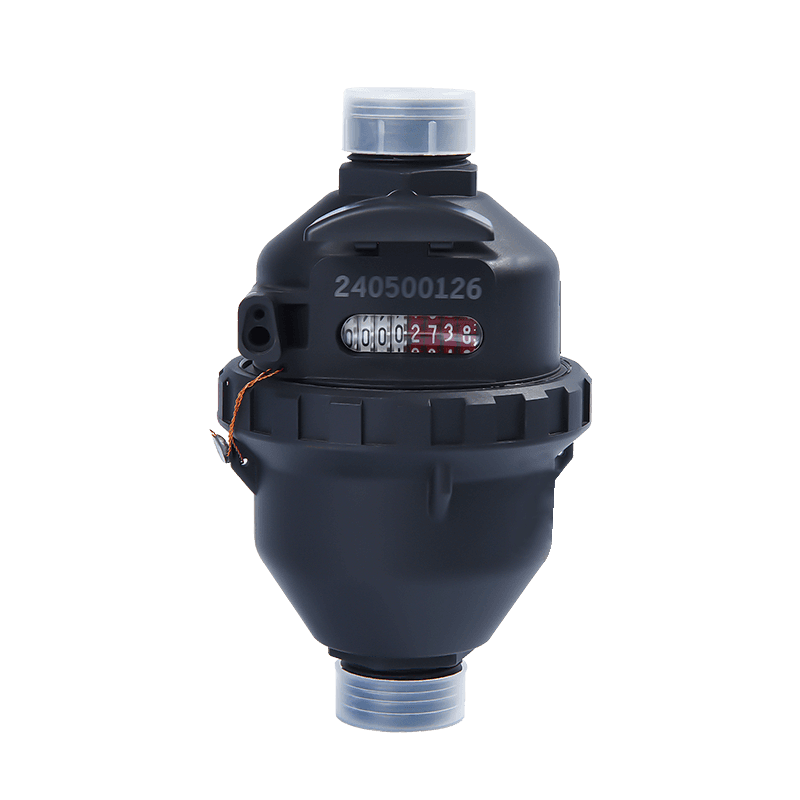
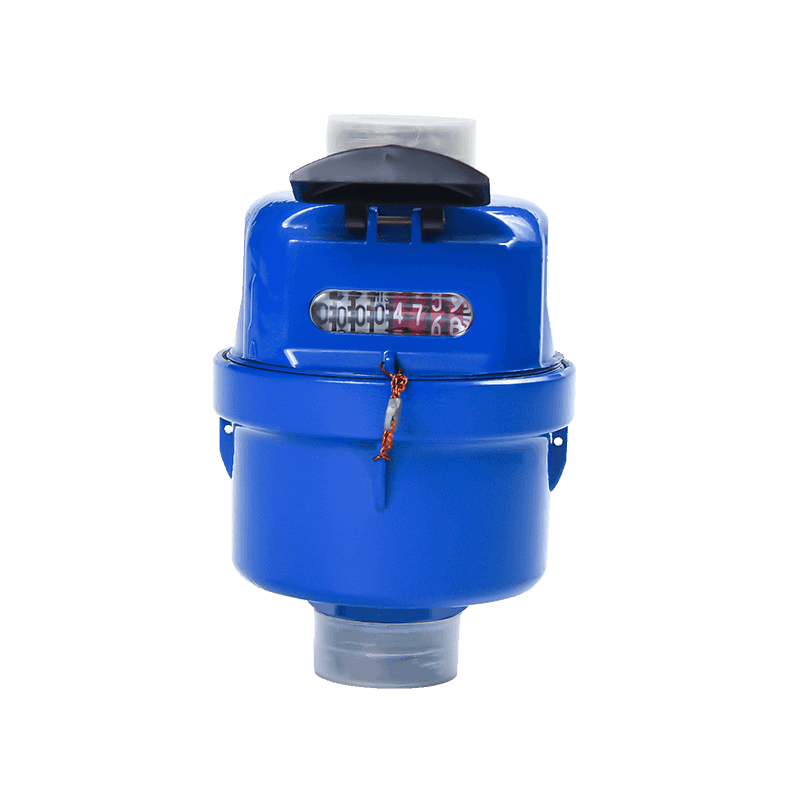
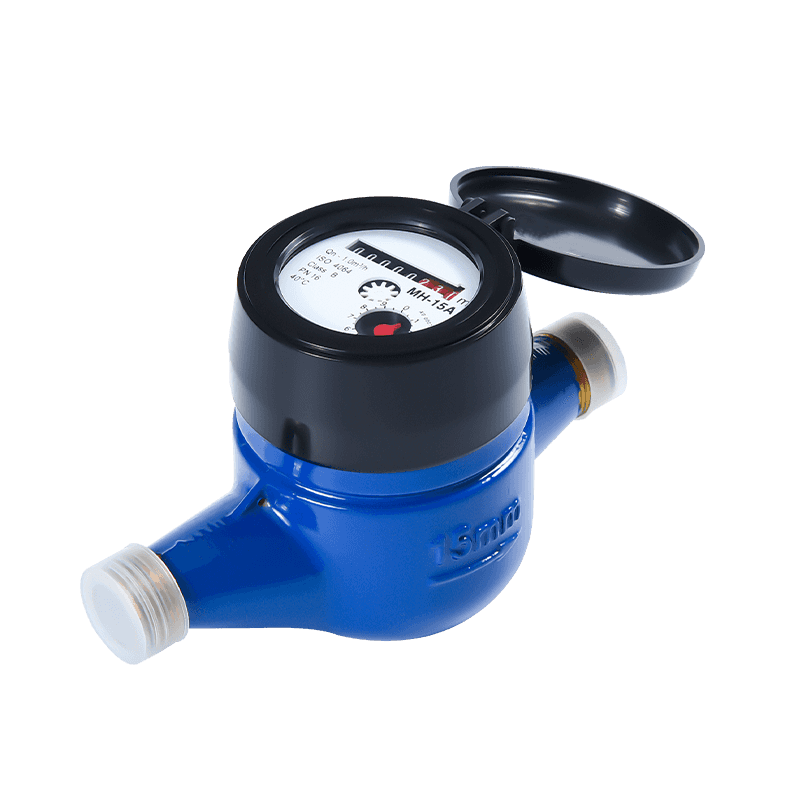
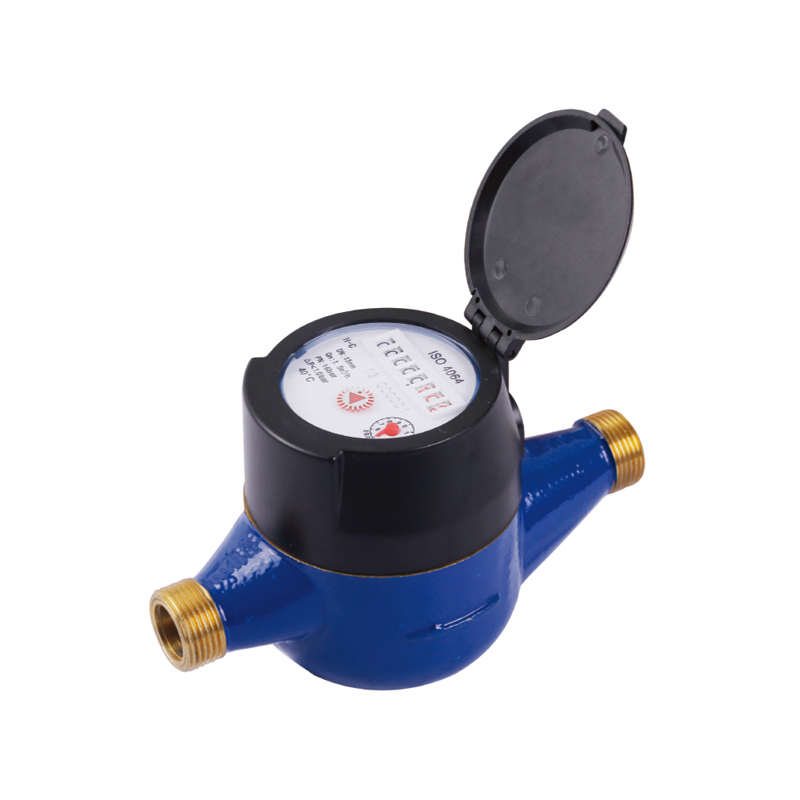
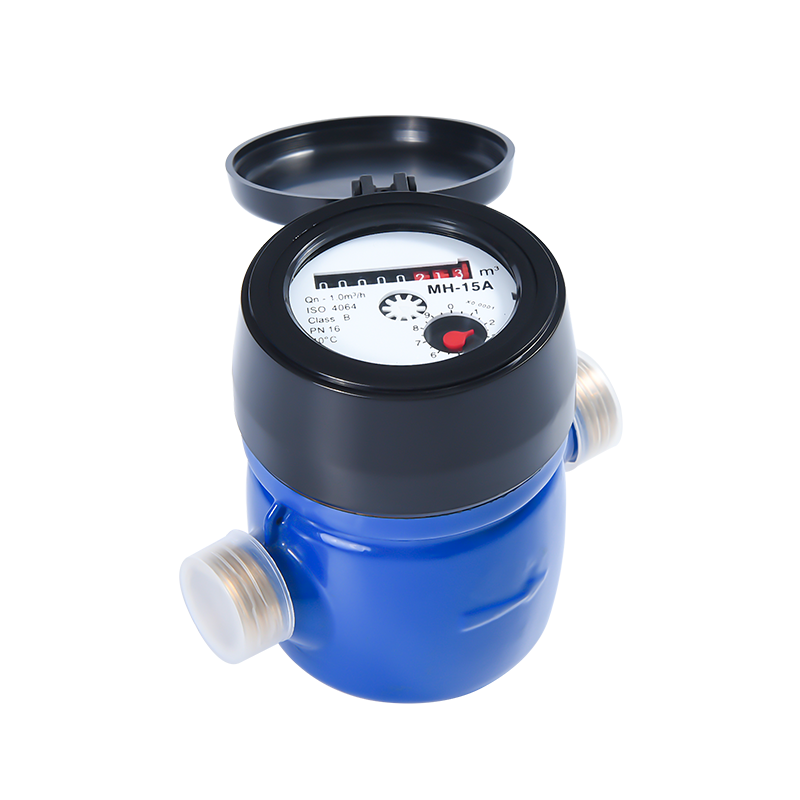
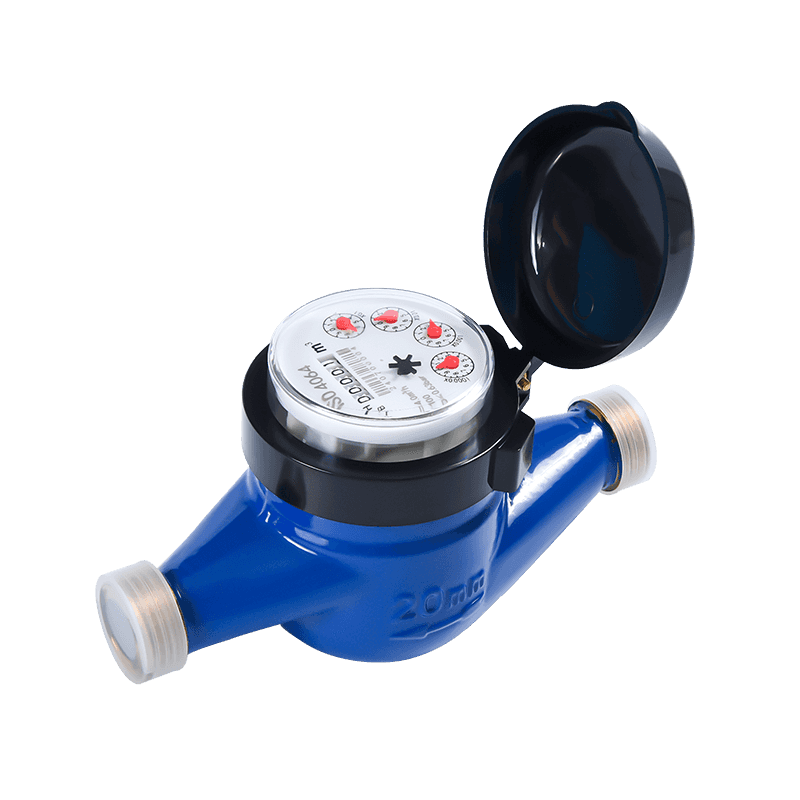
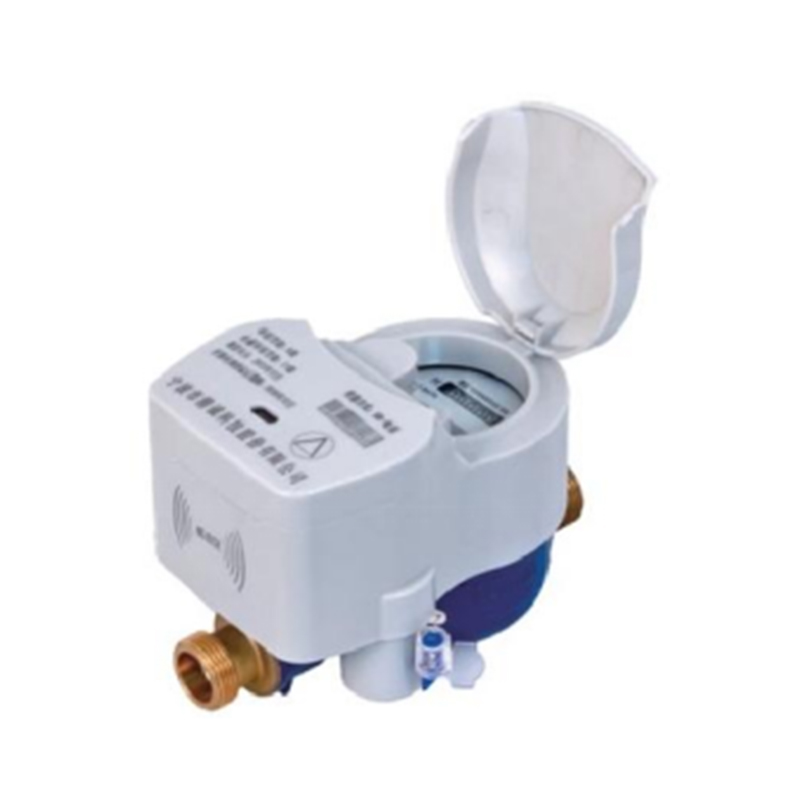
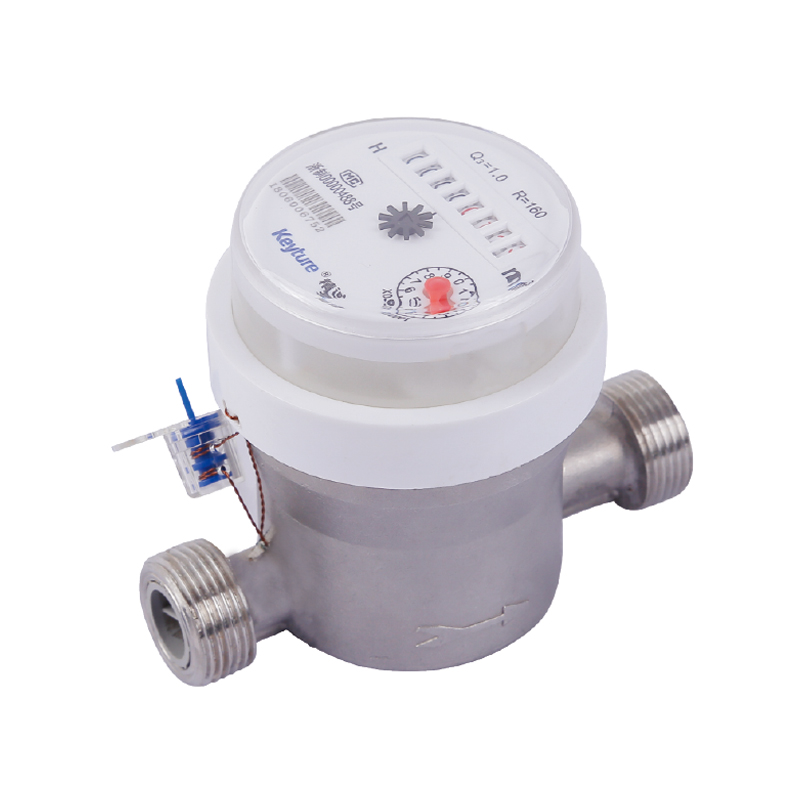
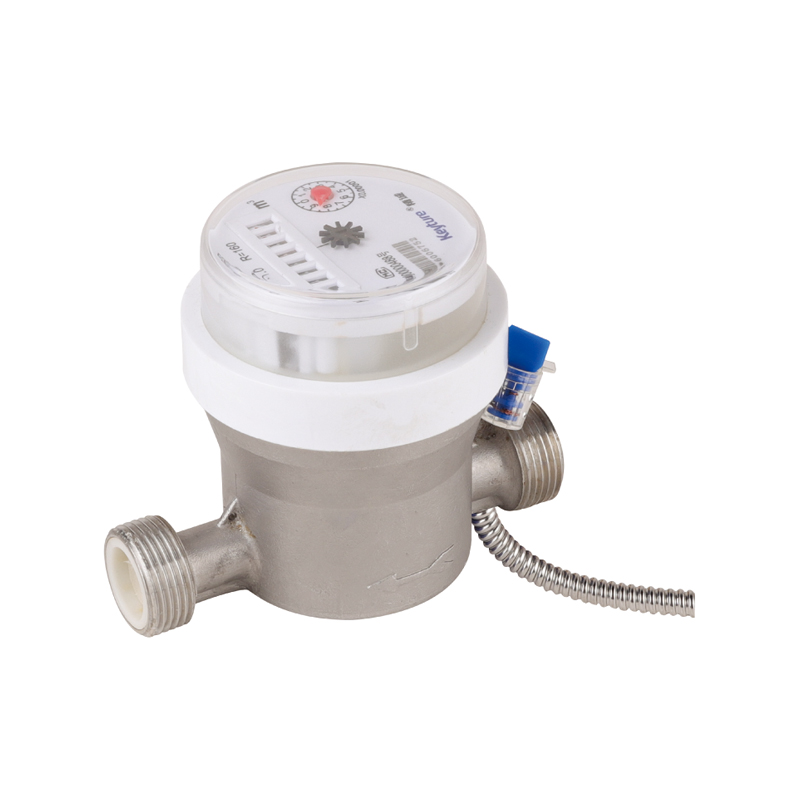
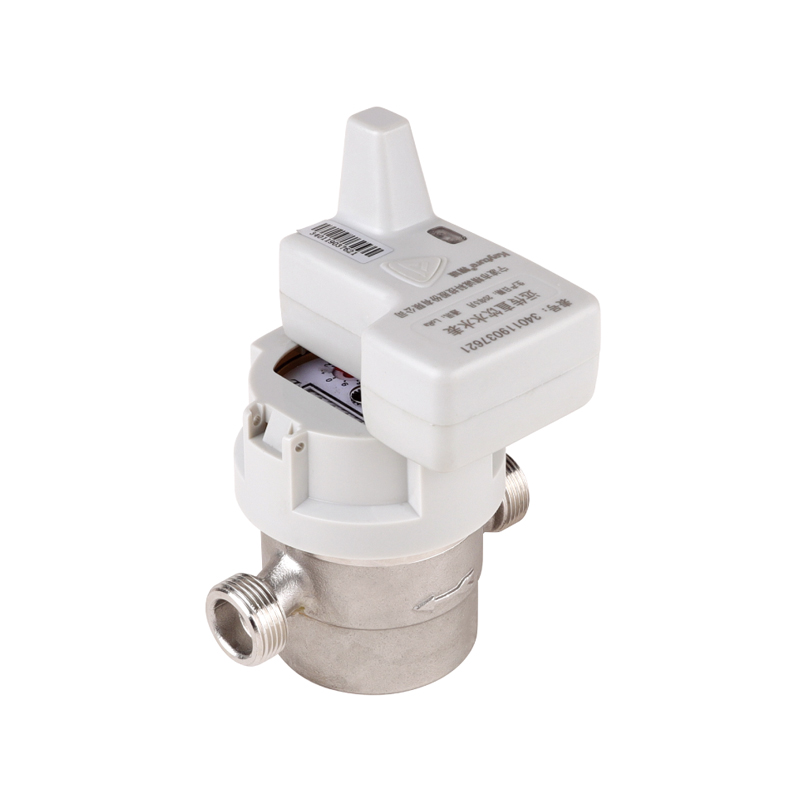
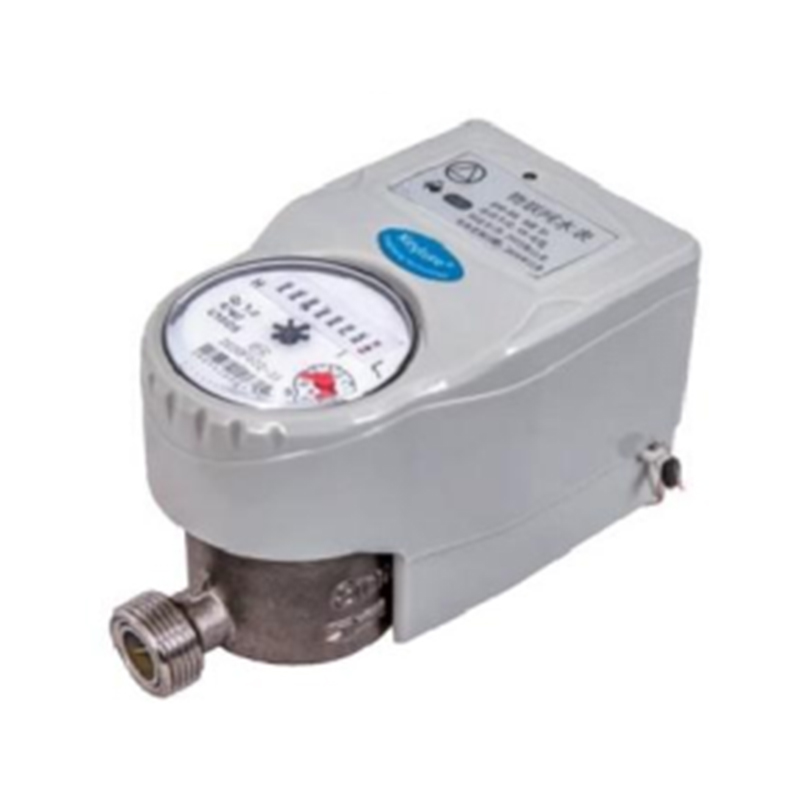
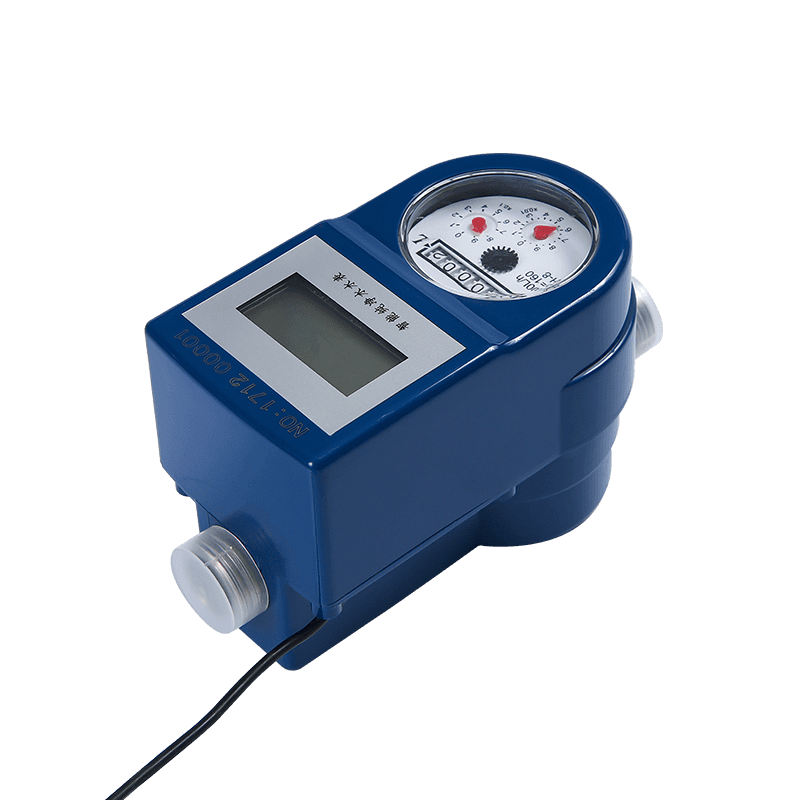
Very Low Starting Flow
Because the piston is driven by water pressure, not velocity, it begins to move at a few litres per hour. Leaks, dripping taps and trickle-flow irrigation are recorded where velocity meters register nothing.

A positive displacement meter that traps and counts fixed volumes of water — engineered for very low starting flow, wide range ratio and installation without any straight pipe requirement.
Positive displacement · rotary piston chamber · magnetic drive
A volumetric rotary piston water meter is a positive displacement meter: instead of inferring flow from the speed of water, it physically counts known volumes of water. Inside the measuring chamber, a cylindrical piston with a central hub is driven by the incoming water to rotate in a circular orbit around a fixed partition. Every complete orbit displaces exactly the same, precisely machined volume of liquid. A magnetic coupling transfers piston revolutions to the register, which multiplies the count by the known chamber volume to give a cumulative reading. Because every drop that passes through is trapped and counted, the measurement is independent of flow velocity, flow profile and upstream disturbance.
This is the key reason volumetric meters are chosen for accuracy-critical billing. Velocity meters lose sensitivity when flow is very low, because the water cannot spin the impeller against bearing friction. A rotary piston meter starts registering at only a few litres per hour, with Class 2 accuracy typically held down to R250 or R400 range ratios. That means drips from a leaking tap, a running toilet cistern or a small garden outlet are captured and billed, while the same meter handles peak demand without sacrificing accuracy. The meter needs no straight pipe upstream or downstream, which allows installation in tight pits, compact plant rooms and retrofits where velocity meters cannot reach their rated accuracy.
The trade-off is that tight clearances demand clean water. Fine sand, scale and suspended solids can scratch the chamber or jam the piston, so a fine upstream strainer is mandatory. The pressure loss is also higher than in velocity meters. In return, the meter delivers a combination of very low starting flow, wide dynamic range and excellent long-term accuracy in clean potable networks. Available in DN15 to DN40 with brass bodies, pulse output and AMR heads, it is chosen where billing precision matters more than the lowest possible unit price: premium residential supply, hotels, hospitals, laboratories and utilities hunting for non-revenue water.
Key takeaway: Velocity meters estimate. Volumetric piston meters count. If your priority is capturing every litre — especially at very low flow — a rotary piston meter is the most accurate mechanical choice.
Six design advantages that make piston meters the reference choice for accurate low-flow billing.
Because the piston is driven by water pressure, not velocity, it begins to move at a few litres per hour. Leaks, dripping taps and trickle-flow irrigation are recorded where velocity meters register nothing.
R250, R315 and R400 versions provide an exceptionally wide measuring span. A single DN15 meter can accurately measure from a dripping tap to a fully open garden hose.
The chamber fills and empties in discrete volumes, so swirl, asymmetric velocity and pulsation have almost no effect on accuracy. No straight pipe upstream or downstream is required.
Short body length and no flow-conditioning requirements make the meter easy to fit in tight pits, wall cabinets and plumbing retrofits where space is restricted.
The piston orbits a fixed stroke volume, so accuracy depends on the chamber geometry rather than on fluctuating water velocity. Calibration remains stable throughout the service life when water is clean.
By capturing the lowest flows, a piston meter reduces apparent losses at consumer meters. Utilities often see measurable increases in billed volume after replacing aging velocity meters.
Standard configuration below. Range ratio, register type and body options can be adapted to your market requirements.
| Parameter | Specification |
|---|---|
| Standard | ISO 4064 / OIML R49 |
| Meter type | Volumetric, rotary piston, positive displacement |
| Nominal diameter | DN15 – DN40 (1/2" – 1½") |
| Accuracy class | Class 2, R250 standard / R315, R400 optional |
| Starting flow | ≤ 3 L/h (DN15, R400 version) |
| Register | Dry-type, magnetic drive, 5- to 7-digit odometer |
| Water temperature | 0.1 °C – 50 °C (cold water); up to 90 °C hot water version |
| Working pressure | MAP 16 bar |
| Pressure loss | ≤ 0.1 MPa at Q3 |
| Body material | Forged brass, lead-free options |
| Measuring chamber | Engineered polymer or stainless steel; precision-machined |
| Piston | Engineered polymer piston with hub and guide |
| Connection | Threaded G3/4" – G2" |
| Strainer | Fine 100-mesh stainless steel strainer, mandatory |
| Installation | Horizontal or vertical; no straight pipe required |
| Pulse output | Optional reed switch or Hall head, 1 L / 10 L per pulse |
| Protection | IP65 standard; IP68 on request |
Q4 is the overload flow, Q3 the permanent flow, Q2 the transitional flow and Q1 the minimum flow, all expressed in m³/h.
| Nominal Diameter | Q4 Overload | Q3 Permanent | Q2 Transitional | Q1 Minimum | Range Ratio | Reading Range |
|---|---|---|---|---|---|---|
| DN15 (1/2") | 3.125 | 2.5 | 0.0127 | 0.007937 | R315 | 0.00005 – 99,999 m³ |
| DN20 (3/4") | 5 | 4 | 0.02032 | 0.0127 | R315 | 0.00005 – 99,999 m³ |
| DN25 (1") | 7.875 | 6.3 | 0.032 | 0.02 | R315 | 0.0001 – 99,999 m³ |
| DN32 (1¼") | 12.5 | 10 | 0.05079 | 0.03175 | R315 | 0.0001 – 999,999 m³ |
| DN40 (1½") | 20 | 16 | 0.08127 | 0.05079 | R315 | 0.0001 – 999,999 m³ |
Values shown for R315. R250 and R400 versions are also available. Starting flow depends on size and chamber design — tell us your target market and flow profile and we will confirm the correct configuration.
Volumetric meters are tested to confirm their special advantage — accuracy at very low flow — as well as endurance under clean-water use.
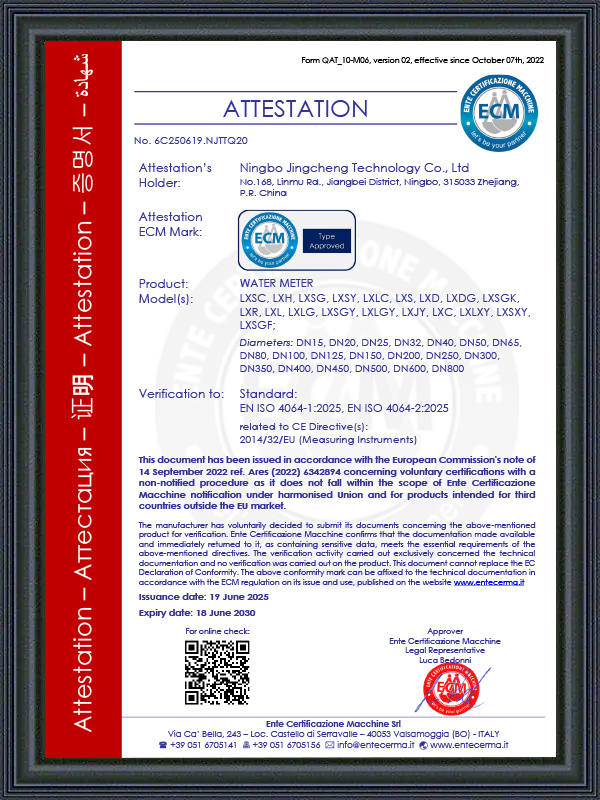
Defines Class 2 limits and test requirements for cold potable water meters, including high range ratios. Our piston meters are verified at Q1, Q2, Q3 and Q4 and at the starting-flow limit.
Type-approval covering accuracy, endurance and pressure loss. Positive displacement meters are evaluated for endurance with debris-free water and for wear-related drift.
Each batch is tested at flows well below Q1 to confirm starting-flow performance. Results are reported in litres per hour.
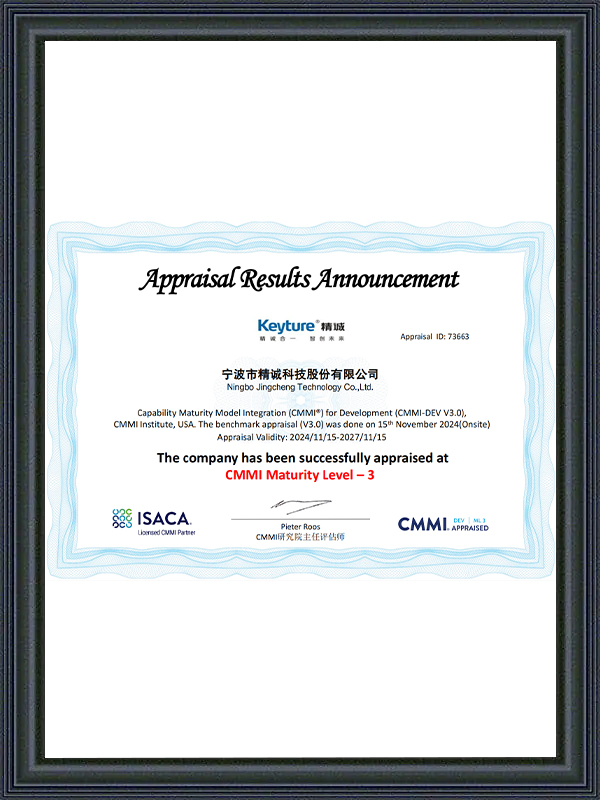
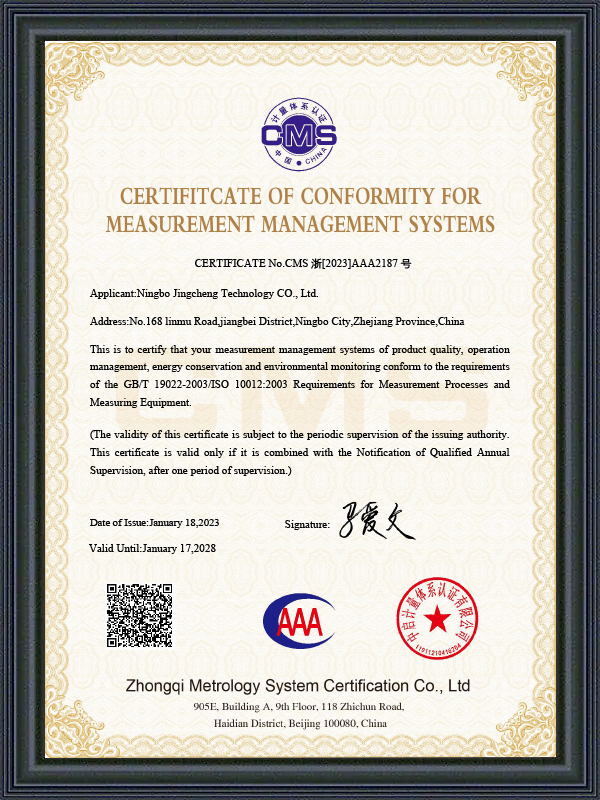
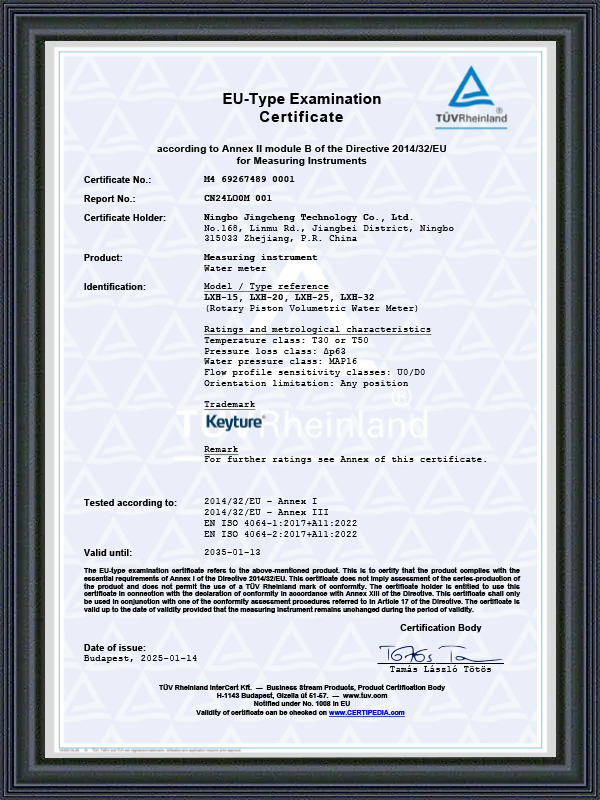
EU MID certification with the higher R-values is available for European destinations, supporting tenders that demand R315 or R400.
Brass, chamber and piston materials suitable for drinking water contact can be supplied with NSF/ANSI 61, 372, WRAS or ACS.
Sample meters undergo accelerated endurance on a flow rig, with periodic accuracy checks to confirm that piston and chamber wear remain below threshold.
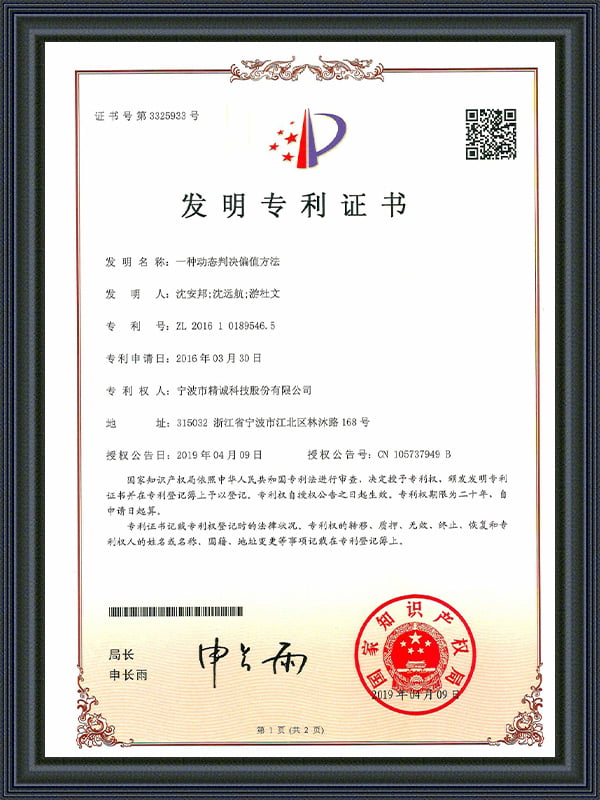
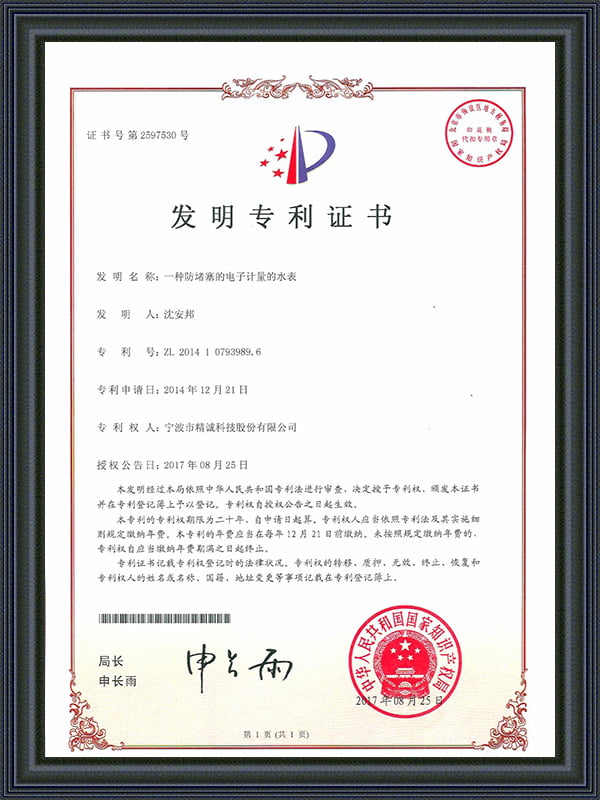
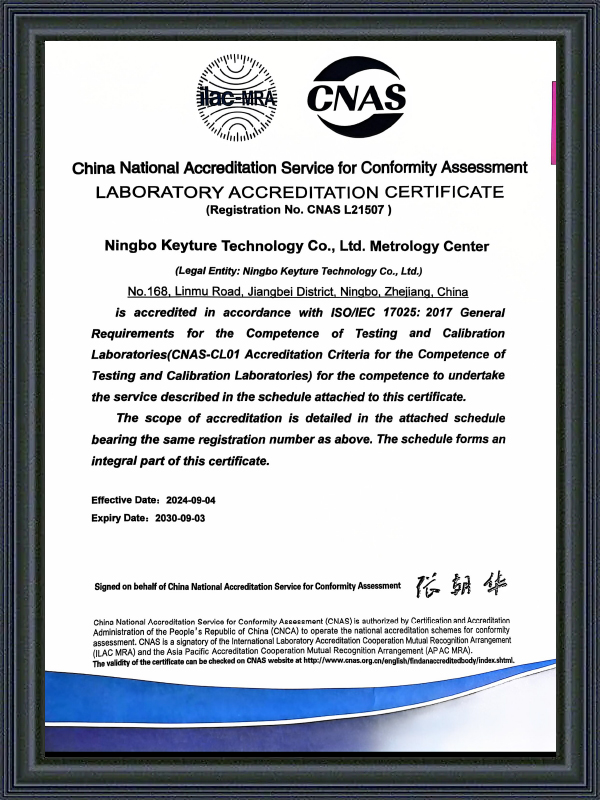
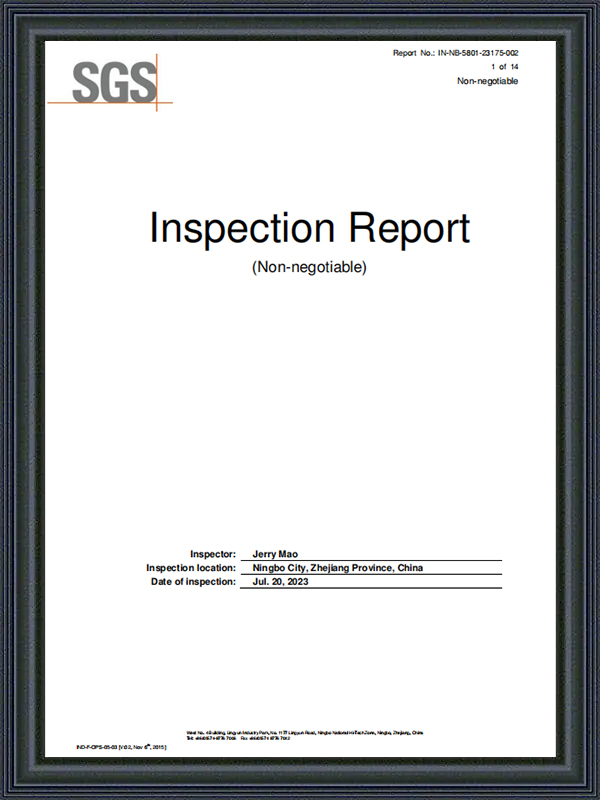
Two principles define this meter: how a piston traps water in measured volumes, and why clean water and fine filtration matter.
Water enters the chamber through a port and fills the space between the outer chamber wall and the piston. The pressure difference across the piston forces it to roll around the chamber in an orbiting motion, guided by a fixed partition and a central hub. As the piston orbits, it alternately fills and empties the measuring volume, with every revolution corresponding to a fixed amount of water.
The piston shaft carries a magnet that drives the register through the chamber wall. Since each revolution displaces the same volume, the meter does not need to infer flow from velocity. This is why accuracy stays high at very low flow and why upstream disturbances, swirl or partly open valves have little effect on the reading.
Positive displacement meters work with tight clearances between piston and chamber — typically fractions of a millimetre. This produces excellent low-flow sealing but also means fine particles can jam or abrade the piston. A 100-mesh stainless steel strainer is fitted at the inlet and must be kept clean, and a second external strainer is recommended on lines with scale or sediment.
Chambers and pistons are made from engineered polymers with low friction and good dimensional stability, or from stainless steel for harder duty. Wear is concentrated on easily replaceable parts, so the measuring cartridge can be exchanged when its accuracy drifts. In clean potable networks, a piston meter typically stays within Class 2 limits for the full verification period.
Measured performance data for the volumetric rotary piston water meter. Use these charts to confirm pressure loss, low-flow accuracy and installation dimensions before specifying.
Figure 1 — Head loss curve (MPa vs. flow m³/h)
The chart shows pressure loss across the piston meter at DN15 to DN40. A positive displacement meter has higher head loss than a multi jet velocity meter because the whole stream passes through the chamber, but losses stay at or below 0.1 MPa at Q3 — adequate for most municipal pressures.
Figure 2 — Accuracy error curve (Class 2, R315, Q1–Q4)
The error curve for a positive displacement meter is notably flat in the low-flow region. At Q1 — set at 1/315th of Q3 — the error is already inside ±1%, far better than the ±5% limit. A slight slippage at higher flow produces a gentle negative drift toward Q4, still well within ±2%.
Figure 3 — Installation dimensions (L × H × B × D)
| Size | L (mm) | H (mm) | B (mm) | D (thread) |
|---|---|---|---|---|
| DN15 | 165 | 105 | 86 | G3/4" |
| DN20 | 190 | 110 | 88 | G1" |
| DN25 | 260 | 128 | 110 | G1¼" |
| DN32 | 260 | 138 | 112 | G1½" |
| DN40 | 300 | 160 | 135 | G2" |
Dimensions are for reference. Confirm exact values with our engineering team before installation design.
Positive displacement and velocity meters measure in fundamentally different ways. Compare where each is the better engineering choice.
| Design Feature | Rotary Piston (Volumetric) | Multi Jet (Velocity) | Single Jet (Velocity) |
|---|---|---|---|
| Starting flow | Very low — a few L/h | Low | Low to moderate |
| Range ratio | R250 – R400 | R100 – R160 | R80 – R100 |
| Low-flow accuracy | Excellent | Good | Fair |
| Straight pipe requirement | None | Minimal | Recommended |
| Tolerance to dirty water | Low — needs fine strainer | Moderate | Moderate |
| Pressure loss | Higher | Lower | Moderate |
| Unit purchase cost | Higher | Moderate | Lowest |
| Best application | Accurate billing, leak capture | General residential | Budget residential |
This comparison is indicative. Actual performance depends on water quality, installation conditions and the specific product configuration. Contact our engineers for application-specific guidance.
Premium quality
since 2002
Coming From China, Marketing To The World
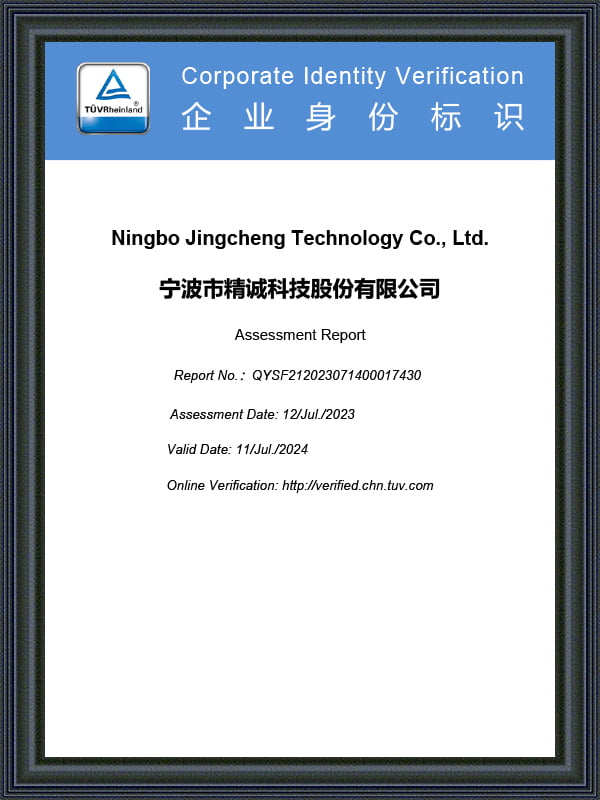
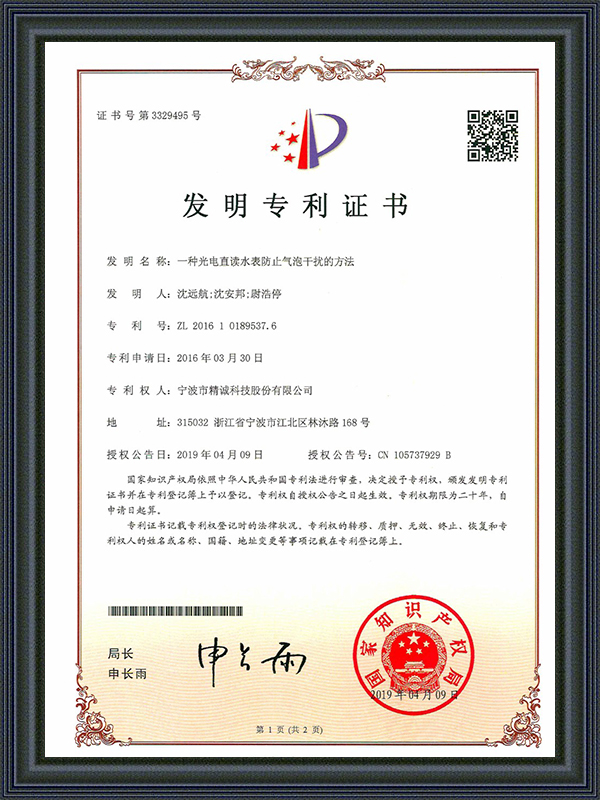
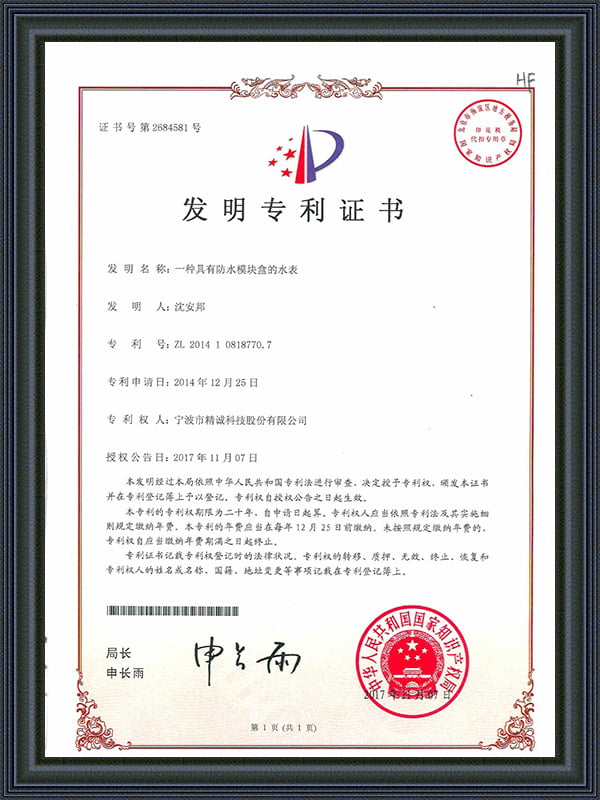
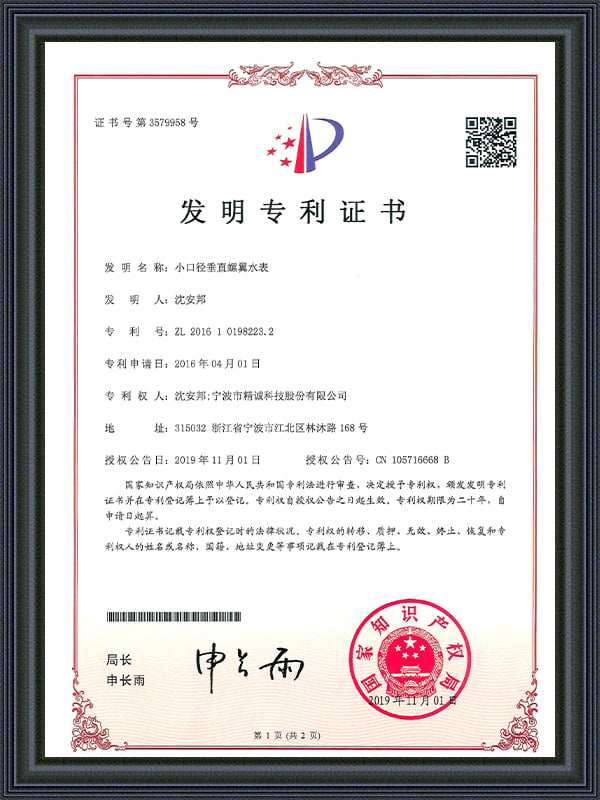
Keyture Meter is located in Picturesque Jiangbei Investment Park, NINGBO, CHINA. It is a comprehensive high-tech China Volumetric Rotary Piston Water Meter Manufacturers and Custom Volumetric Rotary Piston Water Meter Factory that integrates scientific research & development, production, sales, and service. Established in 2002 as a manufacturer and exporter of water meters for more than 22 years. The factory covers an area of 40 acres (30,000 square meters), 200 staff, 100+ types of products, product capacity of 5 million per year. Its product range covers single jet, multi-jet, volumetric piston type, Woltman type, IC card intelligent water meter, remote control water meter, optoelectrical reading direct remote control water meter...
Yearly production capacity
Production Area
Works and inspectors
Production experience
Excellent product with exquisite craftsmanship
Customization
We have a strong R&D team, and we can develop and produce products according to the drawings or samples the customers offered.
Cost
We are a professional manufacturer and also have our own processing machinery. So we can offer good prices and good products directly.
Quality
We have our own testing lab and advanced and complete inspection equipment, which can ensure the quality of the products.
Service
We focus on developing high-quality products for top-end markets. Our products are in line with international standards, and are mainly exported to Europe, America, Africa, Asia and other destinations around the world.
Capacity
Our annual production capacity is over 5 million units. We can meet the needs of different customers with different purchase quantities.
Shipment
We are about 35 kilometers away from Ningbo Port. It is very convenient and efficient to ship goods to any other countries.
From mechanical meters to smart AMR/AMI systems — we provide end-to-end water metering solutions tailored to your project.
Chosen where billing precision, leak capture and installation flexibility outweigh the lowest unit cost.
Install a fine strainer — 100 mesh or finer — directly upstream of the meter, and flush the pipework thoroughly before commissioning. Debris left after plumbing work is the most common cause of piston jamming. For new construction, we recommend flushing at high velocity with a temporary spool before the meter is fitted.
Because piston meters have no straight-pipe requirement, they can be installed after elbows, valves and pumps without accuracy loss. They can be mounted horizontally or vertically depending on the version, but the register should be accessible and legible. Check the orientation marking on the dial.
Fully fill the line with water before pressurising and bleed air from the system. Rapid pressurisation or water hammer can shock the piston and damage the chamber, so open valves slowly and consider a pressure-reducing valve or pulsation damper on high-pressure supplies.
The measuring chamber is the heart of the meter, and water cleanliness determines its life. Routine maintenance means cleaning the strainer at intervals based on local water quality, and checking the register for smooth operation. If the starting flow rises noticeably, the strainer may be partially blocked or the piston worn.
A replaceable measuring cartridge reduces service cost. When a meter is removed at the end of its verification period, the cartridge can be replaced, the meter recalibrated and sealed for another service life.
In clean potable systems, a piston meter typically remains within Class 2 limits for 6 to 8 years, with many units exceeding this. Utilities in sandy or scaling regions should shorten the replacement cycle and increase strainer checks.
The meter contains a precisely shaped chamber and a piston that orbits as water passes through. Each orbit displaces an exact volume of water, and the register counts the number of orbits. Since the volume per orbit is fixed, the reading is the product of orbit count and chamber volume — a true volumetric measurement.
Velocity meters need enough water speed to turn an impeller against friction. A piston meter is driven by pressure and displaces a fixed volume per cycle, so it keeps counting even when flow is only a few litres per hour. This allows drips and small leaks to be measured accurately.
The standard version is R315, with R250 and R400 available. A higher range ratio means a lower minimum flow Q1 relative to permanent flow Q3. Choose the range ratio based on how important low-flow accuracy is in your billing.
No. Because the meter measures displaced volumes rather than velocity, it is unaffected by swirl or flow profile. This makes installation simpler, particularly in tight pits and retrofits where straight sections are unavailable.
Clean potable water is required. The tight clearances inside the chamber can be damaged by sand, scale and suspended solids. A fine upstream strainer is mandatory, and we recommend an additional external strainer if water quality is uncertain.
A jammed piston stops the meter from passing water or causes a sharp rise in pressure loss. Many designs include a strainer to prevent this, and the measuring cartridge can be removed and cleaned. If blockage is recurring, increase strainer maintenance or upgrade filtration.
Yes. All the water passes through the chamber, so head loss at Q3 is about 0.1 MPa, compared with 0.063 MPa for typical multi jet meters. For most mains pressures this is acceptable, but check available head in gravity-fed or low-pressure systems.
Yes, if the version is marked for vertical installation. Piston meters are less orientation-sensitive than velocity meters, but the calibration position is still specified at order stage and indicated on the dial.
The standard version supports 0.1 °C to 50 °C cold water. A hot water version up to 90 °C uses chamber and piston materials selected for heat stability.
Yes. A reed-switch or Hall-effect pulse head can be fitted on the register for AMR systems. For higher resolution, an encoder head can read the register directly and transmit data through M-Bus or wireless modules.
In clean potable water, 6 to 8 years of accurate service is typical. The replaceable cartridge allows a second service life after re-calibration. Hard or sandy water shortens life and calls for more frequent inspection.
For accounts where billing precision, leak detection or apparent loss reduction is valuable, yes. The additional revenue captured at low flow often repays the higher purchase price within a few years, particularly on high-tariff or intermittent-use connections.
Send us the size, range ratio, water quality and quantity you need. Our engineers will recommend the right volumetric rotary piston configuration, with price and lead time.

Address: No.168,LinMu Rd.,Zone B, Jiangbei investment Park, Ningbo, Zhejiang,China
Tel: +86-0574-83090480/+86-18892665118
Fax: +86-0574-83021045
Email: [email protected]
Web: https://www.keyturemeter.com/
Quick Links
Product
Mobile terminal
 Custom Volumetric Rotary Piston Water Meter Manufacturers