 English
 Español
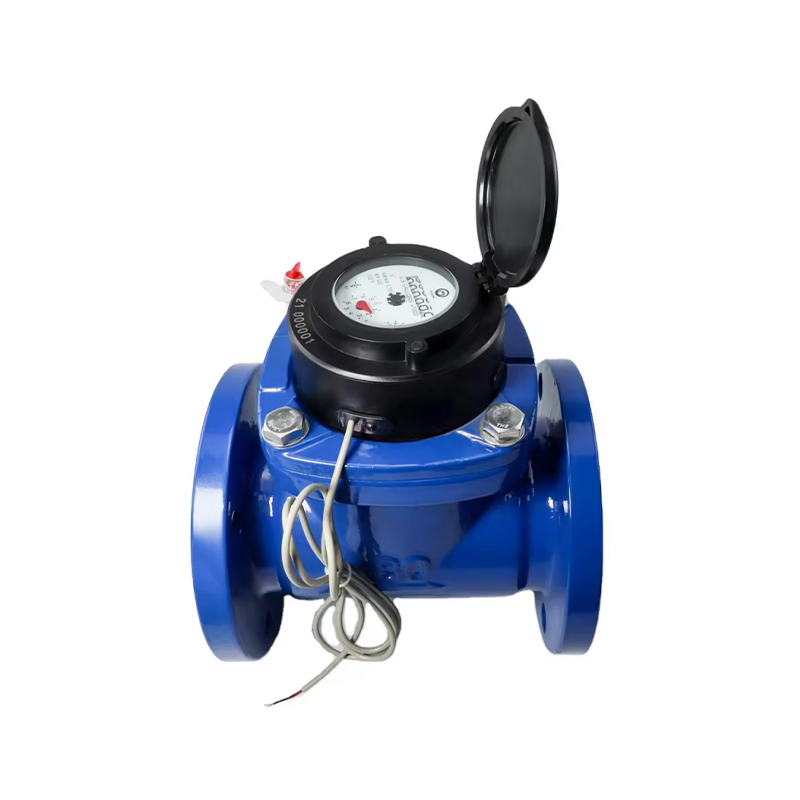
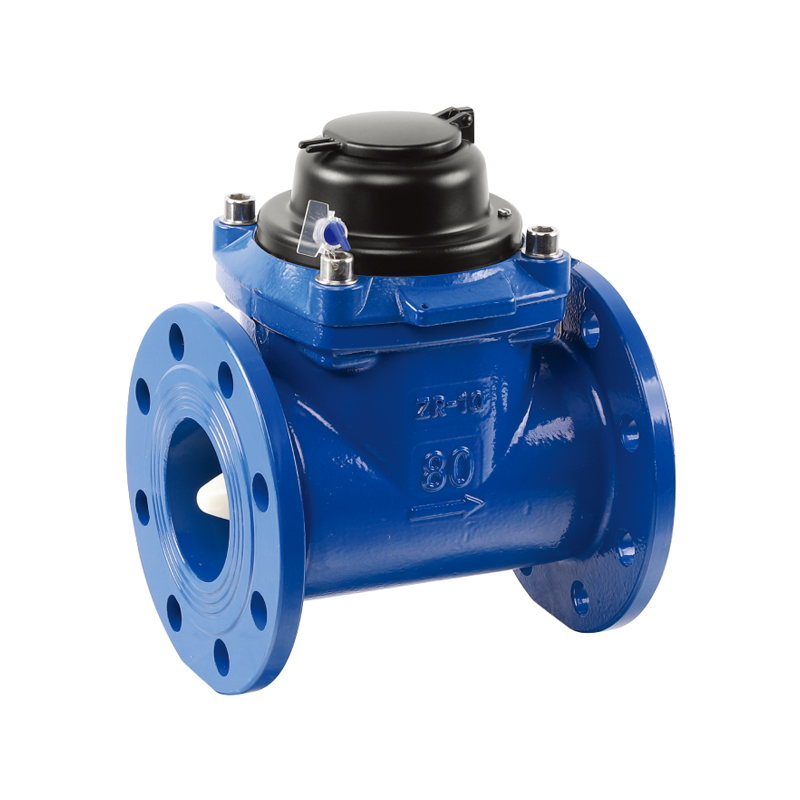
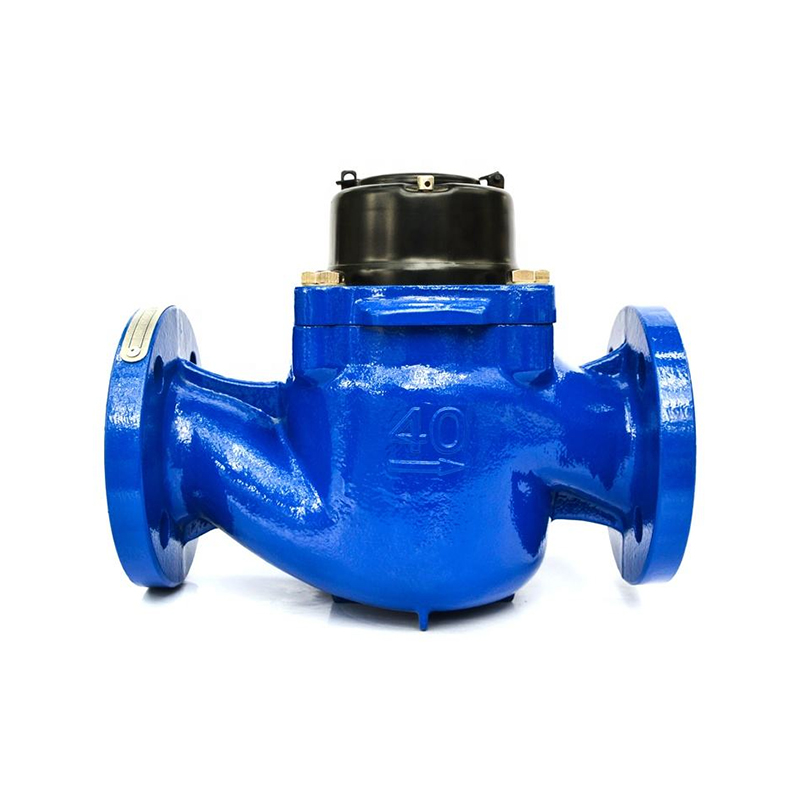
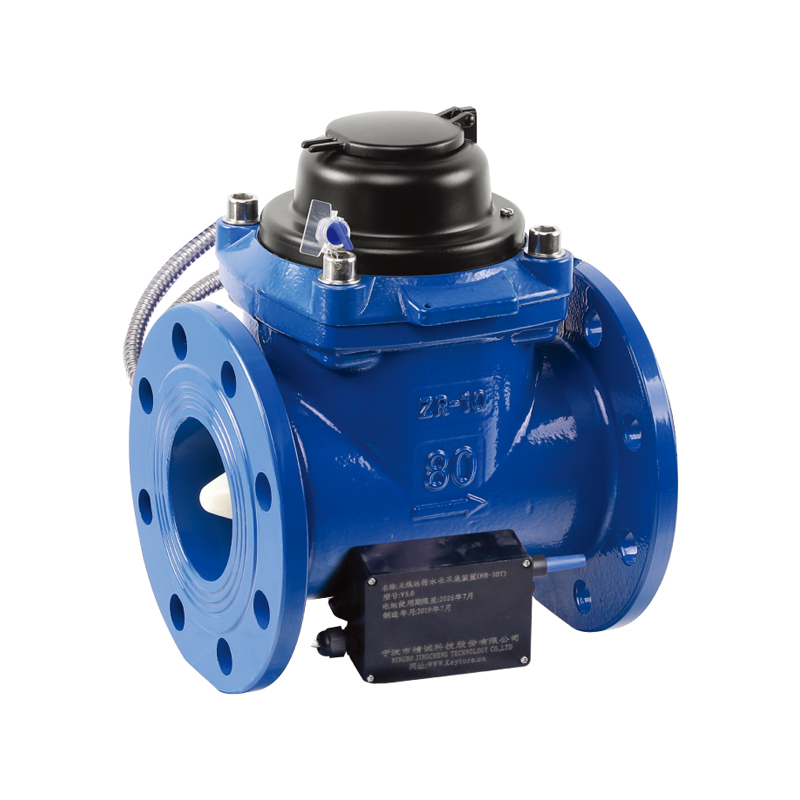
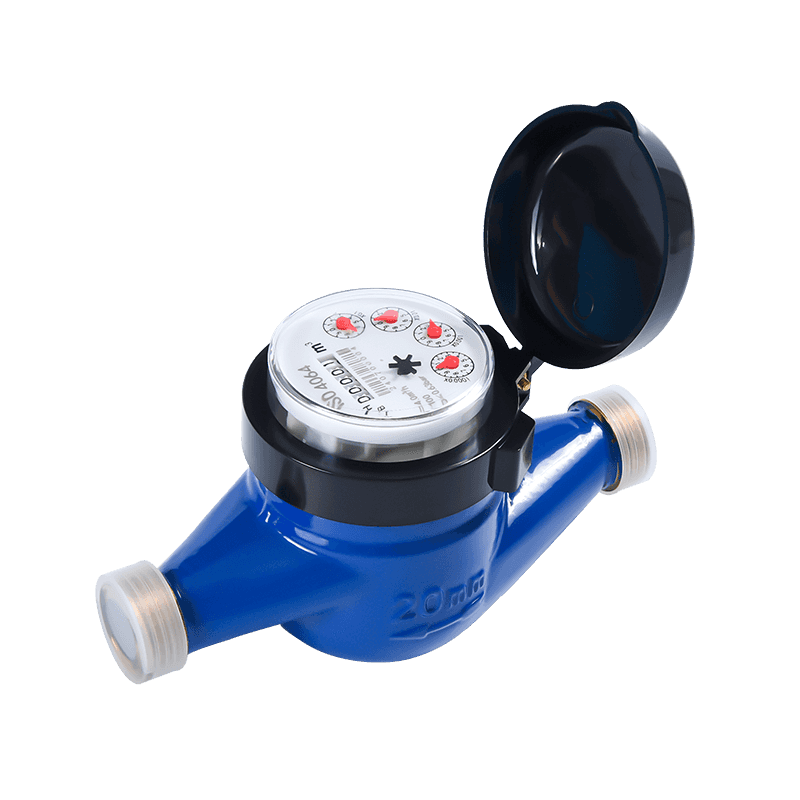
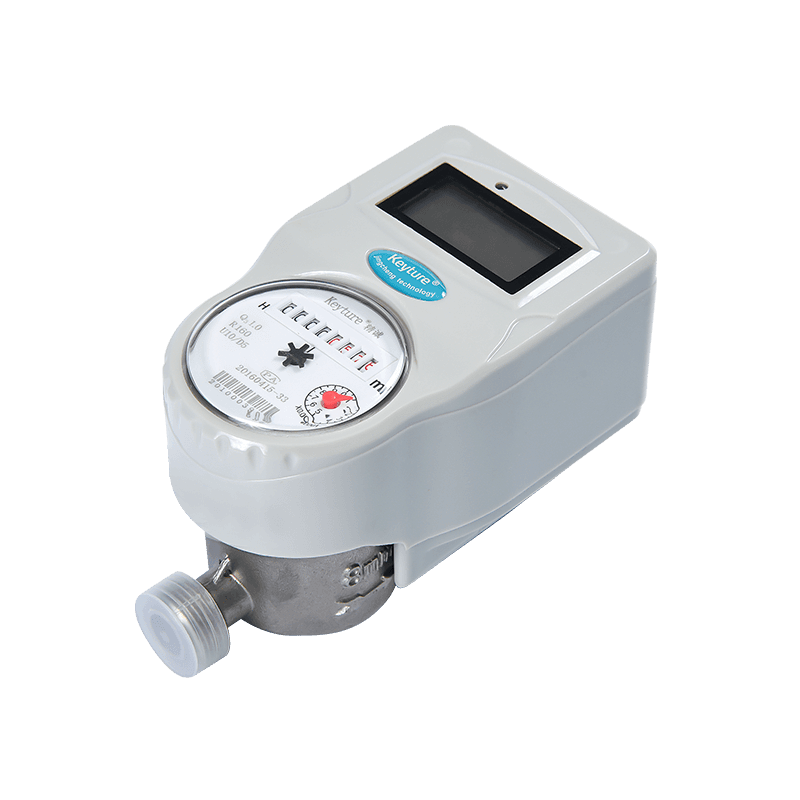
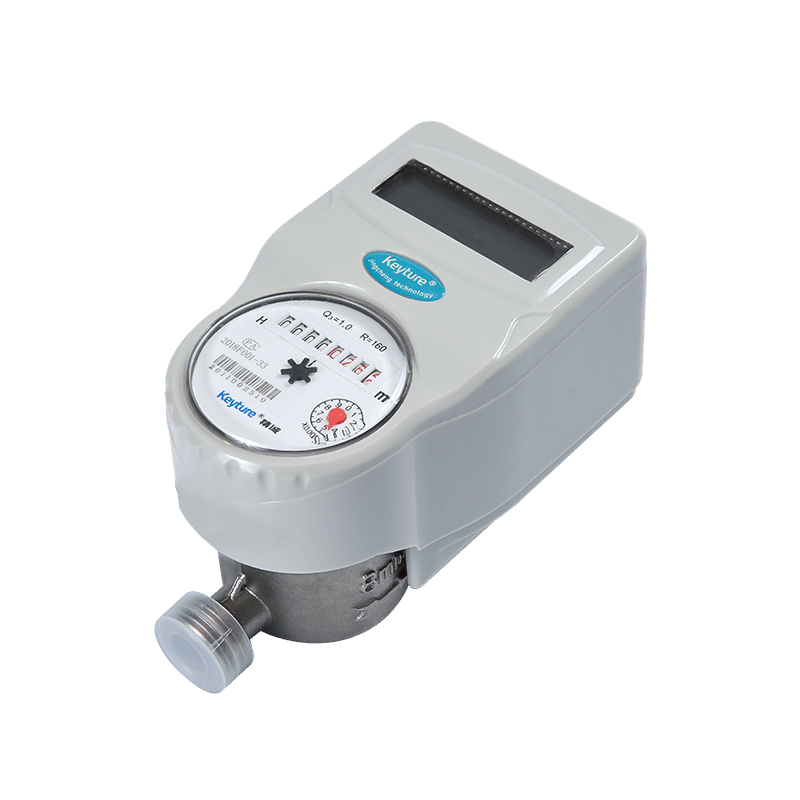
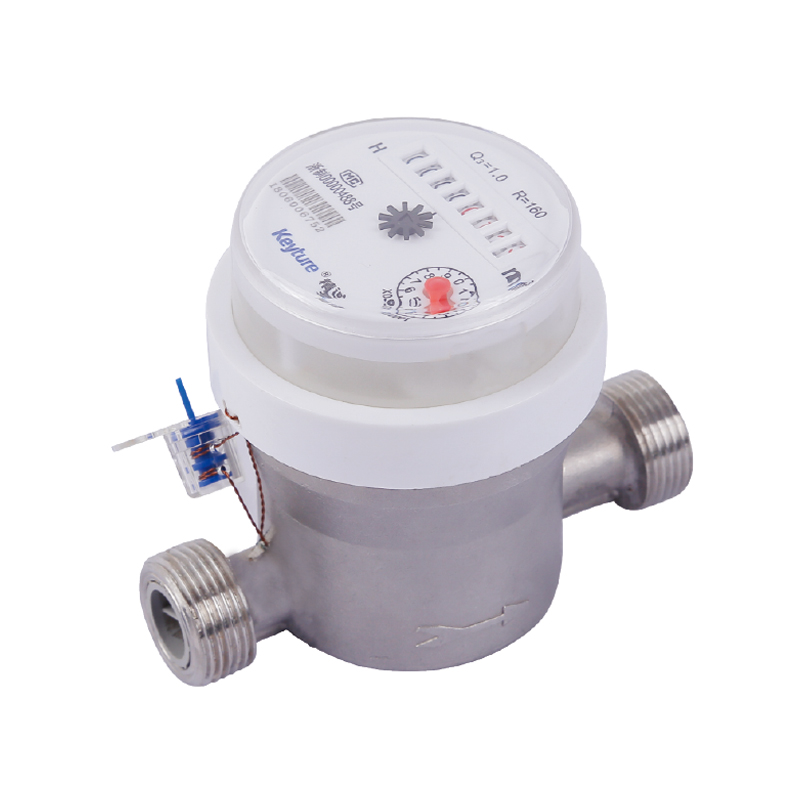
Body Stays in the Pipe
The flanged body, gaskets and pipework are never disturbed. This removes the risk of flange leaks, pipe stress and misalignment that come with lifting a heavy meter in and out.

A bulk meter whose rotor, bearings and register drive come out as a single calibrated cartridge — service, exchange and recalibrate without cutting the pipeline.
Cartridge insert · interchangeable · calibrated spare pool
A removable element Woltman water meter is a bulk meter whose entire measuring mechanism — rotor, bearings, flow straightener, gear train and register drive — is built as one self-contained cartridge that can be unbolted from the meter body and replaced as a unit. The cast flanged body, which is heavy, expensive and tied into the pipeline with large bolts and gaskets, stays where it is. Only the insert comes out. In a conventional fixed-mechanism meter, a worn rotor or a drifting calibration means shutting down the line, breaking the flanges, lifting the whole meter out of the chamber and sending it away. In a removable element design, the same repair is done by lifting out a cartridge that a single technician can carry.
This changes the economics of owning bulk meters. The wearing parts of a Woltman meter — bearings, rotor tips and the gear train — are a small fraction of its mass and cost, yet they determine whether the meter remains accurate. When a utility holds a pool of calibrated spare inserts, an exchange takes a few hours: isolate the line, unbolt the cover, lift out the old insert, drop in a calibrated replacement, refit the cover and re-pressurise. The old insert goes back to the workshop for refurbishment, where bearings are replaced, the rotor is rebalanced and the unit is recalibrated on a test rig. The flanged body, the chamber and the piping never move, so there is no risk of pipework stress, flange leaks or lost alignment.
Interchangeability is the heart of the design. Each insert is machined to a common interface for its size, so an insert calibrated in the workshop fits any body of that size and can be swapped between meters with no change in registration beyond the tolerance stated on its certificate. Inserts are supplied for DN50 to DN300 with Class 2 accuracy under ISO 4064 / OIML R49 and R200 range ratio, with the register rotating through 360 degrees and optional pulse or M-Bus heads. For utilities that operate dozens or hundreds of bulk meters, a removable element Woltman meter turns an expensive replacement cycle into a routine exchange of an inexpensive, pre-calibrated cartridge.
Key takeaway: Leave the body in the pipe and exchange the cartridge. A removable element makes bulk meter servicing a half-day job for one technician instead of a multi-day project.
Six advantages that change how utilities service large meters.
The flanged body, gaskets and pipework are never disturbed. This removes the risk of flange leaks, pipe stress and misalignment that come with lifting a heavy meter in and out.
An insert weighs a few kilograms to a few tens of kilograms. A single technician can lift it by hand or with a small hoist, and the exchange takes a few hours.
Spare inserts are calibrated in the workshop before they go to site. The swapped-in unit already carries a certificate, so the meter returns to service with verified accuracy.
Worn bearings and rotors are replaced in the workshop, and the insert is rebalanced and recalibrated. The cost is a fraction of a new meter, and the cycle can be repeated for decades.
All inserts of a given size share a common interface and tolerance. Any insert fits any body of that size, which simplifies stocking and lets utilities standardise on one spare per size.
Downtime, lifting equipment, new gaskets, chamber works and body replacement are avoided. Total cost per cubic metre metered falls over the meter’s life.
Standard configuration below. Size range, flange standard, communication and spare-pool arrangements can be adapted to your utility requirements.
| Parameter | Specification |
|---|---|
| Standard | ISO 4064 / OIML R49 |
| Meter type | Woltman, horizontal helix rotor, removable measuring insert |
| Installation position | Horizontal pipe, register facing up (H) |
| Nominal diameter | DN50 – DN300 (2" – 12") |
| Accuracy class | Class 2, R200 standard / R160 optional |
| Insert contents | Rotor, bearings, straightener, drive shaft and gear train |
| Insert interface | Common flange or bayonet seat per size, interchangeable |
| Water temperature | 0.1 °C – 50 °C (cold water) |
| Working pressure | PN10 / PN16 |
| Pressure loss | ≤ 0.025 MPa at Q3 |
| Body material | Cast iron or ductile iron, epoxy coated |
| Rotor | Engineered polymer or stainless steel, balanced |
| Bearings | Ceramic / tungsten carbide, replaceable in workshop |
| Register | Dry-type, magnetic coupling, 360° rotatable |
| Connection | Flanged EN 1092-2; ANSI / JIS / AS on request |
| Sealing | O-ring and cover seal, torque-controlled bolts |
| Pulse output | Optional reed / Hall; M-Bus, LoRaWAN, NB-IoT on request |
| Protection | IP65 standard; IP68 register on request |
Q4 is the overload flow, Q3 the permanent flow, Q2 the transitional flow and Q1 the minimum flow, all expressed in m³/h.
| Nominal Diameter | Q4 Overload | Q3 Permanent | Q2 Transitional | Q1 Minimum | Range Ratio | Insert Weight (typical) |
|---|---|---|---|---|---|---|
| DN50 (2") | 50 | 40 | 0.32 | 0.2 | R200 | 2.5 kg |
| DN80 (3") | 125 | 100 | 0.8 | 0.5 | R200 | 4.5 kg |
| DN100 (4") | 200 | 160 | 1.28 | 0.8 | R200 | 6 kg |
| DN150 (6") | 500 | 400 | 3.2 | 2 | R200 | 12 kg |
| DN200 (8") | 787.5 | 630 | 5.04 | 3.15 | R200 | 21 kg |
| DN250 (10") | 1250 | 1000 | 8 | 5 | R200 | 33 kg |
| DN300 (12") | 2000 | 1600 | 12.8 | 8 | R200 | 48 kg |
Values shown for R200. Insert weights are typical and depend on rotor material. R160 versions are available — tell us the number of meters per size and your workshop calibration capacity and we will recommend a spare-insert pool.
A removable element meter is certified like any bulk meter, with additional controls to guarantee that any insert fits and performs in any body of its size.
Class 2 limits and test points for cold potable water meters. Insert and body are tested together, and interchangeability is demonstrated across several body samples.
Sample inserts are fitted into different bodies of the same size and re-tested. The shift in error must stay within the stated interchangeability tolerance.
Each insert carries a serial number and a certificate showing errors at Q1, Q2, Q3 and Q4. Records link the insert to the meter in which it was installed.
EU MID approval for the meter with removable element, including the sealing of the insert and cover to prevent unauthorised exchange.
O-ring seals and torque-controlled bolts are tested at 1.5 × PN for leak tightness after repeated insert removal and refitting.
Fusion-bonded epoxy internal and external coating suitable for potable water contact, with WRAS, NSF/ANSI 61 or ACS where required.
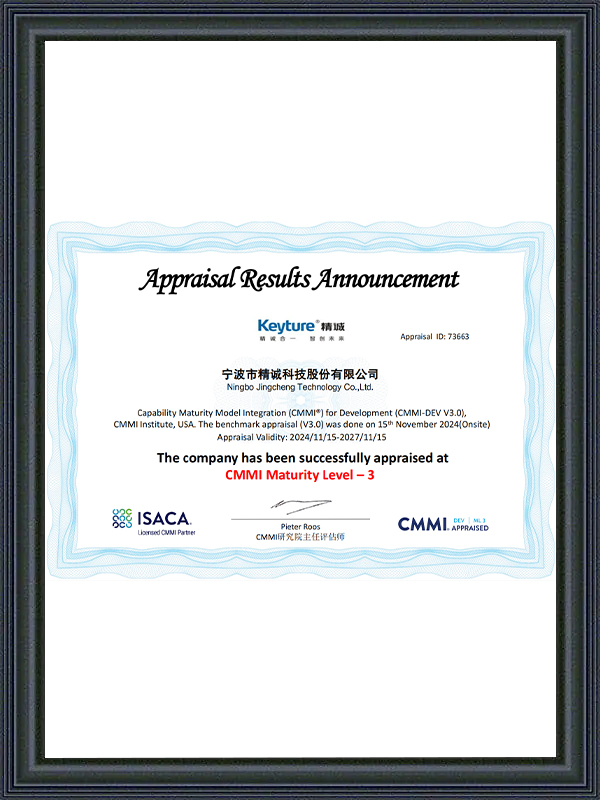
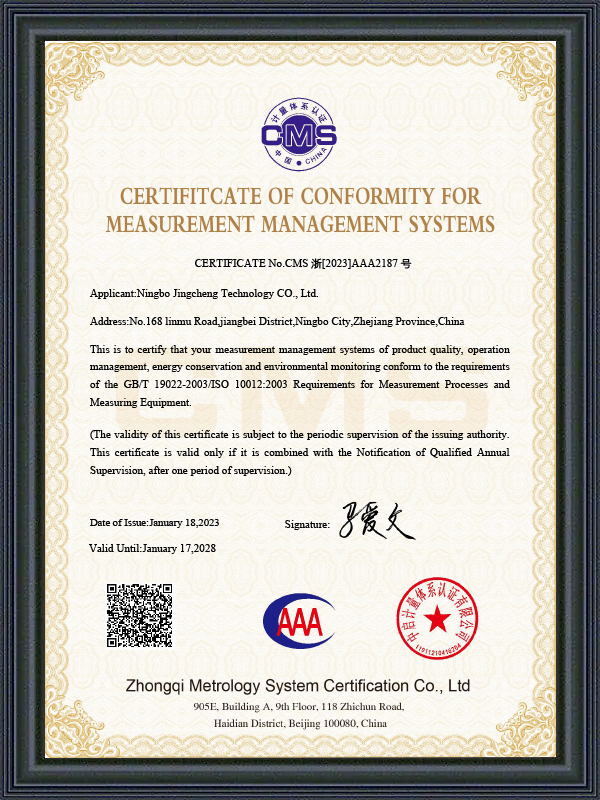
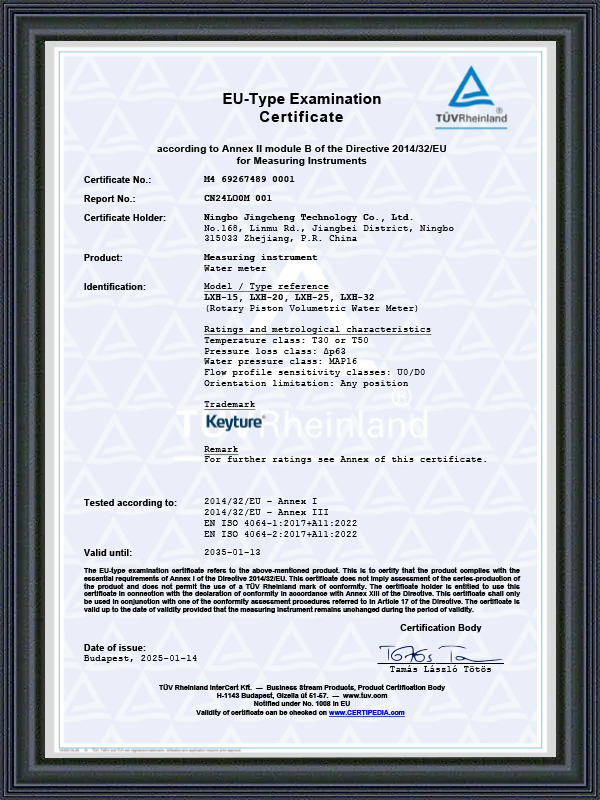
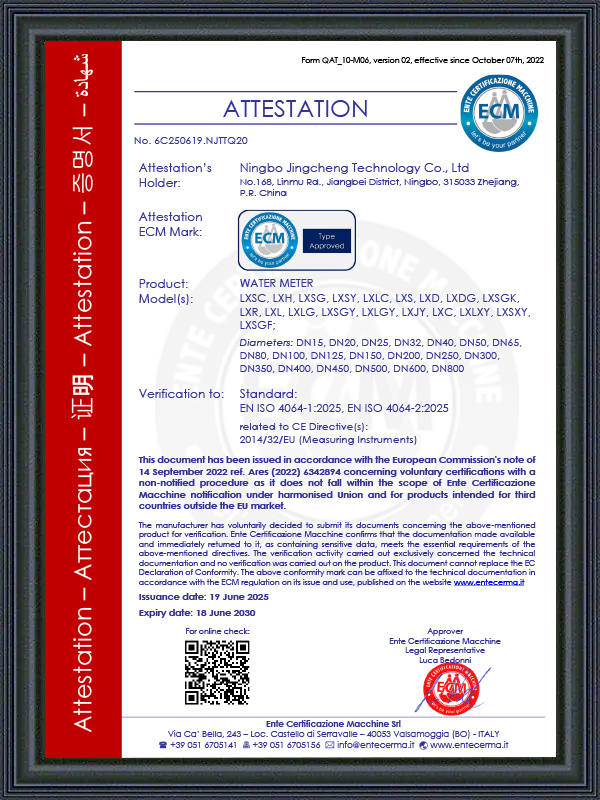

Two engineering details make removal practical: how the insert is defined as a calibrated module, and how the body keeps it aligned and sealed.
In a conventional Woltman meter the rotor, bearings and gear train are mounted in several parts that are assembled into the body, and calibration is done on the whole assembly. In a removable element design, those parts are assembled onto a single carrier that includes the straightener, rotor, bearing housing and the drive coupling to the register. The carrier is machined to fit the body seat with a tight, defined tolerance.
This lets the insert be calibrated independently of any particular body. On the test rig, the insert is mounted in a reference body, flow is run at Q1 to Q4 and the error is recorded and adjusted. Because the body only provides a pipe and a seat, the insert’s performance is essentially independent of which body it is fitted to, and inserts can be pre-calibrated and kept in stock.
The cast body is machined with a precision seat that locates the insert both radially and axially. A spigot fit and locating pins ensure the insert goes in the right way and always in the same position, and an O-ring seals the cover to the body. Cover bolts are tightened to specified torque in a cross pattern, which gives repeatable compression and prevents distortion of the seat.
Because the insert is removed repeatedly during its life, the seat and seal faces are designed for many cycles: the body is machined with hardened or coated seating surfaces, O-rings are replaceable and the cover has captive bolts that cannot be lost in a chamber. A lead seal on the cover prevents unauthorised exchange, and the register on top is detached with the insert so no gear train is exposed.
Measured performance data for the removable element Woltman water meter. Use these charts to confirm pressure loss, accuracy and installation dimensions before specifying.
Figure 1 — Head loss curve (MPa vs. flow m³/h)
The chart shows pressure loss for DN50 to DN300 with the insert fitted. The insert follows the same axial flow path as a fixed design, and the carrier adds only a modest obstruction, so loss at permanent flow remains at or below 0.025 MPa.
Figure 2 — Accuracy error curve (Class 2, R200, Q1–Q4)
The curve is measured on the insert in a reference body, and then verified on sample inserts swapped into other bodies. The shift between bodies is typically within ±0.5%, so a replacement insert delivers the accuracy shown on its own certificate.
Figure 3 — Installation dimensions (L × H × B × D)
| Size | L (mm) | H (mm) | B (mm) | D (flange OD) | Lift Height (mm) |
|---|---|---|---|---|---|
| DN50 | 200 | 250 | 225 | 165 | 260 |
| DN80 | 225 | 275 | 250 | 200 | 290 |
| DN100 | 250 | 295 | 270 | 220 | 310 |
| DN150 | 300 | 355 | 325 | 285 | 370 |
| DN200 | 350 | 410 | 380 | 340 | 430 |
| DN250 | 450 | 465 | 440 | 405 | 490 |
| DN300 | 500 | 520 | 490 | 460 | 545 |
Dimensions are for reference, PN16 flanges. Lift height is the clearance needed above the meter to withdraw the insert. Confirm exact values with our engineering team before chamber design.
How a bulk meter is serviced determines its lifetime cost. This table compares a removable element design with fixed designs.
| Design Feature | Removable Element Woltman | Fixed Mechanism Woltman | Electromagnetic |
|---|---|---|---|
| Service method | Exchange insert, body stays | Remove whole meter | Replace electronics or recalibrate |
| Time on site | Hours | Day or more | Hours |
| Spare strategy | Pool of calibrated inserts | Spare complete meter | Spare transmitter |
| Pipeline disturbance | None | Flanges broken, pipe moved | None |
| Spare cost | Low — insert only | High — full meter | Moderate |
| Pressure loss | Low | Low | None |
| Power requirement | None | None | Mains or battery |
| Best application | Fleets of bulk meters | Single, rarely serviced meters | Dirty water or wide range |
This comparison is indicative. Actual cost and service time depend on chamber layout, meter fleet size and the specific product configuration. Contact our engineers for application-specific guidance.
Premium quality
since 2002
Coming From China, Marketing To The World
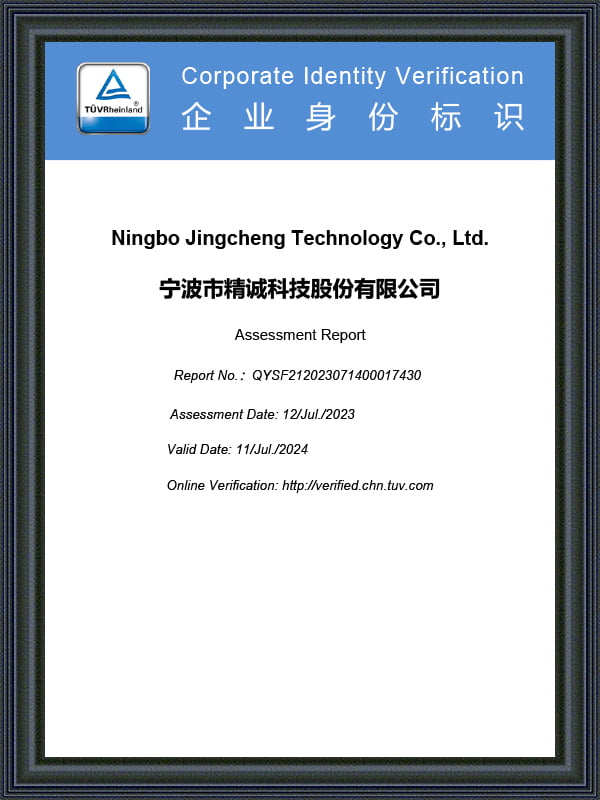
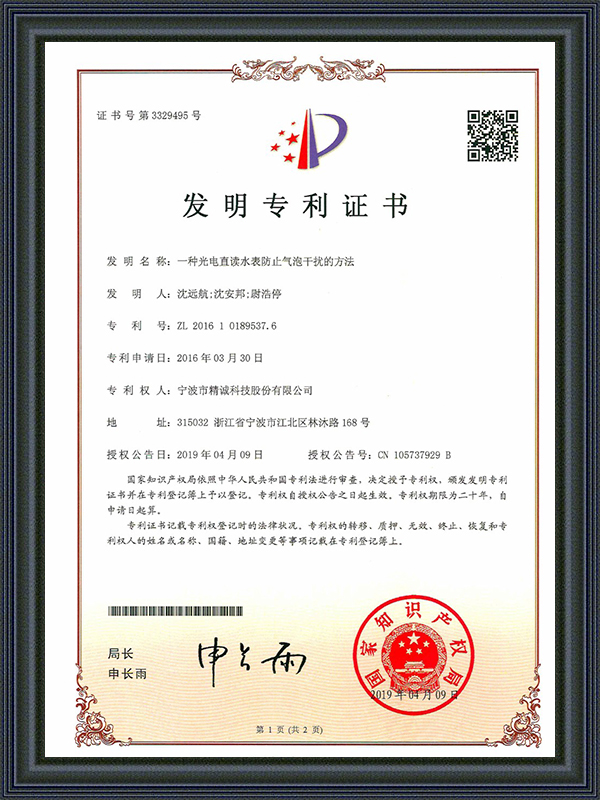
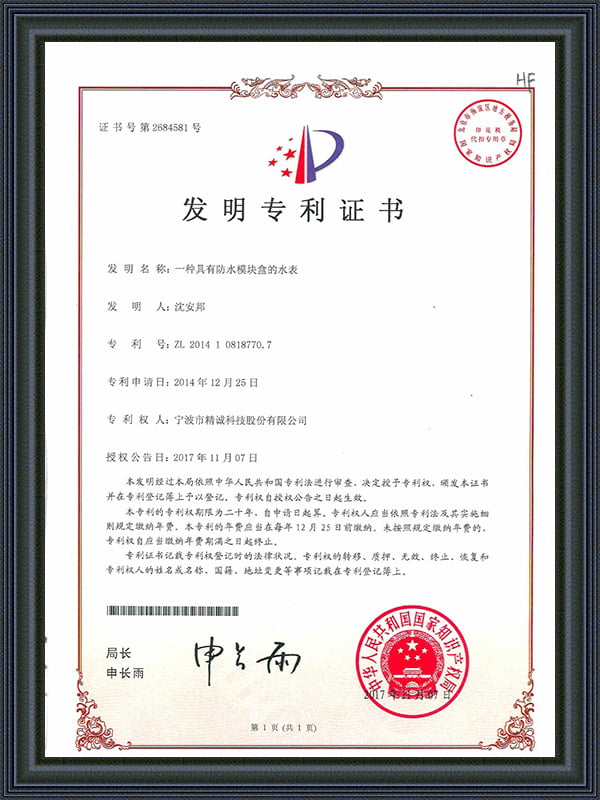
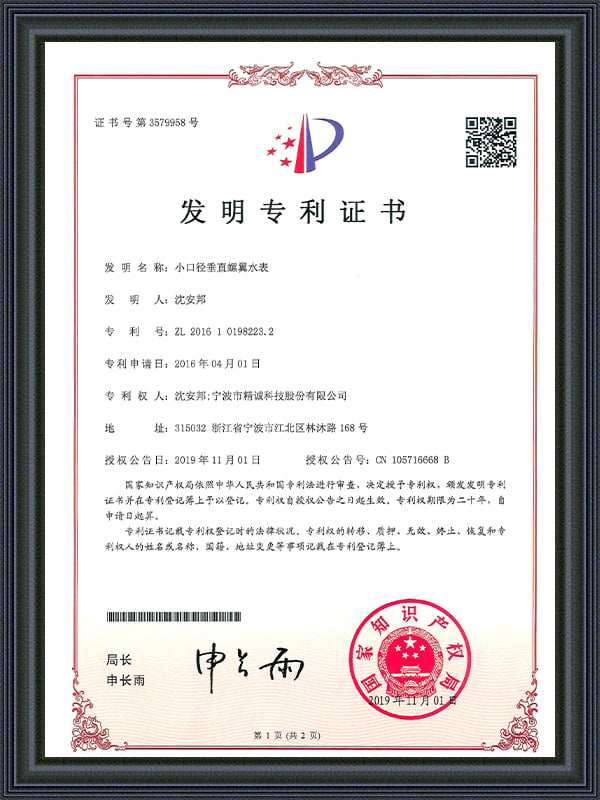
Keyture Meter is located in Picturesque Jiangbei Investment Park, NINGBO, CHINA. It is a comprehensive high-tech China Removable Element Woltman Water Meter Manufacturers and Custom Removable Element Woltman Water Meter Factory that integrates scientific research & development, production, sales, and service. Established in 2002 as a manufacturer and exporter of water meters for more than 22 years. The factory covers an area of 40 acres (30,000 square meters), 200 staff, 100+ types of products, product capacity of 5 million per year. Its product range covers single jet, multi-jet, volumetric piston type, Woltman type, IC card intelligent water meter, remote control water meter, optoelectrical reading direct remote control water meter...
Yearly production capacity
Production Area
Works and inspectors
Production experience
Excellent product with exquisite craftsmanship
Customization
We have a strong R&D team, and we can develop and produce products according to the drawings or samples the customers offered.
Cost
We are a professional manufacturer and also have our own processing machinery. So we can offer good prices and good products directly.
Quality
We have our own testing lab and advanced and complete inspection equipment, which can ensure the quality of the products.
Service
We focus on developing high-quality products for top-end markets. Our products are in line with international standards, and are mainly exported to Europe, America, Africa, Asia and other destinations around the world.
Capacity
Our annual production capacity is over 5 million units. We can meet the needs of different customers with different purchase quantities.
Shipment
We are about 35 kilometers away from Ningbo Port. It is very convenient and efficient to ship goods to any other countries.
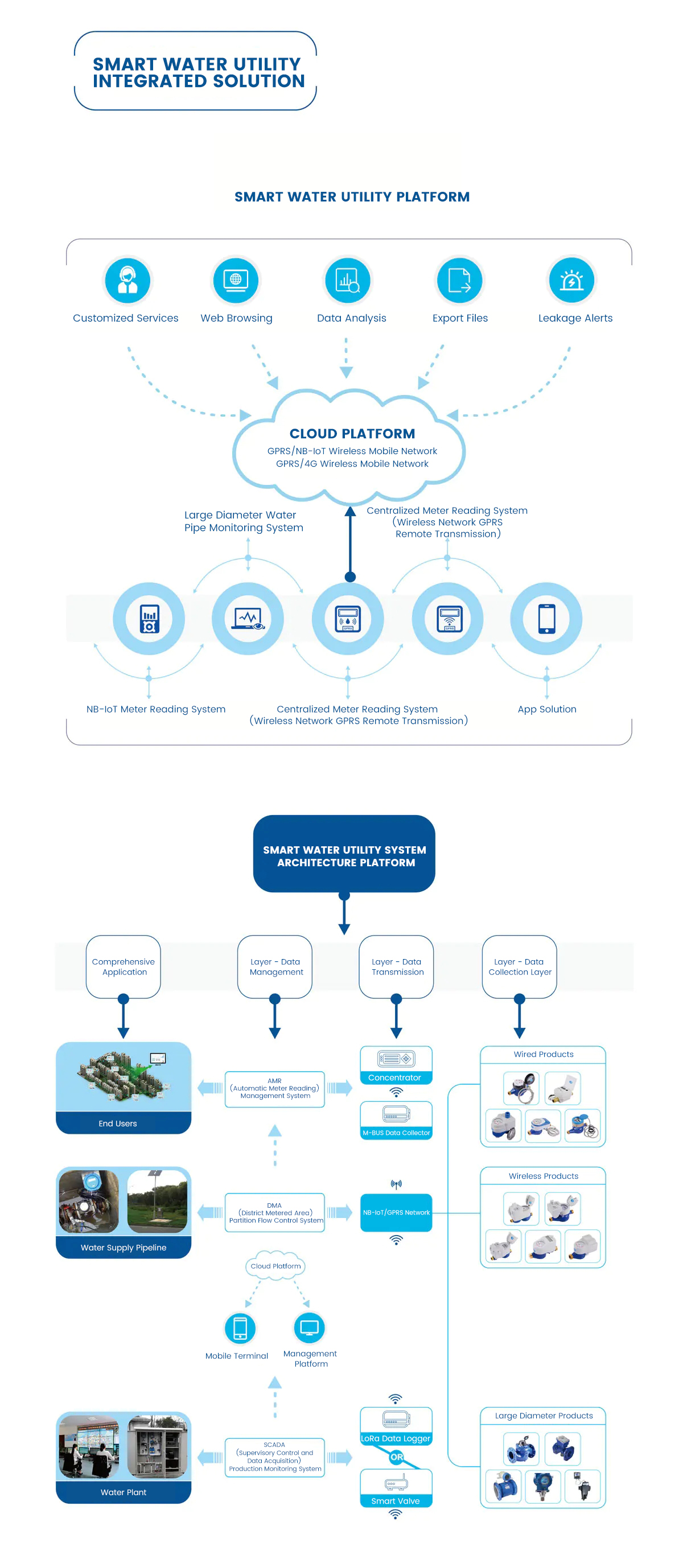
From mechanical meters to smart AMR/AMI systems — we provide end-to-end water metering solutions tailored to your project.
Most valuable for utilities and industrial sites that operate many bulk meters and plan regular servicing.
Install the meter in a horizontal pipe with the register facing up, and leave enough vertical clearance above the cover to lift the insert out. The required lift height is listed in the dimension table, and the chamber hatch should be wide enough for the insert and any hoist or tripod.
Provide a short isolation arrangement — valves upstream and downstream, and a drain point — so that the meter can be depressurised for insert exchange. A bypass is useful on critical lines. Fit a strainer upstream where debris is expected, and use a dismantling joint if the body must occasionally be removed.
Record the serial numbers of body and insert in the asset register at commissioning. Seal the cover with a lead wire and label the chamber with the insert’s calibration date. Keep a log of exchanges so the workshop can track each insert through its refurbishment cycle.
To exchange an insert: isolate the line and release the pressure, remove the lead seal, loosen the cover bolts in a cross pattern, lift the cover and register together and withdraw the insert vertically. Inspect the seat and O-ring, clean the seat with a lint-free cloth and fit a new O-ring. Lower the calibrated replacement into the seat, check the locating pins have engaged and refit the cover.
Tighten the cover bolts gradually to the specified torque in a cross pattern, re-pressurise slowly while venting air, check for leaks and compare the register with a portable reference or the next billing reading. Reseal the cover and log the exchange.
In the workshop, the removed insert is cleaned, inspected, fitted with new bearings and rotor as needed, rebalanced and recalibrated across Q1 to Q4. It is then certified and returned to the spare pool. A well-run pool can cycle several inserts per body over the body’s life.
The measuring mechanism can be removed and replaced without removing the meter body from the pipeline. This saves time, avoids pipework stress and flange leaks and lets utilities service bulk meters with a pool of calibrated spares.
Typically a few hours including isolation, exchange, re-pressurisation and leak checks. Fixed designs often need a full day or more, because the whole meter must be unbolted and lifted.
Yes, within the same size and model. They fit a common machined seat. The calibration shift between bodies is small, typically within ±0.5%, and is stated in the interchangeability data.
The insert arrives with a calibration certificate. Many utilities do a quick comparison against a portable reference or bulk billing data after installation. A full in-situ test is optional but recommended for critical points.
Yes, if you have a workshop with a test rig and trained staff. We supply refurbishment kits with bearings, rotors and seals, and procedures for balancing and calibration. Alternatively, return inserts to us for refurbishment.
A common rule is one spare per ten meters of the same size, depending on service plans and criticality. For critical points, hold one spare per site. We can recommend a pool size for your fleet.
A bypass is recommended for continuous supply points. It lets you remove the insert without interrupting supply. Where a short outage is acceptable, isolation valves and a drain are enough.
The cover is sealed with a lead wire or tamper-evident seal. Any breach is visible at the next inspection, and the insert serial number is recorded, so substituting a different insert is detectable.
DN50 to DN300 as standard, with larger sizes on request. Each size has its own insert, and inserts are not interchangeable between sizes.
No. The insert is calibrated and certified. The carrier, seat and O-ring seal are designed so that the flow path is identical to a fixed design and the removable feature adds no metrological uncertainty beyond the stated interchange shift.
Yes. The register on the insert accepts pulse, M-Bus, LoRaWAN or NB-IoT heads. The communication head moves with the register, or can be left on the body if a separate coupling is used.
With clean water, five to eight years before bearings and rotor need refurbishment. The insert can be refurbished several times. The body typically lasts 15 years or longer.
Send us the number of meters by size, workshop capability and servicing plan. Our engineers will recommend the right removable element configuration and spare-insert pool, with price and lead time.

Address: No.168,LinMu Rd.,Zone B, Jiangbei investment Park, Ningbo, Zhejiang,China
Tel: +86-0574-83090480/+86-18892665118
Fax: +86-0574-83021045
Email: [email protected]
Web: https://www.keyturemeter.com/
Quick Links
Product
Mobile terminal
 Custom Removable Element Woltman Water Meter Manufacturers