 English
 Español
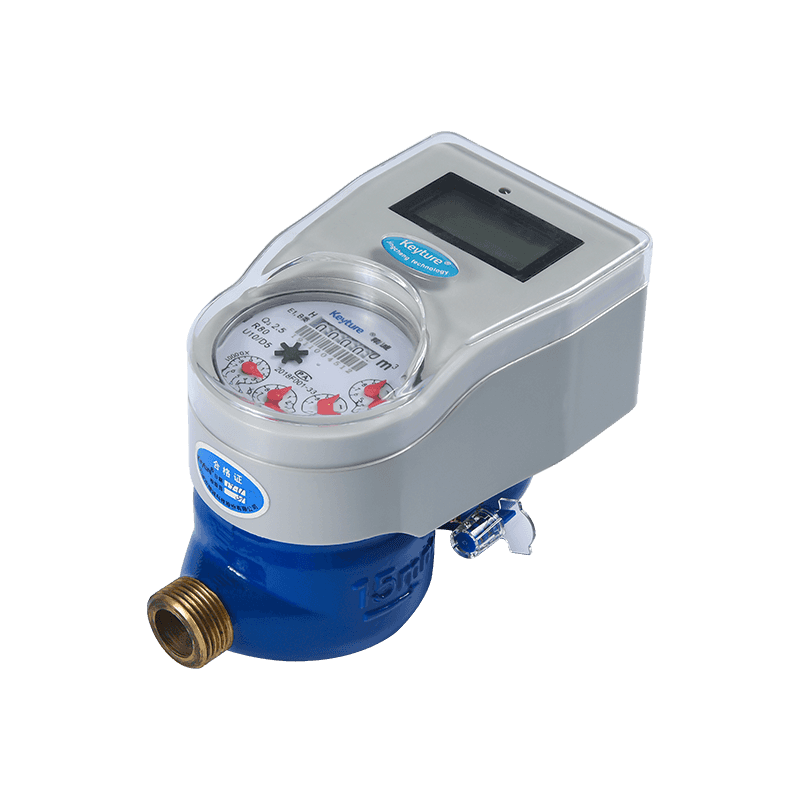
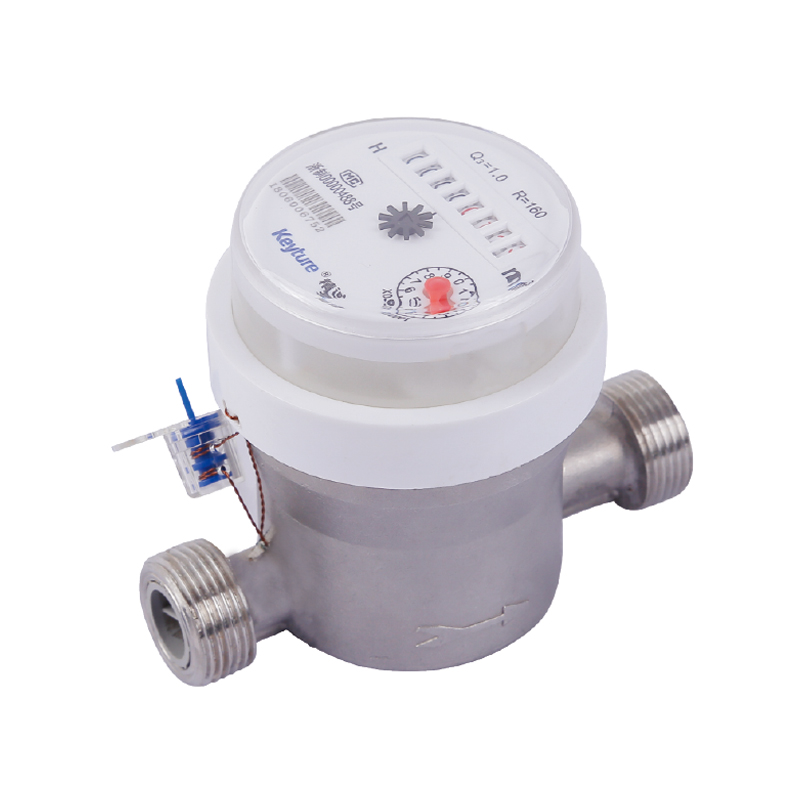
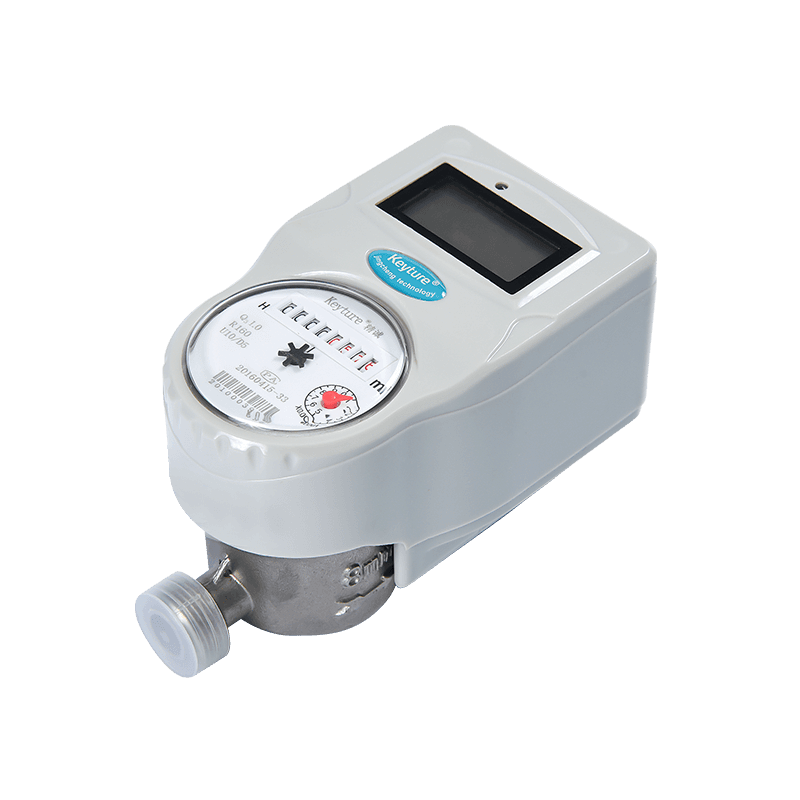
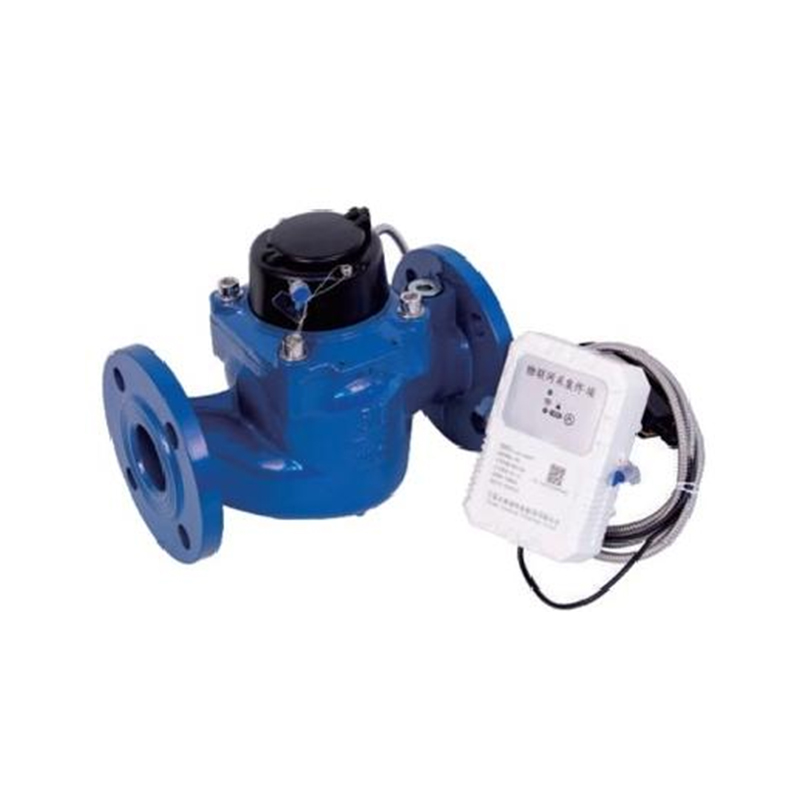
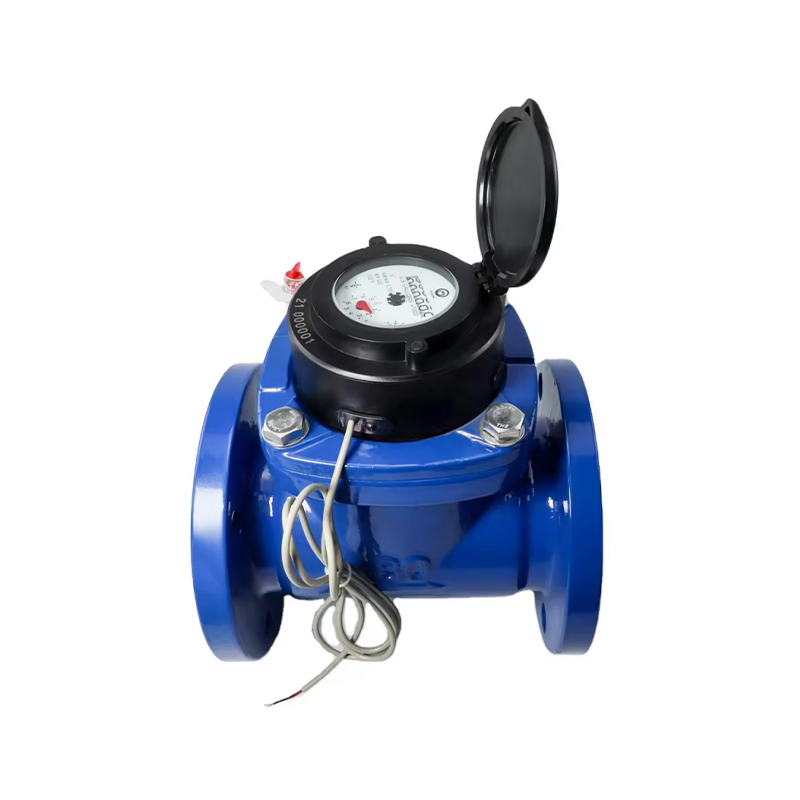
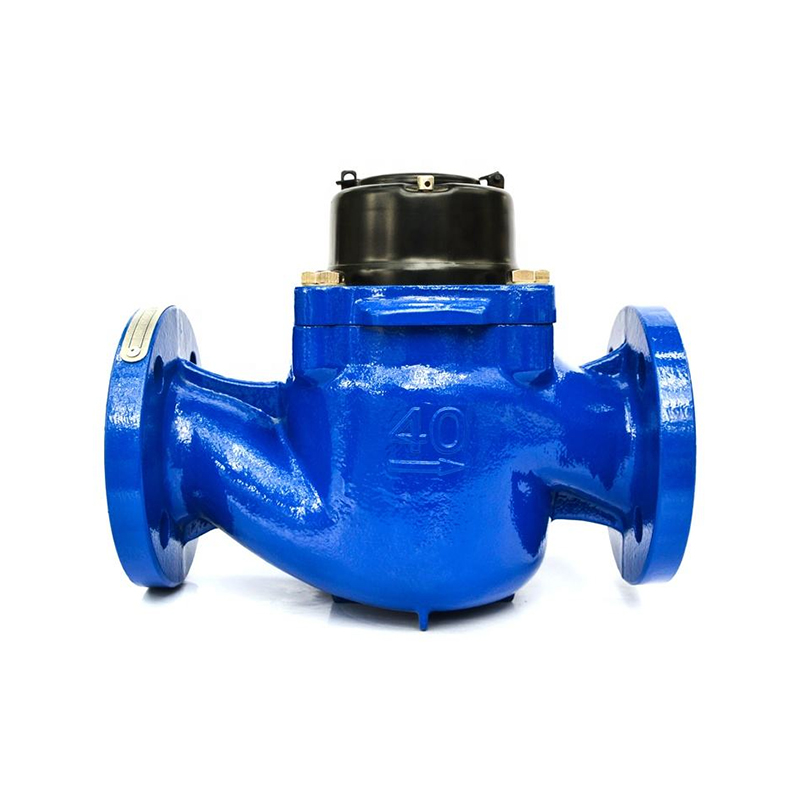
Low Head Loss at High Flow
Axial helical flow passes straight through the meter with minimal turbulence. Head loss at permanent flow is typically ≤ 0.025 MPa, preserving network pressure in large mains and pumping systems.

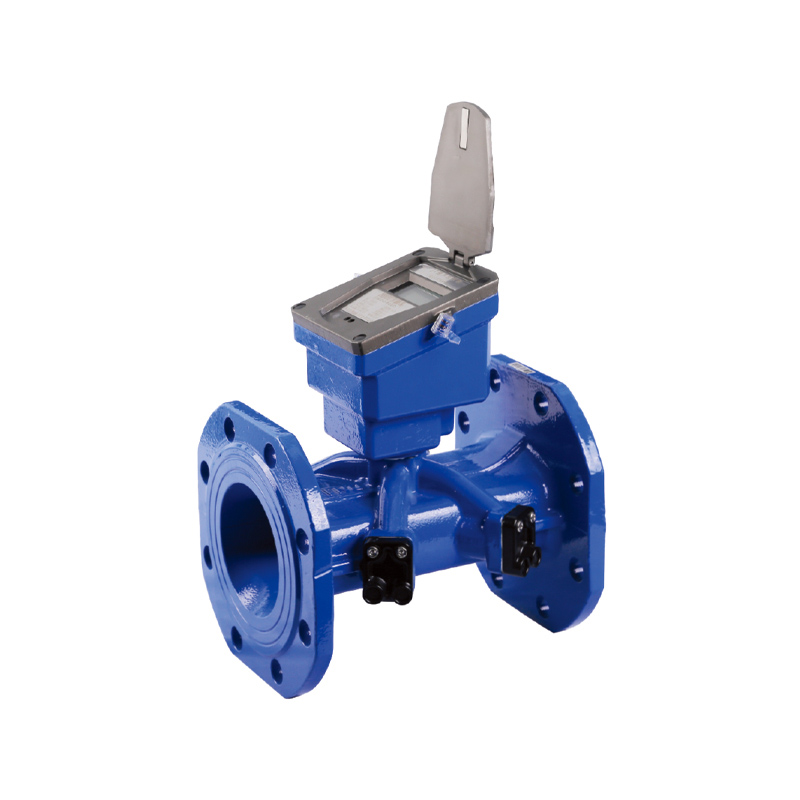
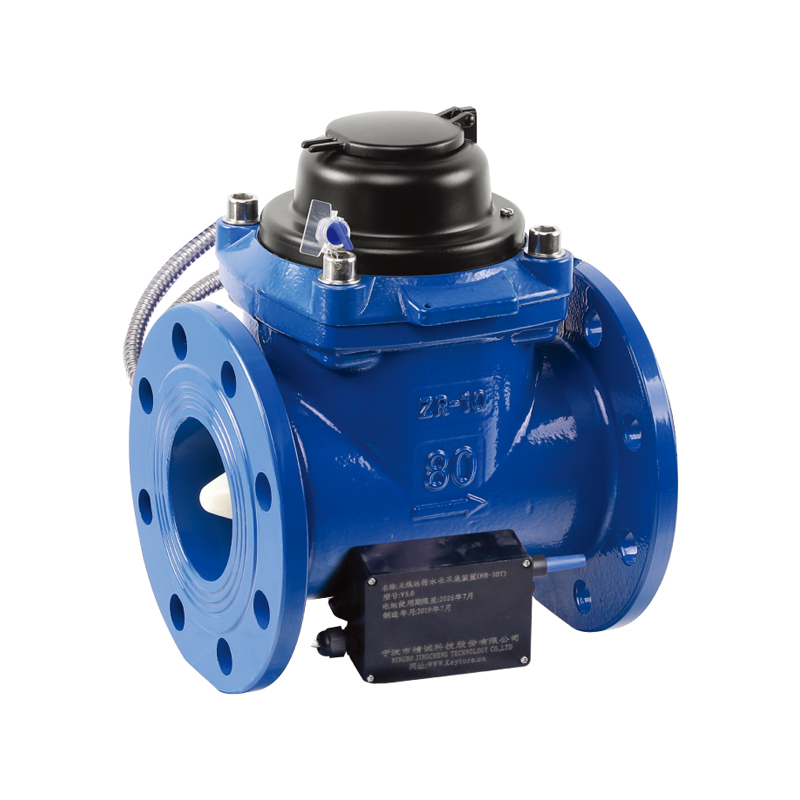
A large-diameter axial turbine meter for bulk supply points, district metered areas and industrial mains — built for high flow, low head loss and in-line service of the measuring insert.
Woltman helix rotor · flanged body · dry-type register
A Woltman type bulk water meter is a large-diameter velocity meter named after the German engineer Reinhard Woltman, who introduced the helical-vane turbine principle in the 18th century. A free-spinning helix rotor is mounted in line with the pipe axis, so the entire stream passes straight through the meter with minimal deflection. The rotor speed is directly proportional to the mean water velocity, and each revolution corresponds to a fixed volume. A gear train, driven through a magnetic coupling or a mechanical drive shaft, converts rotor revolutions into a cumulative volume reading on a dry-type register. Because the water flows axially rather than being redirected through jets or around a chamber, the design handles very high flow rates at a low pressure loss.
This axial-flow geometry is what separates Woltman meters from the multi jet and single jet designs used on domestic connections. In bulk metering, the priority is not the smallest possible starting flow but the ability to measure large volumes with stable accuracy, low head loss and high mechanical robustness. A Woltman rotor operates at modest rotational speeds, reducing bearing wear and allowing the meter to measure continuous high flow for years without recalibration. The measuring insert is a replaceable module — rotor, bearing and flow straightener — which can be removed from the body without cutting the pipeline. This is a major service advantage in large mains where isolating and re-plumbing a DN200 or DN300 pipe would take hours or days.
Woltman meters are supplied in two main configurations: the horizontal (WP) type with the rotor axis parallel to the pipe, and the vertical (WS) type, in which the rotor axis is perpendicular to the flow. Our range covers DN50 to DN300 with flanged connections to PN10 and PN16, Class 2 accuracy per ISO 4064 / OIML R49 and range ratios up to R100 (R160 on request). Each meter comes with a dry-type register that can be rotated through 360° for easy reading, a rated pulse output, and optional integrated communication modules. They are the standard choice for district metering areas, bulk supply points, industrial plants, irrigation mains and anywhere that tens or hundreds of cubic metres per hour need to be measured accurately.
Key takeaway: The helical rotor lets large volumes pass with low head loss. The replaceable measuring insert lets utilities service a bulk meter without cutting the main. Woltman is the proven standard for bulk water.
Six engineering advantages that keep Woltman meters the first choice for bulk water measurement.
Axial helical flow passes straight through the meter with minimal turbulence. Head loss at permanent flow is typically ≤ 0.025 MPa, preserving network pressure in large mains and pumping systems.
Permanent flow Q3 ranges from 40 m³/h at DN50 to over 1,600 m³/h at DN300. A single Woltman meter replaces multiple smaller meters on bulk supply points, simplifying the installation and billing.
The rotor, bearings and straightener form a cartridge that can be unbolted and replaced through the top cover. Servicing takes hours instead of days and does not interrupt the pipeline if a bypass is fitted.
The register head turns through 360°, so the dial can face the reader regardless of whether the meter is installed in a pit, on a wall or above a vault. A magnetic coupling isolates the dial from the wet zone.
Hard-wearing ceramic or tungsten-carbide bearings and a balanced rotor reduce wear at continuous high flow. Meters operate for years at industrial duty with stable calibration.
Pulse output, encoder head and integrated M-Bus, LoRaWAN or NB-IoT modules can be fitted to the same register, connecting bulk points to SCADA and AMI platforms.
Standard configuration below. Orientation, flange standard, temperature range and communication options can be adapted to your market requirements.
| Parameter | Specification |
|---|---|
| Standard | ISO 4064 / OIML R49 |
| Meter type | Woltman helix rotor, axial flow, velocity type |
| Orientation types | WP horizontal (rotor axis parallel to pipe) / WS vertical |
| Nominal diameter | DN50 – DN300 (2" – 12") |
| Accuracy class | Class 2, R100 standard / R160 optional |
| Water temperature | 0.1 °C – 50 °C (cold water); up to 90 °C hot water version |
| Working pressure | PN10 standard / PN16 on request |
| Pressure loss | ≤ 0.025 MPa at Q3 |
| Body material | Cast iron or ductile iron with epoxy coating |
| Rotor | Engineered polymer or stainless steel helix |
| Bearings | Tungsten carbide / ceramic, water lubricated |
| Register | Dry-type, magnetically coupled, 360° rotatable |
| Connection | Flanged, EN 1092-2 PN10 / PN16 (ANSI / JIS on request) |
| Straight pipe | 5 × DN upstream, 3 × DN downstream recommended |
| Pulse output | Optional reed, Hall or Wiegand, 10 L / 100 L / 1 m³ per pulse |
| Protection | IP65 standard; IP68 register on request |
Q4 is the overload flow, Q3 the permanent flow, Q2 the transitional flow and Q1 the minimum flow, all expressed in m³/h.
| Nominal Diameter | Q4 Overload | Q3 Permanent | Q2 Transitional | Q1 Minimum | Range Ratio | Reading Range |
|---|---|---|---|---|---|---|
| DN50 (2") | 50 | 40 | 0.64 | 0.4 | R100 | 0.01 – 9,999,999 m³ |
| DN80 (3") | 125 | 100 | 1.6 | 1 | R100 | 0.01 – 9,999,999 m³ |
| DN100 (4") | 200 | 160 | 2.56 | 1.6 | R100 | 0.01 – 9,999,999 m³ |
| DN150 (6") | 500 | 400 | 6.4 | 4 | R100 | 0.1 – 99,999,999 m³ |
| DN200 (8") | 787.5 | 630 | 10.08 | 6.3 | R100 | 0.1 – 99,999,999 m³ |
| DN250 (10") | 1250 | 1000 | 16 | 10 | R100 | 0.1 – 99,999,999 m³ |
| DN300 (12") | 2000 | 1600 | 25.6 | 16 | R100 | 0.1 – 99,999,999 m³ |
Values shown for R100, horizontal (WP) type. R160 versions, vertical (WS) types, hot water models and alternative flange standards are available — tell us your flow profile and we will confirm the correct size, since oversizing can push minimum flow above actual night demand.
Bulk meters carry high financial weight, so each Woltman meter is verified and documented to the strictest practice of the markets we serve.
Defines Class 2 accuracy, test points and marking for cold potable water meters, including large Woltman sizes. Each meter is verified at Q1, Q2 and Q3.
Pattern approval covering accuracy, pressure loss, endurance and flow-disturbance effects. Installation conditions U5 / D3 are validated for each size.
Standard drilling to EN 1092-2 PN10 / PN16. ANSI B16.5 Class 150, JIS 10K and AS 4087 drillings are available for global projects.
EU MID Module B + D approval for Woltman meters, with orientation marks H or V and the corresponding installation class.
Internal and external fusion-bonded epoxy coating suitable for potable water contact, with NSF/ANSI 61 or WRAS certificate on request.
Meters up to DN300 are calibrated on a weighing or master-meter test rig, with certificates detailing errors at multiple flows, per serial number.
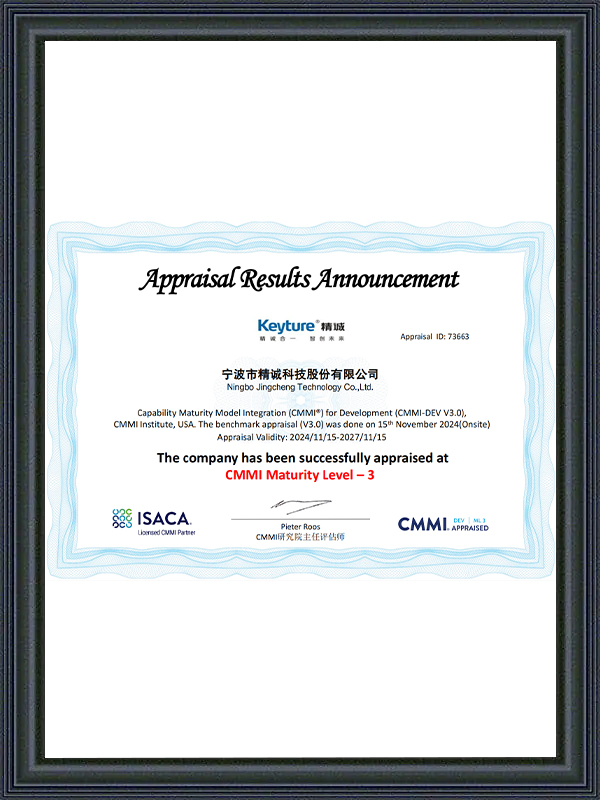
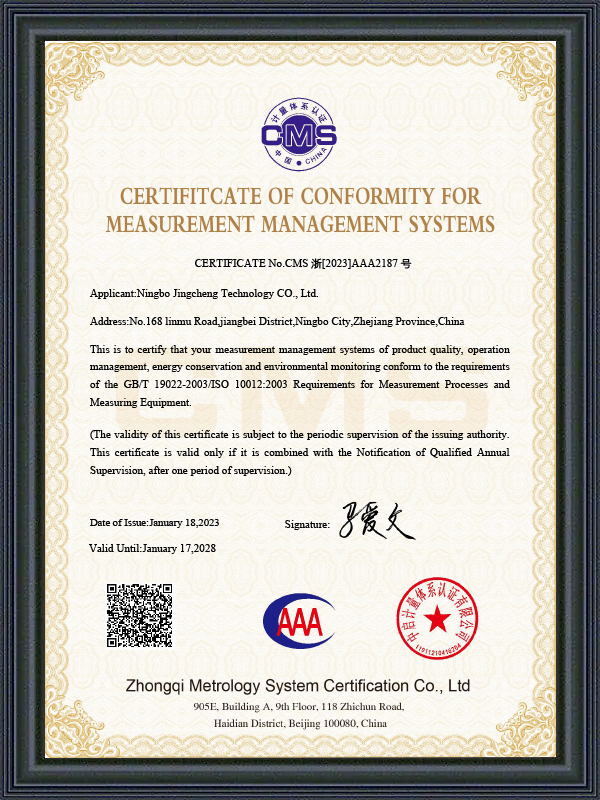
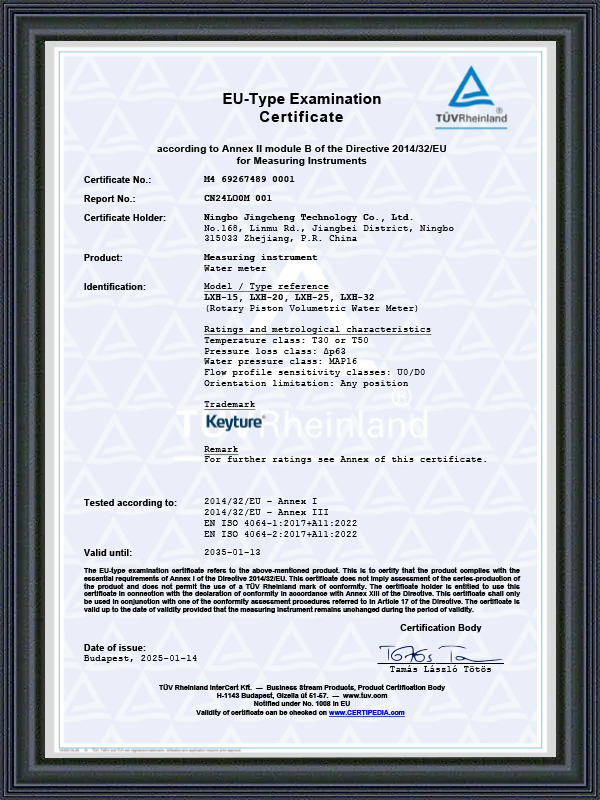
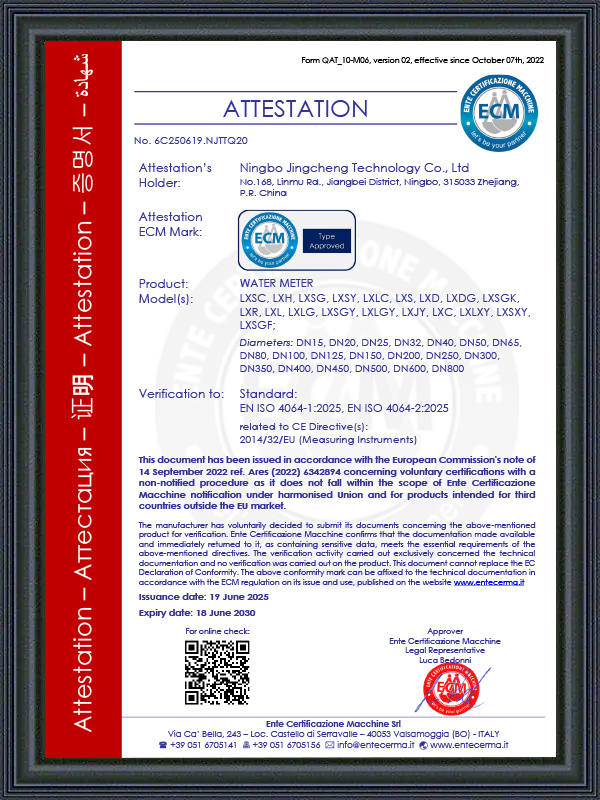
Two engineering ideas define this meter: how an axial helix rotor measures high flow, and how a modular measuring insert is serviced.
Water enters the meter body through a flow straightener, which removes large-scale swirl before the stream reaches the rotor. The helical rotor then spins freely on its axis, with the speed of rotation closely proportional to the mean axial velocity. A magnetic coupling transmits rotor revolutions to the register without a dynamic seal in the water zone.
Since all of the water flows straight along the pipe axis, the rotor acts like a ‘water wheel’ in a pipe with very low hydraulic resistance. This provides a wide dynamic range, a low pressure drop at high velocity and high repeatability. Straight pipe recommendations (typically 5 × DN upstream and 3 × DN downstream) protect the rotor from disturbed flow.
The rotor, bearing assembly and flow straightener form a single cartridge that is bolted into the body. By removing the cover, technicians can lift out the insert as a unit and replace it with a newly calibrated spare, leaving the cast body in the pipeline. Utilities with a bypass or isolating valves can do the exchange in hours, while the main is only briefly isolated.
The dry register sits above the cover and is isolated from water by the magnetic coupling. It can be rotated through 360° and replaced without affecting the wet parts. Together, the cartridge and register design reduce downtime and spare-part cost, which matters because a DN200 body is heavy and expensive to remove.
Measured performance data for the Woltman type bulk water meter. Use these charts to confirm pressure loss, metrological accuracy and installation dimensions before specifying.
Figure 1 — Head loss curve (MPa vs. flow m³/h)
The chart shows pressure loss across the Woltman meter at DN50 to DN300. The axial rotor design gives a low-resistance flow path, so losses at permanent flow stay at or below 0.025 MPa for all sizes. This is about one third of the head loss of a comparable multi jet meter.
Figure 2 — Accuracy error curve (Class 2, R100, Q1–Q4)
The Woltman error curve typically shows a small dip at low flow, due to bearing friction on a large rotor, followed by a positive plateau between Q2 and Q3. Errors remain within ±5% in the lower zone and ±2% in the upper zone, with a small negative drift near overload Q4.
Figure 3 — Installation dimensions (L × H × B × D)
| Size | L (mm) | H (mm) | B (mm) | D (flange OD) |
|---|---|---|---|---|
| DN50 | 200 | 245 | 220 | 165 |
| DN80 | 225 | 265 | 240 | 200 |
| DN100 | 250 | 285 | 260 | 220 |
| DN150 | 300 | 345 | 315 | 285 |
| DN200 | 350 | 400 | 370 | 340 |
| DN250 | 450 | 455 | 430 | 405 |
| DN300 | 500 | 510 | 480 | 460 |
Dimensions are for reference, PN16 flanges, horizontal WP type. Confirm exact values and weights with our engineering team before installation design.
Large-diameter metering can be done by several technologies. This comparison shows where a Woltman helix meter fits against multi jet, electromagnetic and ultrasonic options.
| Design Feature | Woltman (Helix Turbine) | Large Multi Jet | Electromagnetic / Ultrasonic |
|---|---|---|---|
| Unit purchase cost | Moderate | Moderate | Higher |
| Pressure loss at Q3 | Very low | Moderate | None (full bore) |
| Power requirement | None — mechanical | None | Battery or mains |
| Largest practical size | DN300 and above | About DN100 | DN2000 |
| Straight pipe need | 5 × DN upstream | Low | Depends — 3 to 10 × DN |
| Sensitivity to debris | Moderate | High | Low — no moving parts |
| Field serviceability | Replace insert without cutting pipe | Replace meter | Replace electronics |
| Best application | Bulk mains and DMAs | Mid-size branch lines | Dirty or wide-range flow |
This comparison is indicative. Actual performance depends on water quality, installation conditions and the specific product configuration. Contact our engineers for application-specific guidance.
Premium quality
since 2002
Coming From China, Marketing To The World
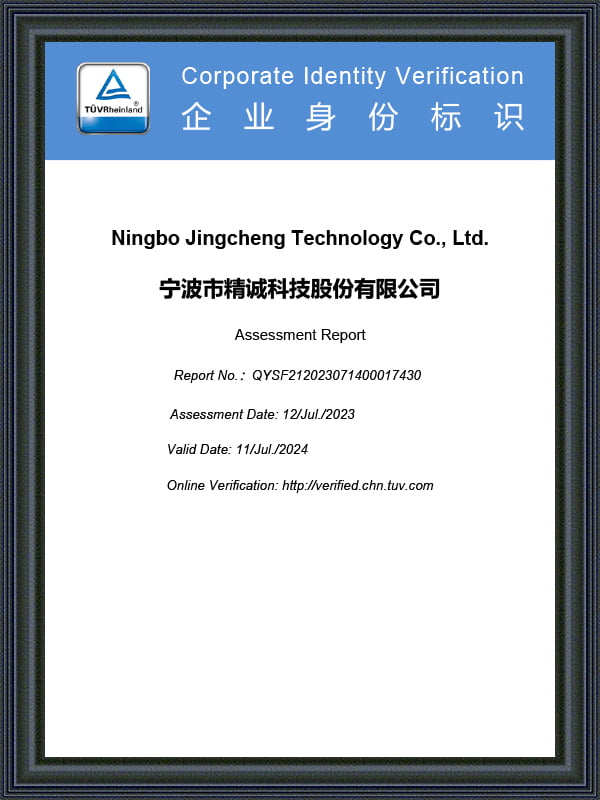
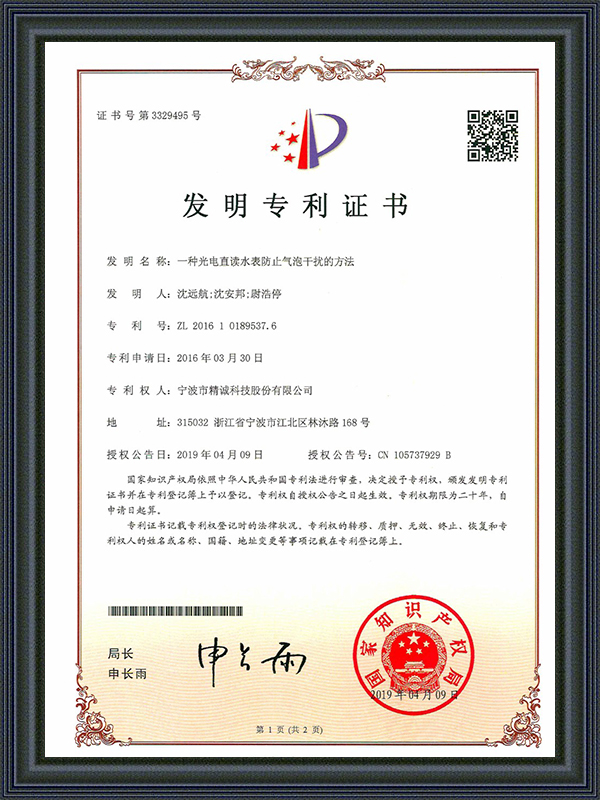
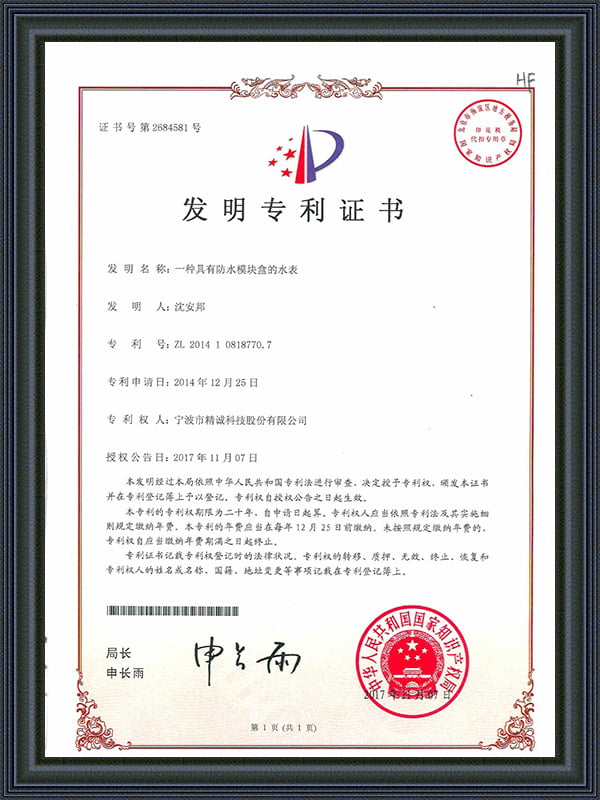
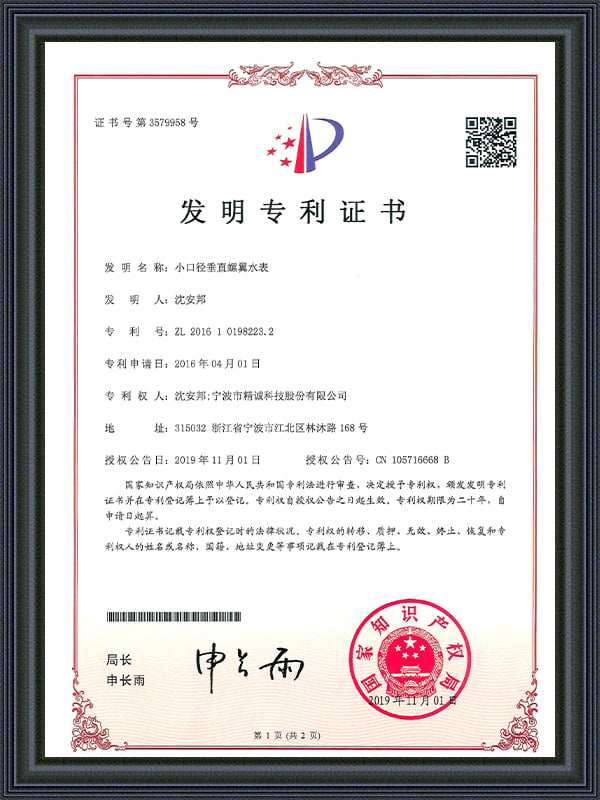
Keyture Meter is located in Picturesque Jiangbei Investment Park, NINGBO, CHINA. It is a comprehensive high-tech China Woltman Type Bulk Water Meter Manufacturers and Custom Woltman Type Bulk Water Meter Factory that integrates scientific research & development, production, sales, and service. Established in 2002 as a manufacturer and exporter of water meters for more than 22 years. The factory covers an area of 40 acres (30,000 square meters), 200 staff, 100+ types of products, product capacity of 5 million per year. Its product range covers single jet, multi-jet, volumetric piston type, Woltman type, IC card intelligent water meter, remote control water meter, optoelectrical reading direct remote control water meter...
Yearly production capacity
Production Area
Works and inspectors
Production experience
Excellent product with exquisite craftsmanship
Customization
We have a strong R&D team, and we can develop and produce products according to the drawings or samples the customers offered.
Cost
We are a professional manufacturer and also have our own processing machinery. So we can offer good prices and good products directly.
Quality
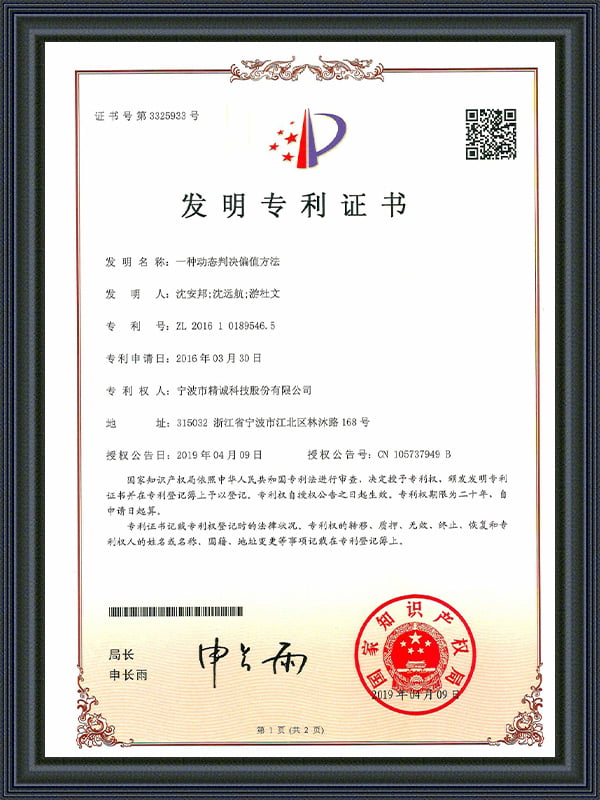
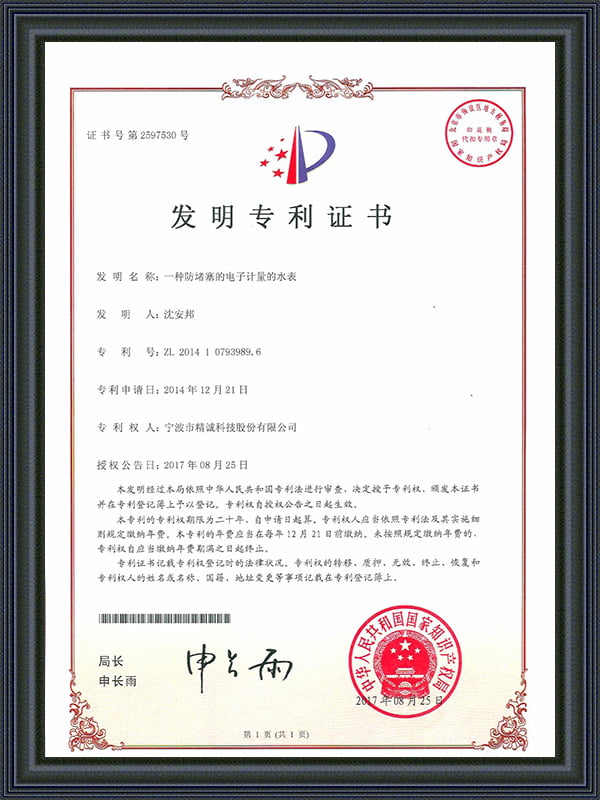
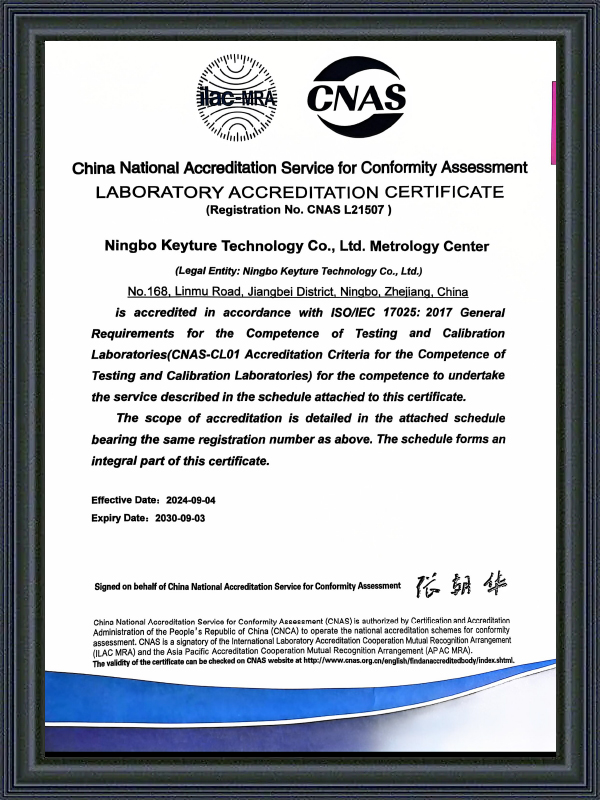
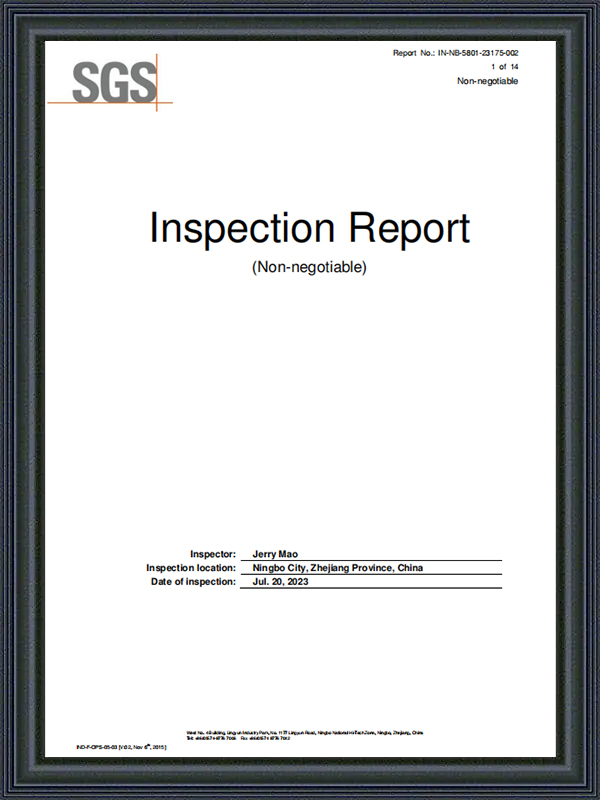
We have our own testing lab and advanced and complete inspection equipment, which can ensure the quality of the products.
Service
We focus on developing high-quality products for top-end markets. Our products are in line with international standards, and are mainly exported to Europe, America, Africa, Asia and other destinations around the world.
Capacity
Our annual production capacity is over 5 million units. We can meet the needs of different customers with different purchase quantities.
Shipment
We are about 35 kilometers away from Ningbo Port. It is very convenient and efficient to ship goods to any other countries.
From mechanical meters to smart AMR/AMI systems — we provide end-to-end water metering solutions tailored to your project.
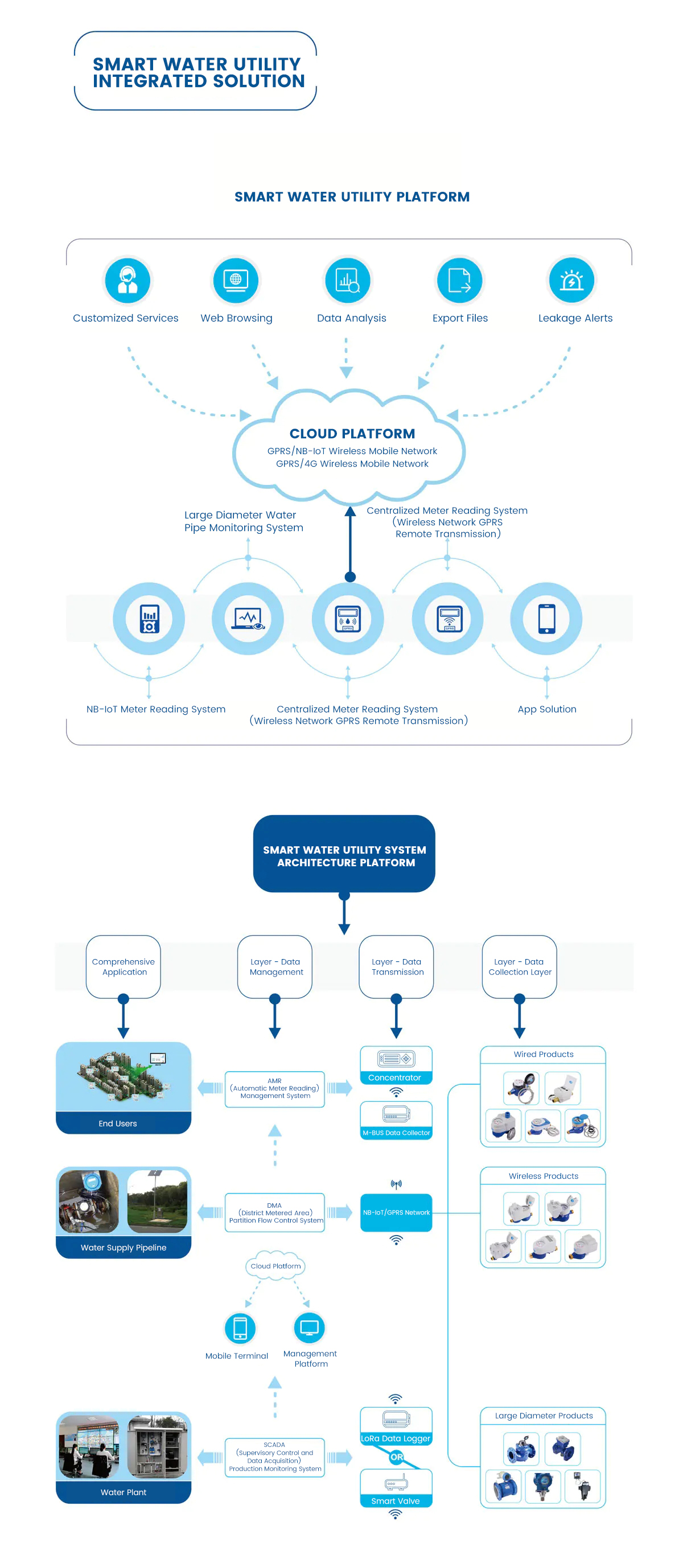
Used wherever large volumes must be measured accurately and the pressure budget is tight.
Install the Woltman meter with at least five pipe diameters of straight pipe upstream and three downstream, free from valves, bends and reducers. Large rotors are sensitive to swirl and asymmetric velocity, and a short disturbed inlet can shift the error curve by several percent at partial load.
For horizontal (WP) meters, mount the meter with the register facing upward, and make sure the pipe remains full at all times. Vertical (WS) meters are designed for vertical pipelines with flow going up. A bypass with isolating valves is strongly recommended, so the measuring insert can be serviced without interrupting supply.
Support large meters on a rigid foundation to prevent pipe stress from loading the flanges. Use flange gaskets matched to the PN rating, tighten bolts in a cross-pattern, and flush the pipeline before commissioning. Always size the meter on flow range rather than pipe size — oversized meters under-register at night flow.
Woltman meters have no consumable parts apart from the bearings and rotor. Routine maintenance consists of visual inspection of the register, leak checks at the flanges, and periodic testing of accuracy against a reference meter. Many utilities verify bulk meters annually because even a one percent change in registration can represent large revenue.
When accuracy drifts, the measuring insert can be removed and replaced with a calibrated spare. The old insert is then returned to the workshop for bearing replacement and recalibration. Spare insert pools allow fleets of meters to be maintained at a fraction of the cost of replacing the body.
Service life is typically 10 to 15 years for the cast body and 5 to 8 years before the insert needs refurbishment, depending on water quality, flow profile and sand content. Keep upstream strainers or flow conditioners clean to protect the rotor.
The design is named after Reinhard Woltman, who developed the helical-vane turbine principle for measuring flow in channels and pipes. A modern Woltman meter uses a helical rotor mounted along the axis of the pipe, so the water flows straight through while turning the rotor in proportion to its speed.
WP (horizontal) meters have the rotor axis parallel to the pipe and the register on top. WS (vertical) meters have the rotor axis vertical and are used in vertical pipelines. Both types offer similar accuracy, but they are calibrated for their intended orientation and the position is marked on the dial.
The range covers DN50 to DN300 with flanged ends drilled to EN 1092-2 PN10 as standard and PN16 on request. ANSI, JIS and AS drillings can be provided. Larger sizes are available on request for special projects.
We recommend 5 × DN upstream and 3 × DN downstream of straight pipe, matching installation class U5 / D3. A flow straightener inside the meter reduces the sensitivity to disturbed inflow, but extra straight pipe improves accuracy for critical bulk billing points.
R100 is standard and suits most bulk meters. R160 gives a lower minimum flow for networks that need to measure night flows accurately. Always check Q1 and Q2 against the lowest realistic flow at the metering point before choosing the size.
Yes. The insert is bolted under the top cover and can be removed without disturbing the body flanges. A bypass or isolation valves are required to depressurise the meter during replacement, but the main pipe does not need to be cut.
No. The Woltman meter is fully mechanical and requires no electrical power. Optional pulse outputs are passive reed switches, while integrated communication modules are battery-powered or externally powered depending on the protocol.
Woltman meters tolerate moderate suspended solids better than piston or multi jet meters, but large debris and fibres can wrap the rotor. For raw water, specify a strainer upstream and consider ultrasonic or electromagnetic meters for very dirty flows.
At permanent flow Q3, pressure loss is ≤ 0.025 MPa for all sizes. Loss rises roughly with the square of flow, so a meter running at Q3 loses far less pressure than one at overload flow Q4.
Yes. Pulse output (reed, Hall or Wiegand) can feed data loggers and RTUs, and integrated modules provide M-Bus, LoRaWAN or NB-IoT connectivity. Data loggers record flow profiles for DMA analysis and non-revenue water detection.
Many utilities test bulk meters annually, or at least every two to three years, because they measure large volumes. A drift of one percent in a bulk meter can represent a major revenue or water-balance error. In-situ testing with a portable ultrasonic reference meter is common.
A hot water version up to 90 °C is available, using stainless steel or high-temperature polymer rotors and adapted bearings. Please specify the maximum operating temperature when ordering.
Send us the pipe size, flow range, pressure rating and communication needs. Our engineers will recommend the right Woltman configuration, with price and lead time.

Address: No.168,LinMu Rd.,Zone B, Jiangbei investment Park, Ningbo, Zhejiang,China
Tel: +86-0574-83090480/+86-18892665118
Fax: +86-0574-83021045
Email: [email protected]
Web: https://www.keyturemeter.com/
Quick Links
Product
Mobile terminal
 Custom Woltman Type Bulk Water Meter Manufacturers