 English
 Español
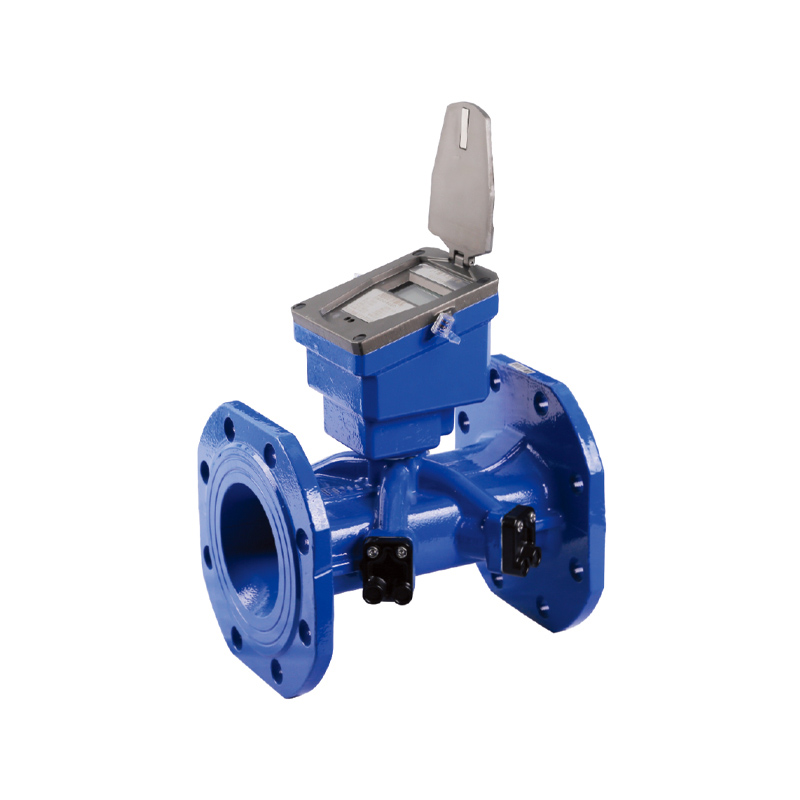
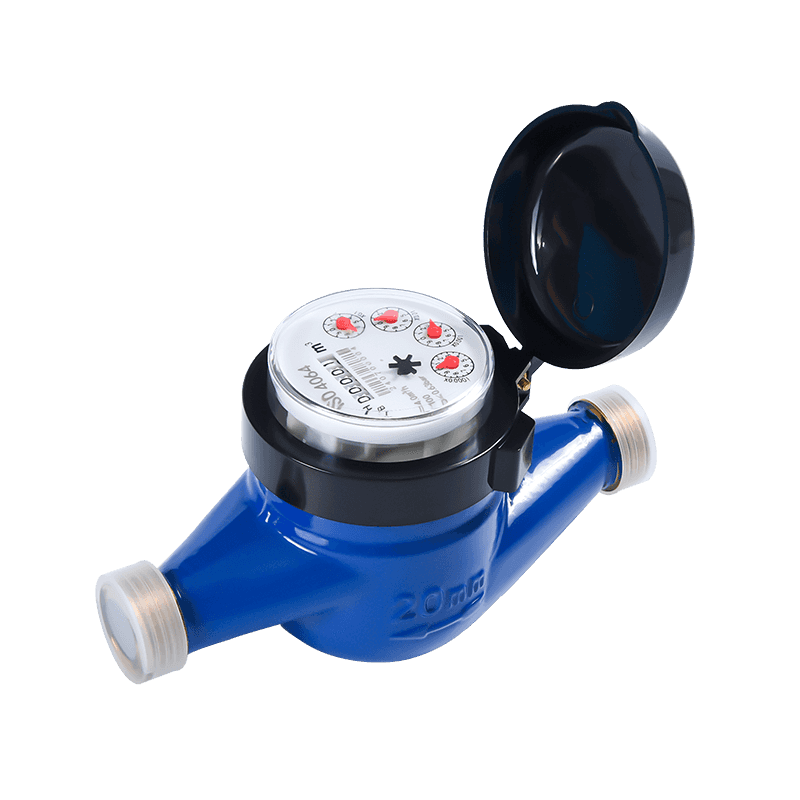
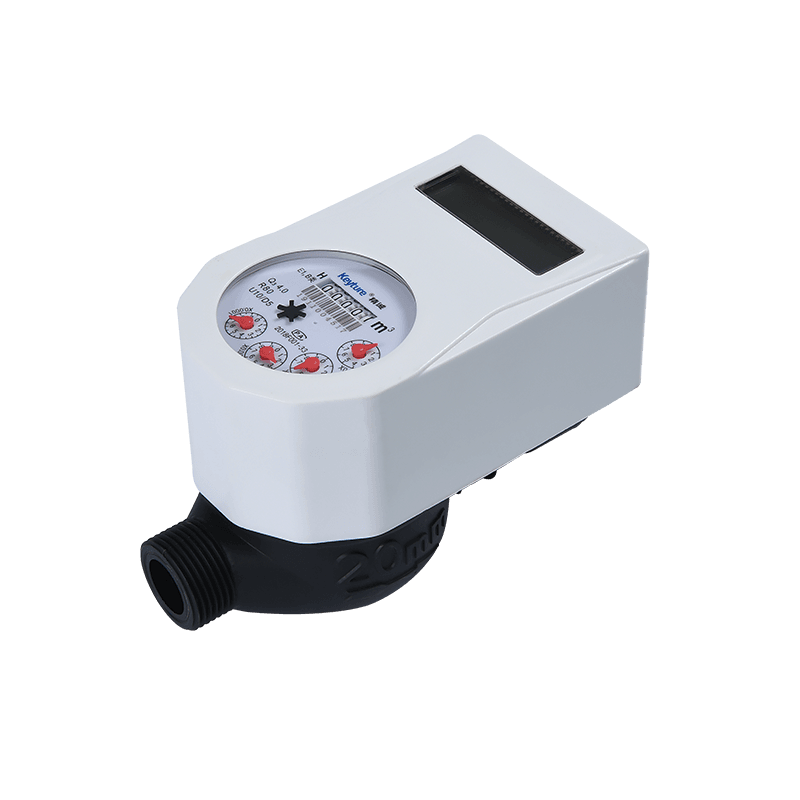
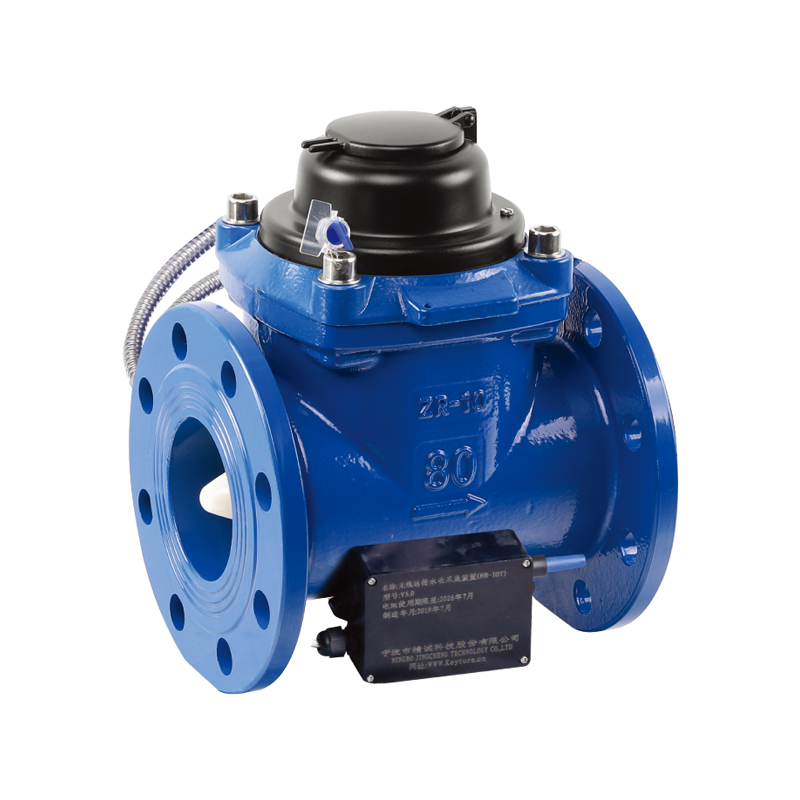
Zero Pressure Loss
The tube is completely unobstructed and as smooth as the pipe itself. There is no pressure drop to add to pumping cost, which matters on long mains and in energy-conscious plants.

A full-bore electromagnetic water meter for large pipelines and tough industrial duty — no moving parts, no pressure loss and accurate through sand, silt and slurry.
Electromagnetic · full bore · flanged · IP68 sensor
An industrial large diameter water meter is a full-bore electromagnetic flow meter built for pipelines from DN200 up to DN1000 and beyond, where a mechanical turbine would be too heavy, too restrictive or too fragile. It works on Faraday’s law of induction: when a conductive liquid such as water moves through a magnetic field, it generates a voltage proportional to its velocity. Coils on either side of the measuring tube create a pulsed magnetic field across the flow, a pair of electrodes touching the liquid picks up the induced voltage and the transmitter converts it into velocity, flow rate and totalised volume. Because the tube is completely unobstructed and has no moving parts, the meter passes the entire flow, tolerates debris and produces essentially no pressure loss.
This is the meter for the duty cycles that defeat mechanical designs. Industrial water carries sand, fibres, slurry, scale flakes and sometimes chemicals. Cooling circuits at power stations pump thousands of cubic metres per hour. Raw water intakes lift river water with silt and weed. Wastewater and treated effluent contain suspended solids and gas bubbles. Each of these conditions jams, erodes or fouls a Woltman rotor or turbine, but an electromagnetic meter measures straight through them. The tube is lined with polyurethane, rubber, PTFE or ceramic to match the fluid, electrodes are made of stainless steel 316L, Hastelloy or titanium, and grounding rings or electrodes establish a stable reference potential. Accuracy is typically ±0.5% of reading over a 100:1 turndown, from 0.1 to 10 m/s.
Industrial large diameter meters are supplied with flanged ends from DN200 to DN1000 in PN10, PN16 or PN25, a compact or remote transmitter, and a wide set of outputs: 4–20 mA, pulse, relay alarms, RS485 Modbus RTU, HART and optional GPRS or NB-IoT remote reading. Power comes from 85–265 V AC or 24 V DC, with battery-powered and solar versions for remote sites. The sensor can be buried or submerged with IP68 protection and a remote transmitter. For water utilities, industrial plants, irrigation authorities and wastewater works, it combines a very wide measuring range with a full-bore, maintenance-free tube in diameters where mechanical meters are heavy, costly and short-lived.
Key takeaway: Sand, silt, scale, slurry and zero pressure loss — a full-bore electromagnetic tube measures through all of it. For large pipelines and dirty industrial water, there are no moving parts to fail.
Six advantages that make electromagnetic technology the standard for large-diameter and difficult water.
The tube is completely unobstructed and as smooth as the pipe itself. There is no pressure drop to add to pumping cost, which matters on long mains and in energy-conscious plants.
Sand, silt, fibres, scale and slurry pass through without jamming or wearing anything. The meter is chosen for raw water, wastewater and cooling water where turbines fail.
Measures from 0.1 m/s to 10 m/s, a 100:1 range, with ±0.5% of reading accuracy. One meter covers both night-time leakage flow and peak daytime demand.
Polyurethane for abrasive water, rubber for general use and PTFE for chemicals and high temperature. Electrodes in 316L, Hastelloy or titanium match the corrosive environment.
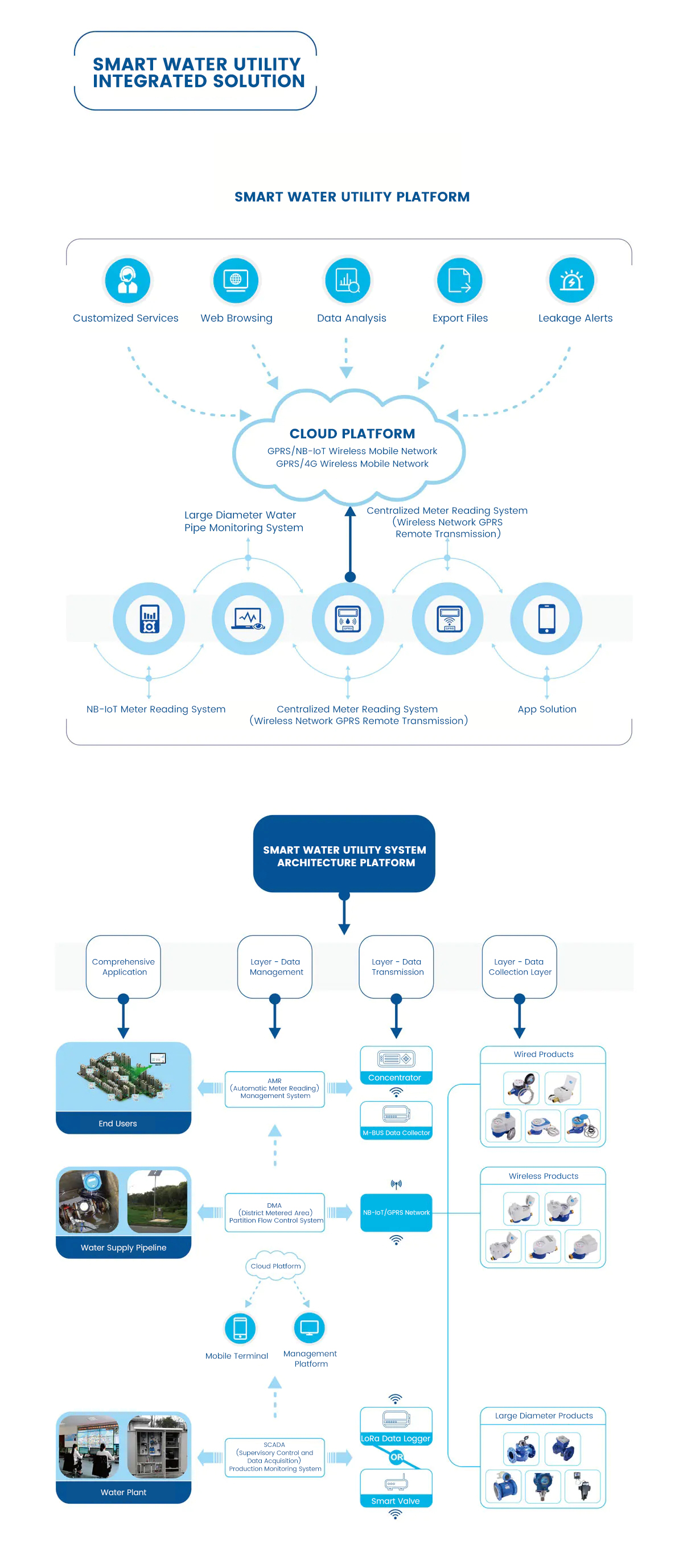
Mains, DC, battery or solar power, with 4–20 mA, pulse, Modbus and HART outputs. Optional remote units send data to SCADA or a cloud platform.
With no bearings, rotors or seals to wear, the meter is verified rather than overhauled. Service life of 15 to 20 years is typical, with only periodic zero and insulation checks.
Standard configuration below. Liner, electrode material, power supply and outputs can be adapted to your plant requirements.
| Parameter | Specification |
|---|---|
| Standard | ISO 4064 / OIML R49 (water); ISO 6817 / OIML R117 (electromagnetic) |
| Meter type | Electromagnetic flow meter, full bore, compact or remote |
| Nominal diameter | DN200 – DN1000 (8" – 40"); larger on request |
| Accuracy | ±0.5% of reading (v ≥ 0.5 m/s); ±0.25% optional |
| Velocity range | 0.1 – 10 m/s, turndown 100:1 |
| Minimum conductivity | ≥ 20 µS/cm |
| Liner | Polyurethane / hard rubber / PTFE / ceramic |
| Electrodes | 316L stainless steel / Hastelloy C / titanium / tantalum |
| Medium temperature | -10 °C – 80 °C (rubber / polyurethane); up to 150 °C (PTFE) |
| Working pressure | PN10 / PN16 / PN25 flanged |
| Flange standard | EN 1092-1, ANSI B16.5, JIS 10K |
| Body material | Carbon steel with epoxy coating; stainless steel on request |
| Power supply | 85 – 265 V AC / 24 V DC / lithium battery / solar |
| Outputs | 4–20 mA, pulse, relay alarm, RS485 Modbus RTU, HART |
| Remote reading | GPRS / NB-IoT module optional |
| Display | Backlit LCD: flow, totalizer, velocity, alarms |
| Protection | Compact IP67; remote sensor IP68 |
Flow values are in m³/h at a velocity of 0.1 m/s (minimum), 1 m/s (typical), 3 m/s (recommended maximum for continuous duty) and 10 m/s (absolute maximum).
| Nominal Diameter | Flow at 0.1 m/s | Flow at 1 m/s | Flow at 3 m/s | Flow at 10 m/s | Turndown | Face-to-Face Length |
|---|---|---|---|---|---|---|
| DN200 (8") | 11.31 | 113.1 | 339.3 | 1131 | 100:1 | 350 mm |
| DN300 (12") | 25.45 | 254.5 | 763.4 | 2545 | 100:1 | 500 mm |
| DN400 (16") | 45.24 | 452.4 | 1357 | 4524 | 100:1 | 600 mm |
| DN500 (20") | 70.69 | 706.9 | 2121 | 7069 | 100:1 | 600 mm |
| DN600 (24") | 101.8 | 1018 | 3054 | 10178.760198 | 100:1 | 600 mm |
| DN800 (32") | 181 | 1810 | 5429 | 18095.573685 | 100:1 | 800 mm |
| DN1000 (40") | 282.7 | 2827 | 8482 | 28274.333882 | 100:1 | 1000 mm |
Flow values are calculated from the tube cross-section. Select the meter so that normal flow lies between 0.5 and 3 m/s — tell us your minimum night flow, normal flow, fluid and conductivity and we will confirm the correct size, liner and electrodes.
Large-diameter meters carry high financial and process importance, so certification covers metrology, pressure, materials and electromagnetic design.
Water meter accuracy classes and tests for static meters including electromagnetic types. Flow points are verified on large-volume calibration rigs.
Specifies how electromagnetic flowmeters are tested for conductive liquids in closed conduits, including zero stability, linearity and installation effects.
Every sensor is hydrostatically tested at 1.5 × PN, and flanges are drilled to EN 1092-1, ANSI B16.5 or JIS standards for direct connection.
Polyurethane, rubber and PTFE liners suitable for drinking water or industrial service. WRAS, NSF/ANSI 61 or ACS approvals can be provided for potable lines.
EMC and low-voltage directives for the transmitter, including immunity to variable-speed drive and switchgear noise common on industrial sites.
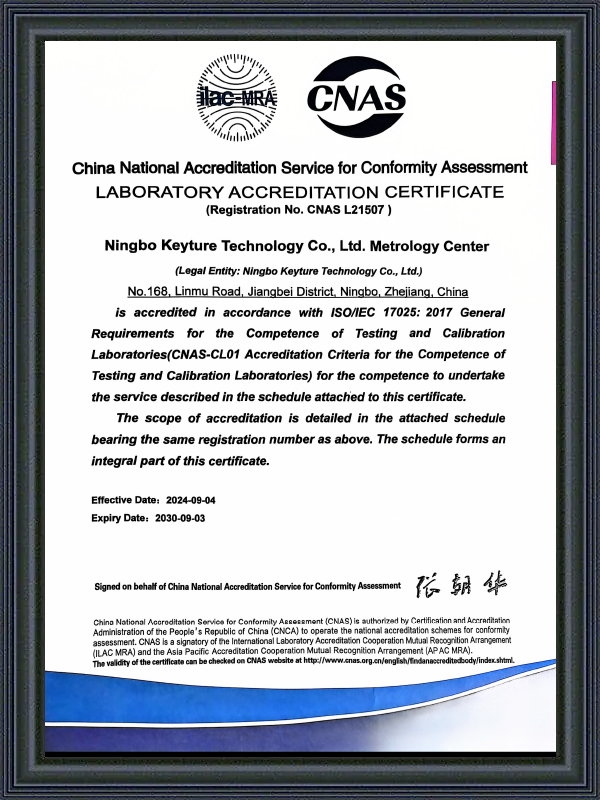
Meters up to DN300 are calibrated on a gravimetric rig; larger sizes are calibrated on a master-meter or volumetric tank, with a certificate for each serial number.
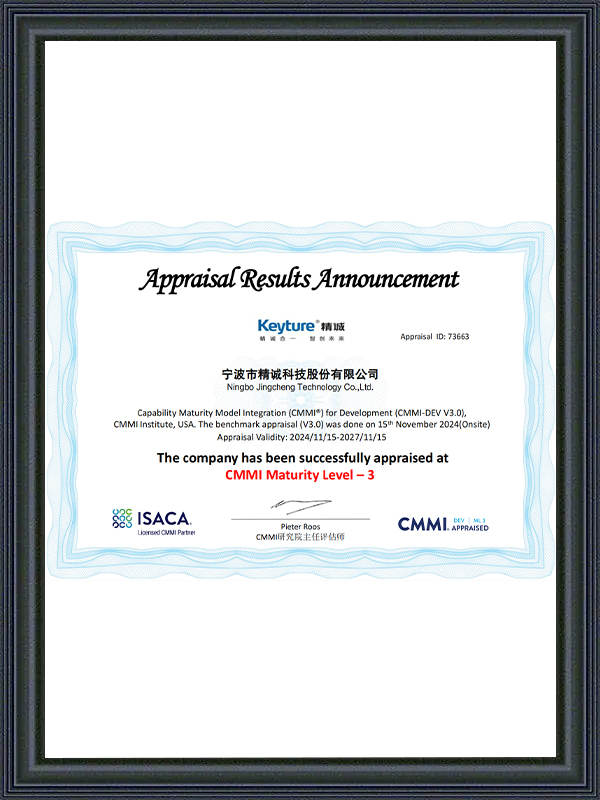
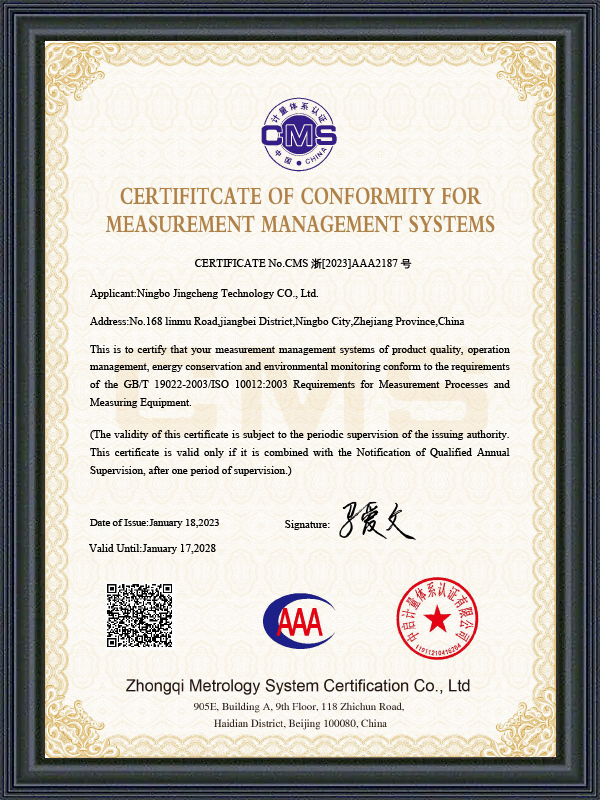
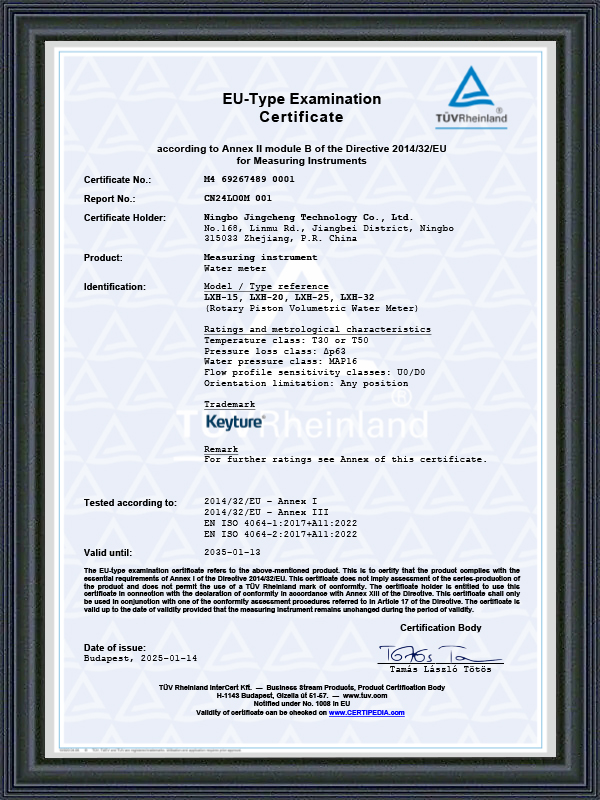
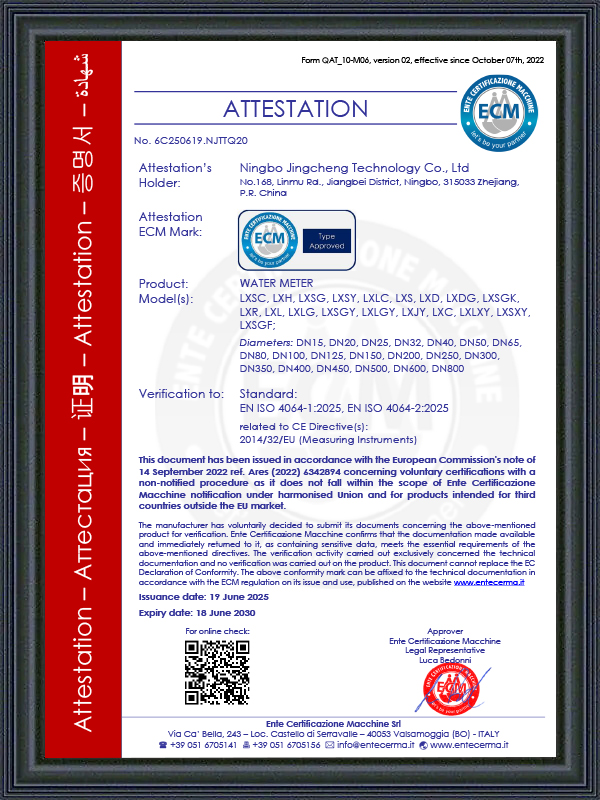

Two principles define this meter: how magnetism turns water velocity into a voltage, and how the lined tube and electrodes survive harsh water.
Coils mounted outside the measuring tube create a magnetic field perpendicular to the flow. As water, a conductor, moves through this field it induces a small voltage across the tube, proportional to its mean velocity. Two electrodes in contact with the water pick up this voltage, typically only a few millivolts, and the transmitter amplifies and digitises it.
The magnetic field is pulsed, reversing polarity many times per second, so the transmitter can separate the flow signal from electrochemical and electrical noise. The result is stable measurement at low flow and a reading that depends on velocity alone, not on temperature, density, viscosity or turbulence. Because velocity is averaged across the whole cross-section, the meter needs only 5 × DN upstream and 3 × DN downstream straight pipe.
The liner insulates the measuring tube electrically and protects the steel body from the fluid. Polyurethane resists abrasion from sand and silt; hard or soft rubber is general-purpose for potable, raw and process water; PTFE resists chemicals and higher temperatures. Electrodes are chosen to resist corrosion, from 316L stainless steel for clean water to Hastelloy or titanium for aggressive effluents.
A stable electrical reference is needed so that the small flow signal is not swamped by stray potentials in a plastic or lined pipe. Grounding rings or grounding electrodes in contact with the liquid provide this reference and are bonded to the sensor flanges. Empty-pipe detection and electrode coating alarms in the transmitter warn when the meter is not measuring correctly.
Measured performance data for the industrial large diameter water meter. Use these charts to confirm pressure loss, accuracy and installation dimensions before specifying.
Figure 1 — Head loss curve (MPa vs. flow m³/h)
The chart shows pressure loss across the electromagnetic sensor for DN200 to DN1000. The tube is the same diameter as the pipe with only a thin liner, so head loss is essentially that of an equal length of straight pipe — a few millibar at full flow.
Figure 2 — Accuracy error curve (±0.5% of reading, 100:1 turndown)
The error curve of an electromagnetic meter is nearly flat across the range, with a small increase in error only at the lowest velocities where the flow signal is small. Above 0.5 m/s, error remains within ±0.5% of reading, well inside the Class 1 limits of ±3% and ±1%.
Figure 3 — Installation dimensions (L × H × B × D)
| Size | L (mm) | H (mm) | B (mm) | D (flange OD) | Weight (kg) |
|---|---|---|---|---|---|
| DN200 | 350 | 430 | 340 | 340 | 65 |
| DN300 | 500 | 520 | 440 | 460 | 120 |
| DN400 | 600 | 630 | 540 | 580 | 210 |
| DN500 | 600 | 740 | 650 | 715 | 310 |
| DN600 | 600 | 840 | 750 | 840 | 430 |
| DN800 | 800 | 1050 | 960 | 1050 | 780 |
| DN1000 | 1000 | 1270 | 1180 | 1270 | 1250 |
Dimensions and weights are for reference, compact version with PN16 flanges. Confirm exact values with our engineering team before chamber design or lifting plan.
Large-diameter water can be measured by several technologies. This table compares electromagnetic with Woltman and clamp-on ultrasonic.
| Design Feature | Electromagnetic (Full Bore) | Woltman Turbine | Clamp-On Ultrasonic |
|---|---|---|---|
| Pressure loss | None — full bore | Low but measurable | None |
| Dirty or abrasive water | Excellent with PU liner | Rotor wear and jamming | Good |
| Moving parts | None | Rotor and bearings | None |
| Turndown | 100:1 | About 30:1 to 100:1 | Depends on velocity profile |
| Accuracy of reading | ±0.5% | ±2% (Class 2) | ±1% to ±3% field |
| Power requirement | Mains, DC or battery | None | Battery or mains |
| Unit purchase cost at DN300+ | Moderate | Lowest | Moderate |
| Best application | Industrial and wastewater mains | Clean potable bulk supply | Temporary or retrofit survey |
This comparison is indicative. Actual performance depends on fluid conductivity, installation conditions and the specific product configuration. Contact our engineers for application-specific guidance.
Premium quality
since 2002
Coming From China, Marketing To The World
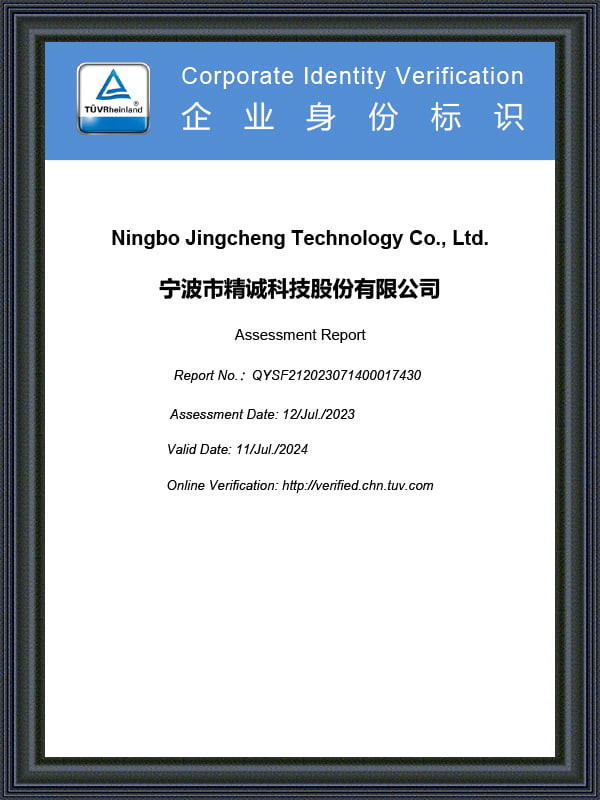
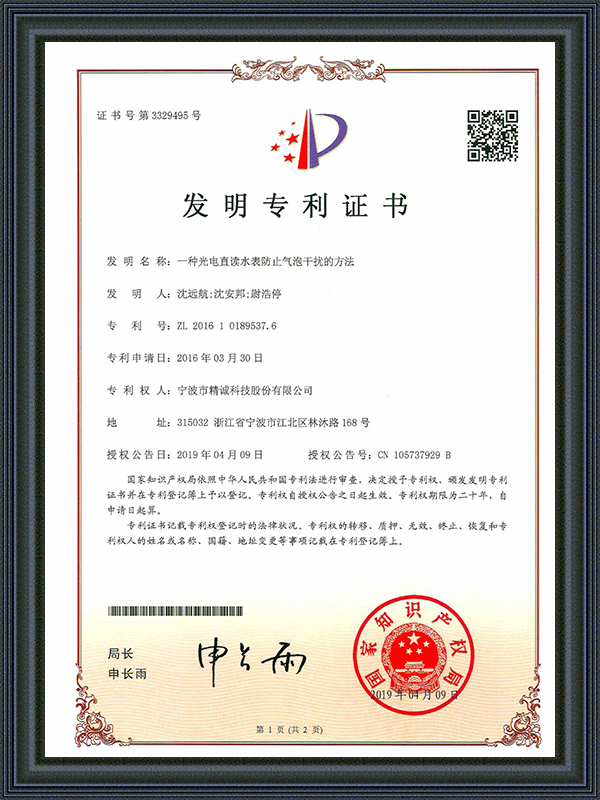
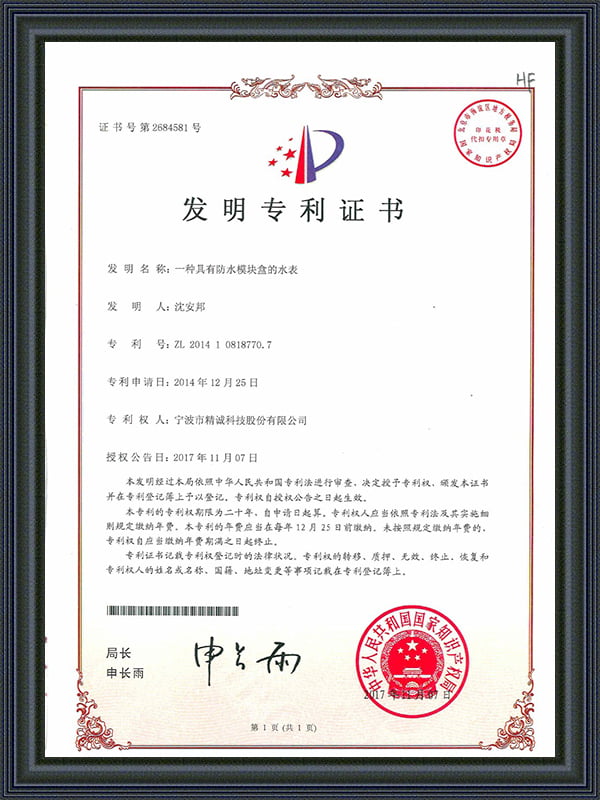
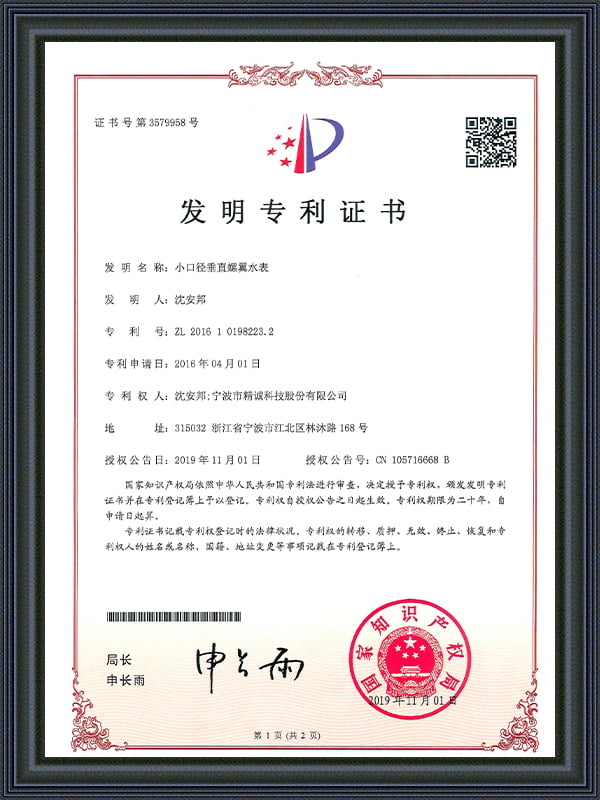
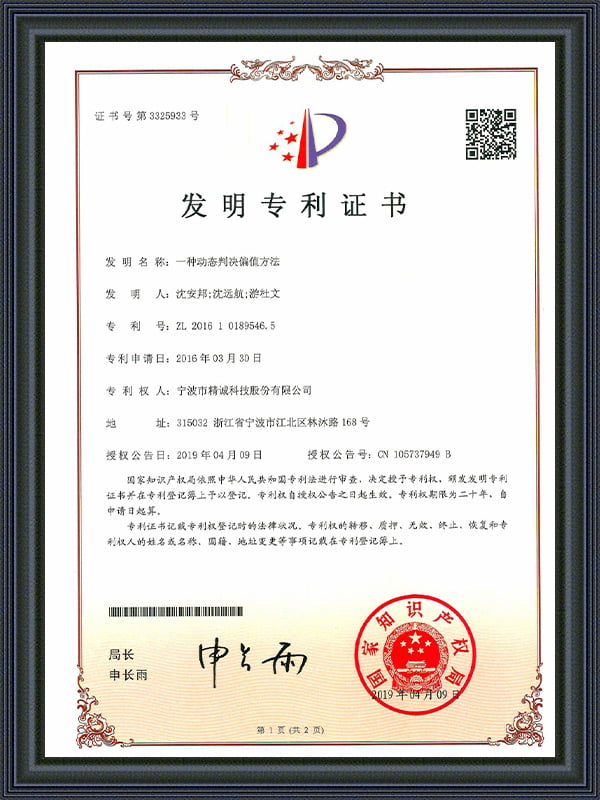
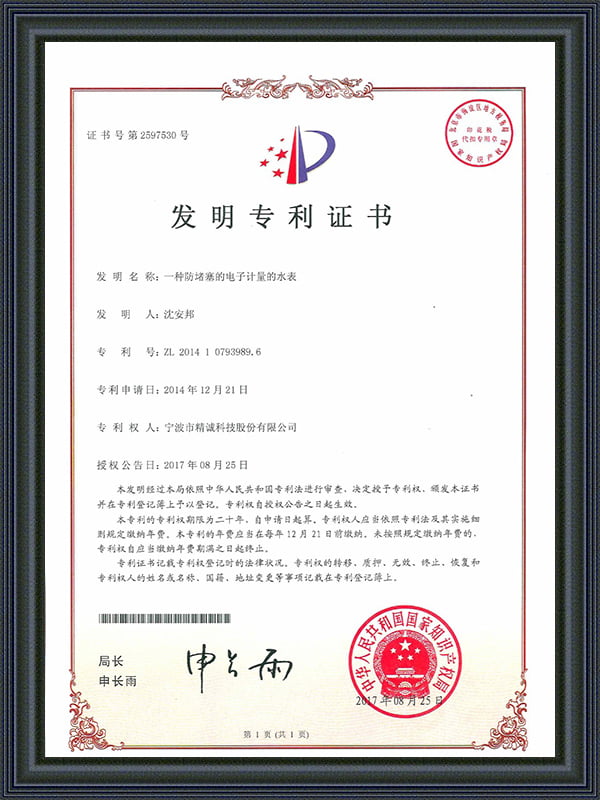
Keyture Meter is located in Picturesque Jiangbei Investment Park, NINGBO, CHINA. It is a comprehensive high-tech China Industrial Large Diameter Water Meter Manufacturers and Custom Industrial Large Diameter Water Meter Factory that integrates scientific research & development, production, sales, and service. Established in 2002 as a manufacturer and exporter of water meters for more than 22 years. The factory covers an area of 40 acres (30,000 square meters), 200 staff, 100+ types of products, product capacity of 5 million per year. Its product range covers single jet, multi-jet, volumetric piston type, Woltman type, IC card intelligent water meter, remote control water meter, optoelectrical reading direct remote control water meter...
Yearly production capacity
Production Area
Works and inspectors
Production experience
Excellent product with exquisite craftsmanship
Customization
We have a strong R&D team, and we can develop and produce products according to the drawings or samples the customers offered.
Cost
We are a professional manufacturer and also have our own processing machinery. So we can offer good prices and good products directly.
Quality
We have our own testing lab and advanced and complete inspection equipment, which can ensure the quality of the products.
Service
We focus on developing high-quality products for top-end markets. Our products are in line with international standards, and are mainly exported to Europe, America, Africa, Asia and other destinations around the world.
Capacity
Our annual production capacity is over 5 million units. We can meet the needs of different customers with different purchase quantities.
Shipment
We are about 35 kilometers away from Ningbo Port. It is very convenient and efficient to ship goods to any other countries.
From mechanical meters to smart AMR/AMI systems — we provide end-to-end water metering solutions tailored to your project.
Chosen for large pipelines and difficult water where mechanical meters are too heavy, too fragile or too restrictive.
Install the sensor in a section of pipe that is always full. Avoid the highest point of the pipeline and vertical downflow sections that can drain. Vertical upward flow is ideal. Provide at least 5 × DN of straight pipe upstream and 3 × DN downstream, and keep the meter away from large pumps, valves and bends that disturb the flow profile.
Grounding is critical. Bond the sensor flanges to the pipe with copper straps, fit grounding rings in plastic or lined pipe and make sure the transmitter earth is connected to the same potential. Keep cables away from power lines and variable-speed drive cabling, using shielded cable with correct earthing of the shield.
Support the pipe on both sides of the meter so the sensor carries no pipe load, and use full-face gaskets and cross-pattern bolt tightening. For buried or flooded installations, use the remote IP68 sensor with a potted cable joint and install the transmitter in a dry cabinet above ground.
An electromagnetic meter has almost no maintenance. Periodic checks include verifying zero flow with the pipe full and stopped, inspecting cable glands and grounding connections and reviewing diagnostic alarms for electrode coating or empty pipe. If electrodes become coated with grease, scale or deposits, they can be cleaned in place during a shutdown.
Verification can be performed in the field with an electronic verification tool that tests coil current, electrode resistance and transmitter linearity, giving a documented confidence check without removing the sensor. For high-value lines, in-situ comparison with a reference meter is common every few years.
With no wearing parts, service life of 15 to 20 years is typical. The liner is the part that ages most; a worn liner can be re-lined by the manufacturer. Transmitters can be upgraded or replaced independently of the sensor.
Coils create a magnetic field across the pipe. When water flows through the field, it generates a voltage proportional to its velocity. Electrodes pick up the voltage and the transmitter converts it into flow rate and totalised volume. There are no moving parts.
A minimum of about 20 µS/cm is needed. Drinking water, river water, wastewater and most industrial water meet this. Demineralised and very pure water is not suitable, and hydrocarbons and gases cannot be measured.
Typical accuracy is ±0.5% of reading above 0.5 m/s, with ±0.25% optional. Accuracy is maintained over a 100:1 turndown. Calibration is done on a water rig and a certificate is supplied with each meter.
Polyurethane is best for abrasive water with sand and silt. Rubber is a general-purpose liner for potable, raw and cooling water. PTFE is used for chemical and high-temperature applications. We can recommend the liner based on your fluid.
No meaningful loss. The tube is the same diameter as the pipe and only has a thin liner, so pressure drop is similar to a short length of straight pipe. This saves pumping energy compared with turbines.
We recommend 5 × DN upstream and 3 × DN downstream. Less is acceptable in some situations, with a small effect on accuracy. Avoid placing the meter immediately after pumps, partially open valves or double bends.
Yes. The remote version has an IP68 sensor and a potted cable that can be buried or submerged, while the transmitter is mounted above ground in a dry enclosure. Use proper grounding and cable glands for submerged use.
Mains power of 85 to 265 V AC, 24 V DC, a lithium battery pack and solar-powered versions are available. Battery and solar versions are used at remote sites without a grid connection.
4–20 mA, pulse, relay alarm, RS485 Modbus RTU and HART are available. GPRS or NB-IoT remote reading modules can be added for data transmission to SCADA or cloud platforms.
Empty pipe, air bubbles, poor grounding, coated electrodes and low conductivity are the main causes. The transmitter has alarms for empty pipe and electrode coating, and installation guidance reduces the risk.
An electronic verification tool tests coil current, electrode integrity and transmitter linearity, which gives a documented check without removing the sensor. For high-value points, comparison with a portable reference meter is also used.
Electromagnetic meters are available up to DN2000 and beyond on request. For sizes above DN1000, insertion electromagnetic or multi-path ultrasonic meters may also be considered for cost and installation reasons.
Send us the pipe size, fluid, flow range, conductivity and power supply. Our engineers will recommend the right industrial large diameter meter configuration, with price and lead time.

Address: No.168,LinMu Rd.,Zone B, Jiangbei investment Park, Ningbo, Zhejiang,China
Tel: +86-0574-83090480/+86-18892665118
Fax: +86-0574-83021045
Email: [email protected]
Web: https://www.keyturemeter.com/
Quick Links
Product
Mobile terminal
 Custom Industrial Large Diameter Water Meter Manufacturers