 English
 Español
Native PLC and SCADA Connection
Modbus RTU is built into almost every PLC, RTU and gateway. The meter appears as a set of registers that the master reads directly, with no vendor driver or protocol converter.

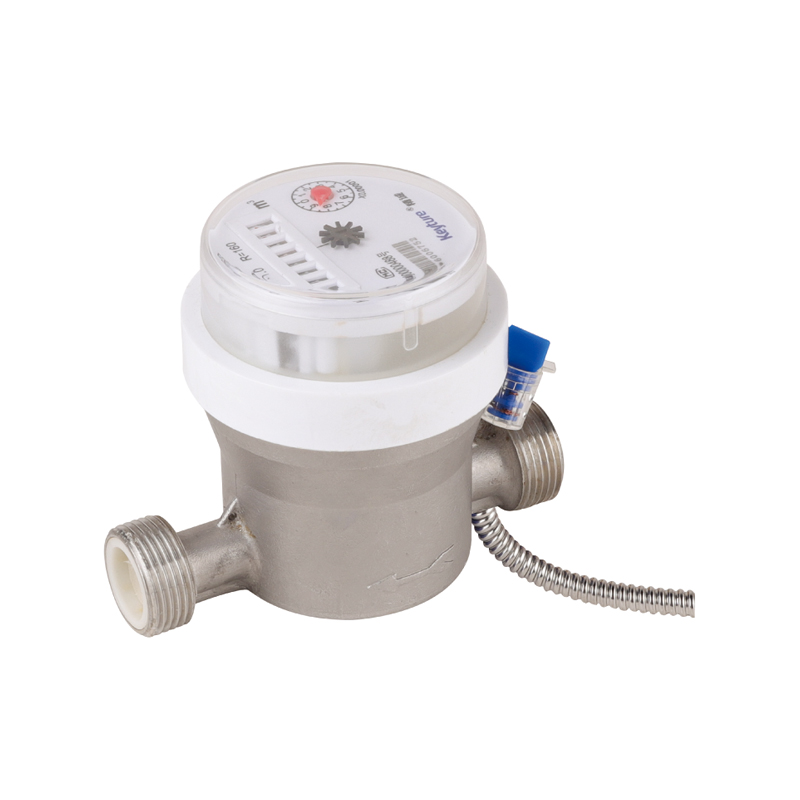
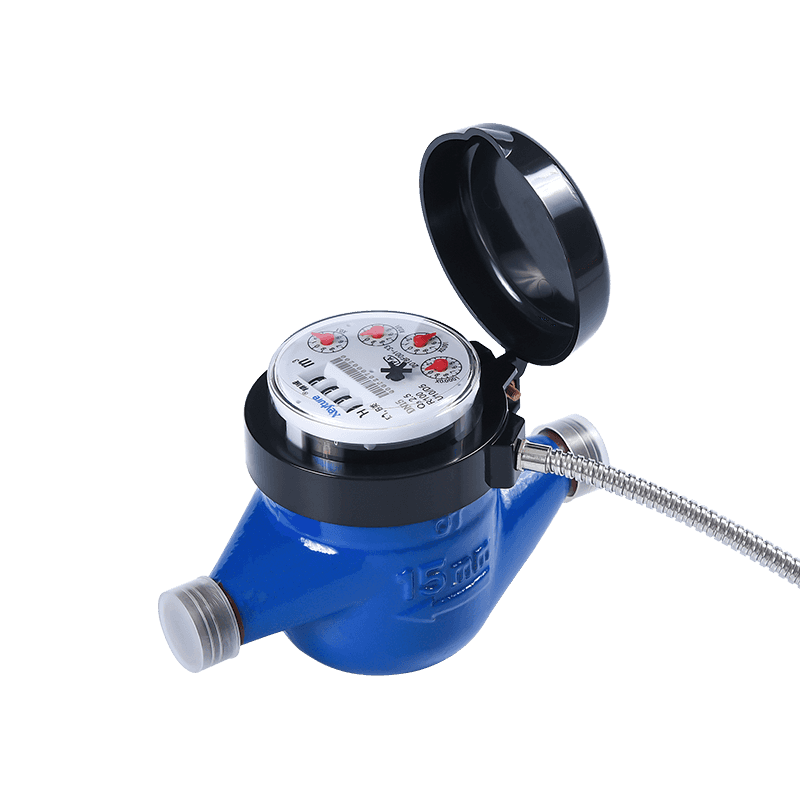
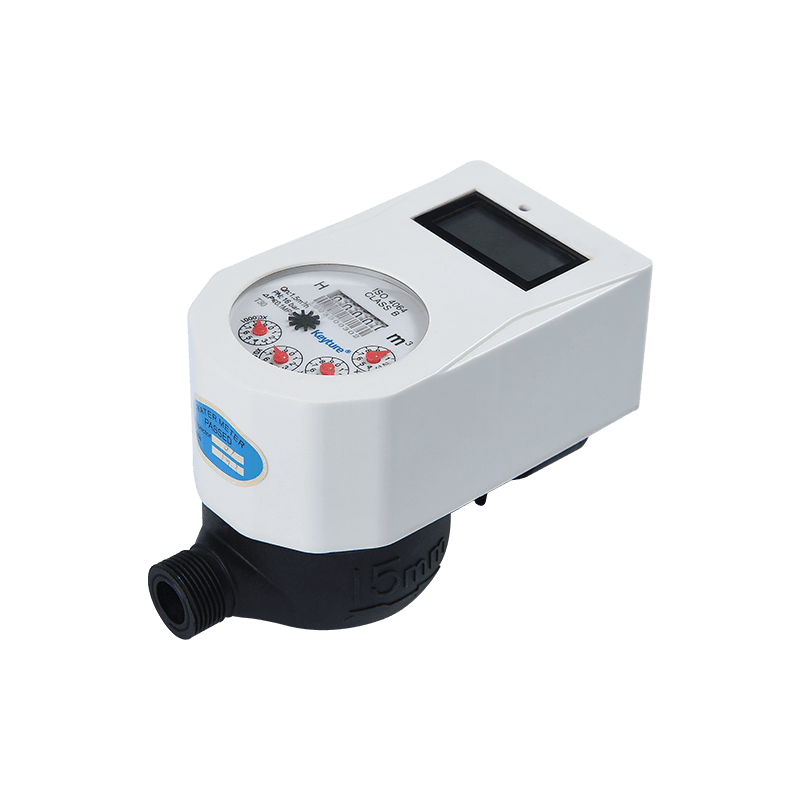
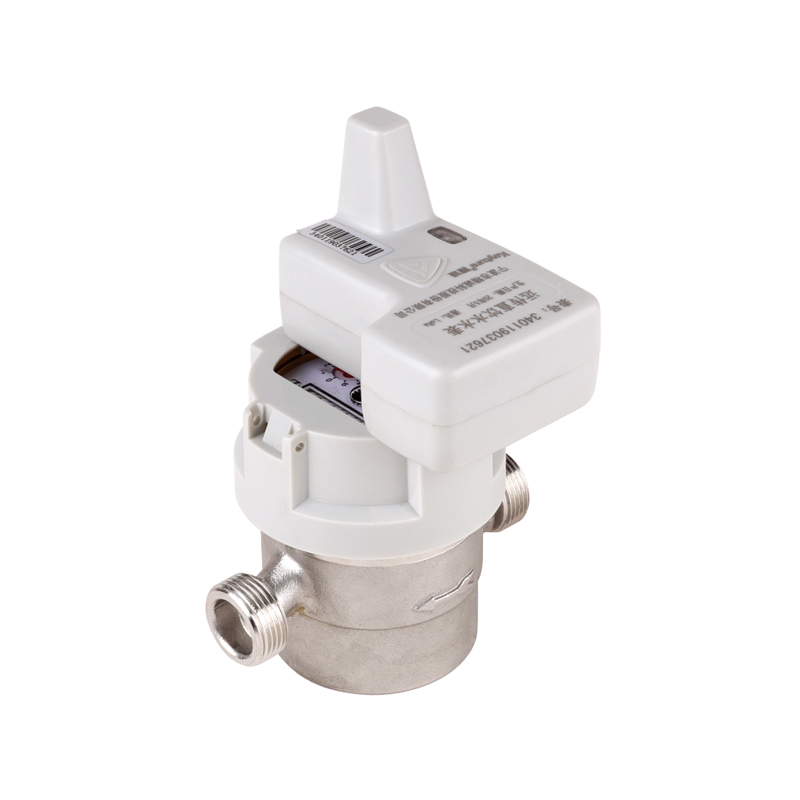
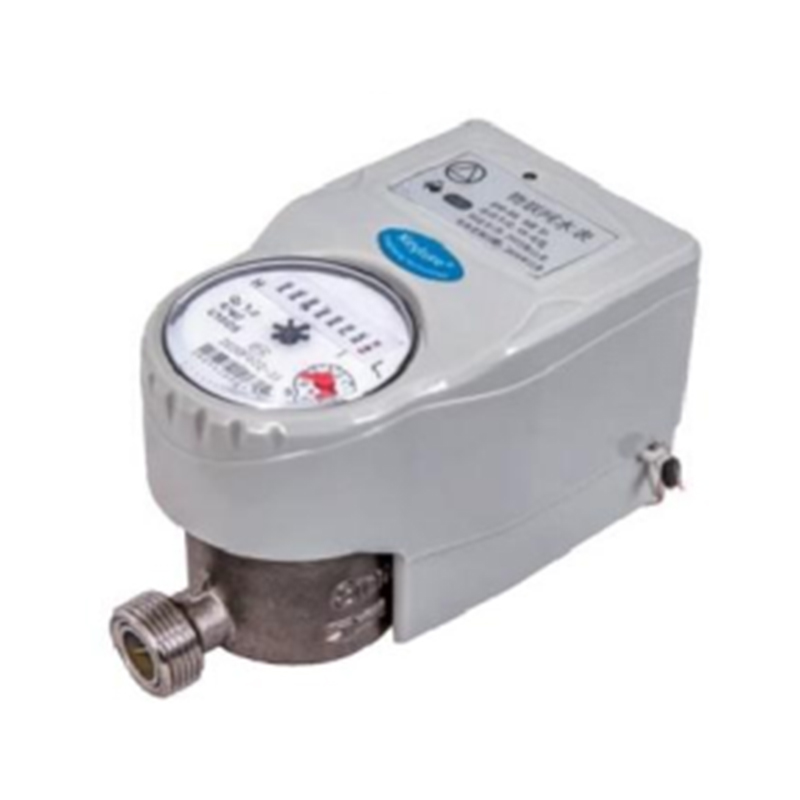
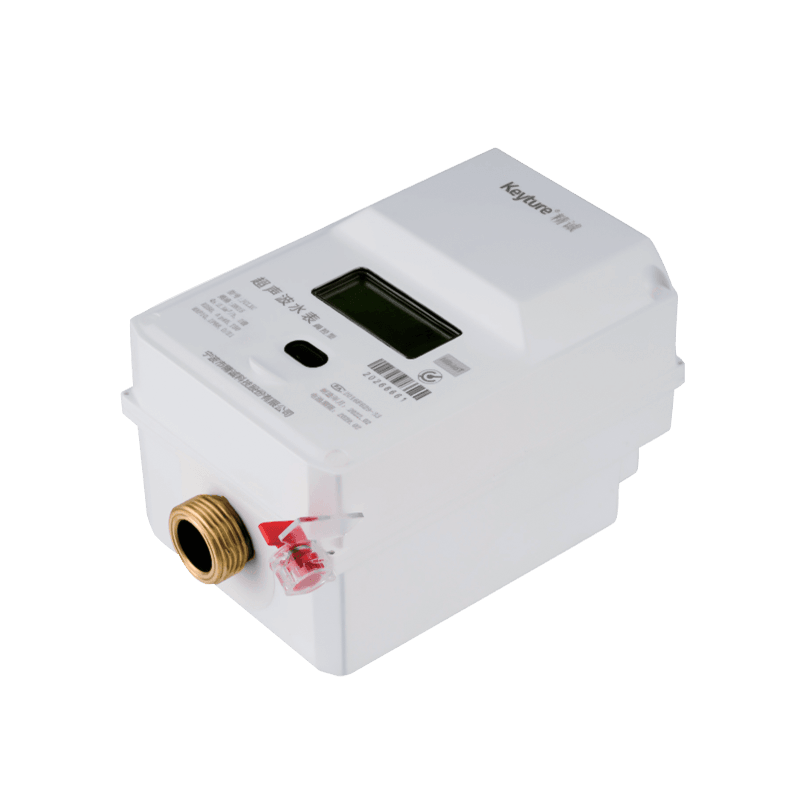
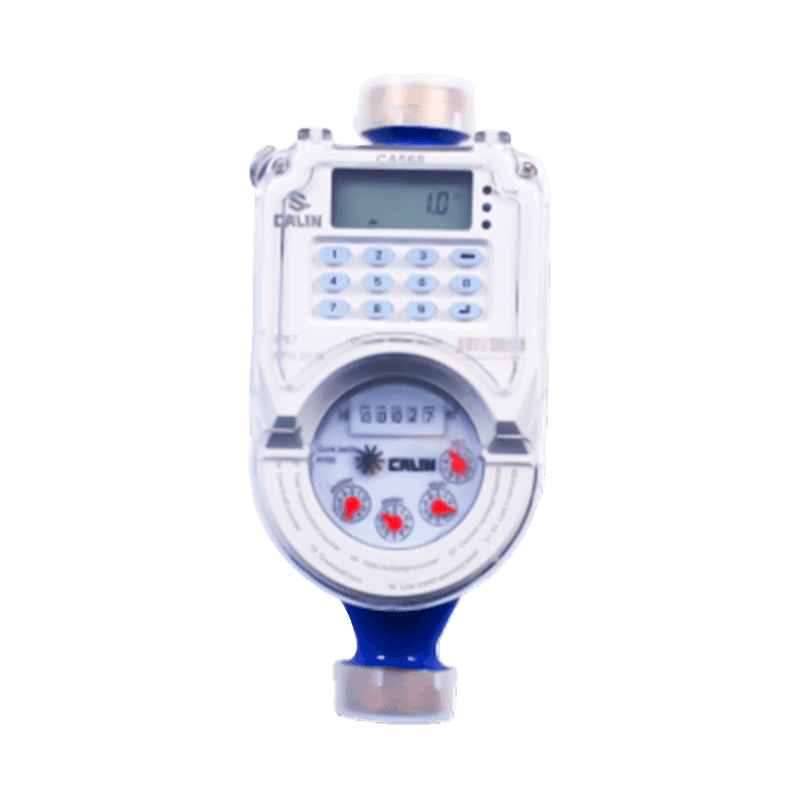
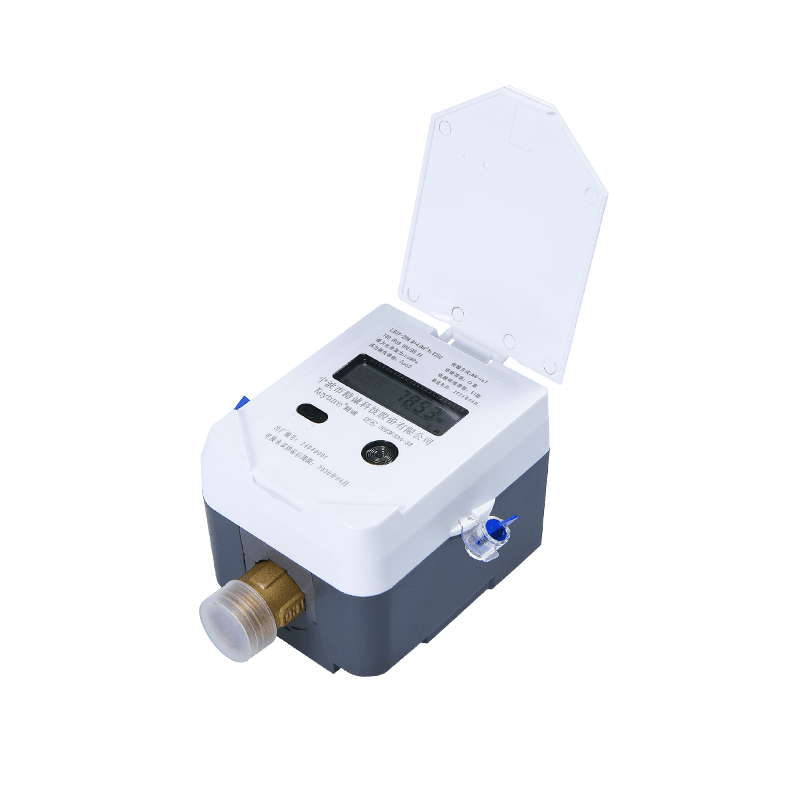
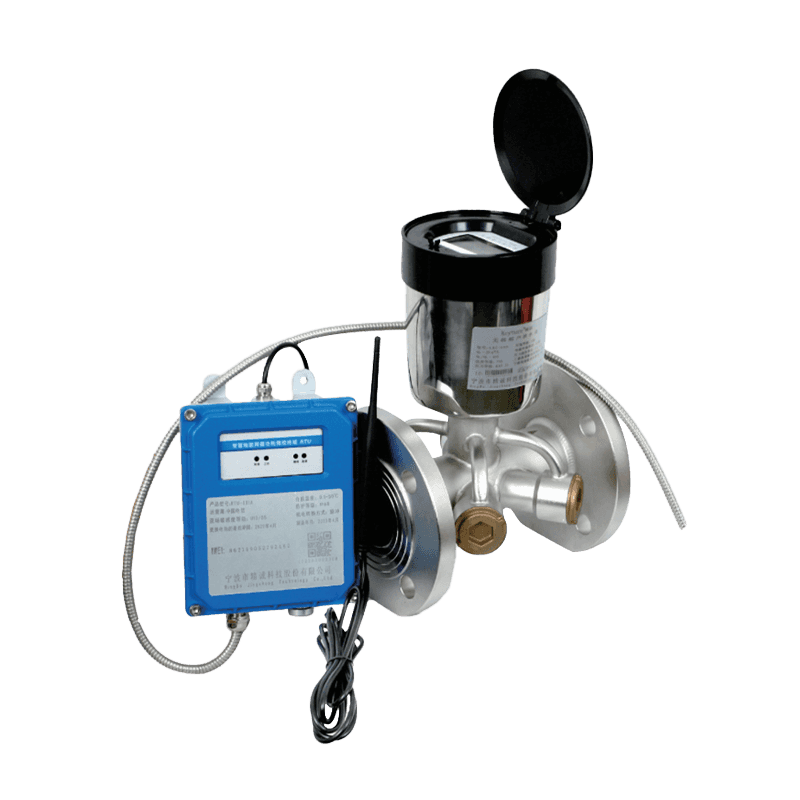
A multi jet water meter with an RS485 serial interface and Modbus RTU registers — made for PLC, SCADA and building automation systems that poll meters directly over a shielded twisted pair.
RS485 · Modbus RTU · 12–24 V DC · surge-protected
An RS485 wired remote reading water meter is a water meter that reports its readings through an RS485 serial interface, most commonly speaking the Modbus RTU protocol. RS485 is a differential, half-duplex signalling standard (TIA/EIA-485) that sends data as the voltage difference between two wires, A and B, rather than relative to ground. Because both wires pick up the same electrical noise, the receiver cancels it out, which lets RS485 run for up to 1,200 m at 9,600 baud through factories, pump houses and long building corridors where ordinary logic-level signals would be corrupted. Up to 32 standard unit loads can share a pair, and modern low-load transceivers allow many more, so a single twisted pair can serve a whole row of meters.
In the meter, a mechanical multi jet chamber turns a register whose rotation is converted to a digital count by a Hall-effect or optical encoder. A small microcontroller stores the cumulative volume in non-volatile memory, maps it into Modbus holding and input registers and answers requests from a master such as a PLC, an RTU, a SCADA server or a data logger. The master reads registers by function code — typically 03 for holding registers and 04 for input registers — and can also write configuration values such as the slave address, baud rate, parity and initial reading. Unlike M-Bus, RS485 uses separate power: the meter takes 12 to 24 V DC from the control cabinet, which supports fast polling, higher baud rates up to 19,200 bit/s and straightforward connection to industrial controllers.
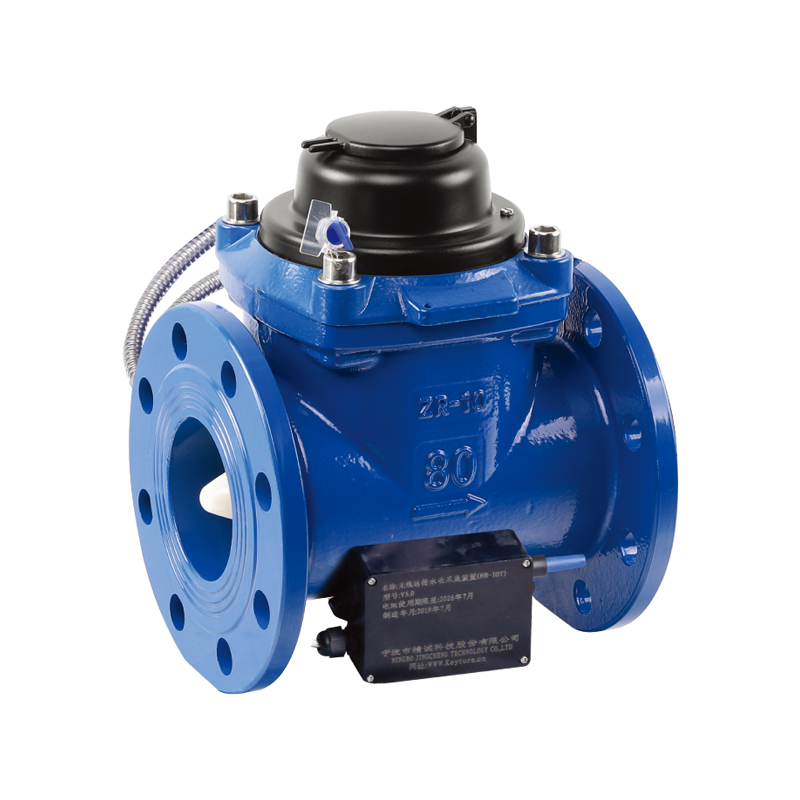
This is the interface that industrial and building-services engineers already understand. RS485 and Modbus are native to PLCs, frequency drives, power meters and building automation gateways, so the water meter can join existing control networks without protocol converters or proprietary software. The meter is supplied in DN15 to DN50 with Class 2 accuracy per ISO 4064 / OIML R49, an R100 range ratio, brass or cast iron body and a sealed register with an IP68 communication module. For factories that want to allocate water cost by workshop, building managers integrating water into a BMS, irrigation schemes automating pump stations and campuses reading hundreds of sub-meters from a control room, an RS485 meter provides a robust, low-cost and thoroughly standard wired link.
Key takeaway: RS485 with Modbus is the common language of industrial control. A water meter that speaks it plugs straight into PLCs, SCADA and BMS — fast polling, long cable runs and no gateway required.
Six integration advantages that make RS485 the default wired interface for industrial and building-services metering.
Modbus RTU is built into almost every PLC, RTU and gateway. The meter appears as a set of registers that the master reads directly, with no vendor driver or protocol converter.
Balanced A/B signalling rejects common-mode noise from motors, drives and switching supplies. Readings stay stable in pump rooms and production halls where other signals fail.
Up to 1,200 m at 9,600 baud on shielded twisted pair, and longer with repeaters. A single cable can link meters across a whole plant, farm or campus.
With external power and up to 19,200 baud, a master can read every meter on a bus in a few seconds. This enables near-real-time flow monitoring and fast leak or burst detection.
Slave address, baud rate, parity, pulse weight and initial volume can be written over the bus. Commissioning teams configure hundreds of meters without opening the housing.
Many meters share the same pair, so cable cost, trunking and labour fall sharply compared with running individual pulse cables back to a panel.
Standard configuration below. Baud rate, parity, register map and supply voltage can be adapted to your control system requirements.
| Parameter | Specification |
|---|---|
| Standard | ISO 4064 / OIML R49; TIA/EIA-485; Modbus Application Protocol |
| Meter type | Multi jet, vane wheel, RS485 remote reading |
| Nominal diameter | DN15 – DN50 (1/2" – 2") |
| Accuracy class | Class 2, R100 |
| Interface | RS485 half-duplex, 2-wire A/B plus shield |
| Protocol | Modbus RTU, slave |
| Slave address | 1 – 247, set by register or DIP switch |
| Baud rate | 1,200 / 2,400 / 4,800 / 9,600 / 19,200 bit/s |
| Data format | 8N1, 8E1, 8O1, 8N2 |
| Supply voltage | 12 – 24 V DC, ≤ 30 mA |
| Bus capacity | Up to 128 meters per segment (low-load transceiver) |
| Cable | Shielded twisted pair, 120 Ω; up to 1,200 m at 9,600 baud |
| Registers | Cumulative volume, instantaneous flow, status, address, baud rate |
| Water temperature | 0.1 °C – 50 °C (cold water) |
| Working pressure | MAP 16 bar |
| Body material | Brass or cast iron |
| Isolation / protection | Isolated transceiver, ±15 kV ESD, IP68 module |
Q4 is the overload flow, Q3 the permanent flow, Q2 the transitional flow and Q1 the minimum flow, all expressed in m³/h.
| Nominal Diameter | Q4 Overload | Q3 Permanent | Q2 Transitional | Q1 Minimum | Range Ratio | Register Resolution |
|---|---|---|---|---|---|---|
| DN15 (1/2") | 3.125 | 2.5 | 0.04 | 0.025 | R100 | 0.001 m³ (1 L) |
| DN20 (3/4") | 5 | 4 | 0.064 | 0.04 | R100 | 0.001 m³ (1 L) |
| DN25 (1") | 7.875 | 6.3 | 0.1008 | 0.063 | R100 | 0.001 m³ (1 L) |
| DN32 (1¼") | 12.5 | 10 | 0.16 | 0.1 | R100 | 0.01 m³ (10 L) |
| DN40 (1½") | 20 | 16 | 0.256 | 0.16 | R100 | 0.01 m³ (10 L) |
| DN50 (2") | 31.25 | 25 | 0.4 | 0.25 | R100 | 0.01 m³ (10 L) |
Values shown for R100. Register resolution and unit scaling in the Modbus map can be customised — tell us your PLC or SCADA platform and the number of meters per bus and we will confirm the register map and wiring.
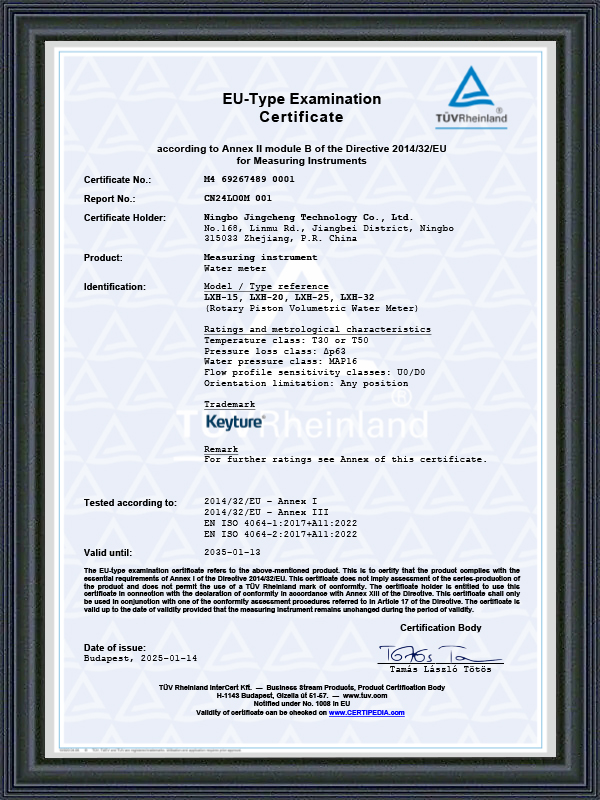
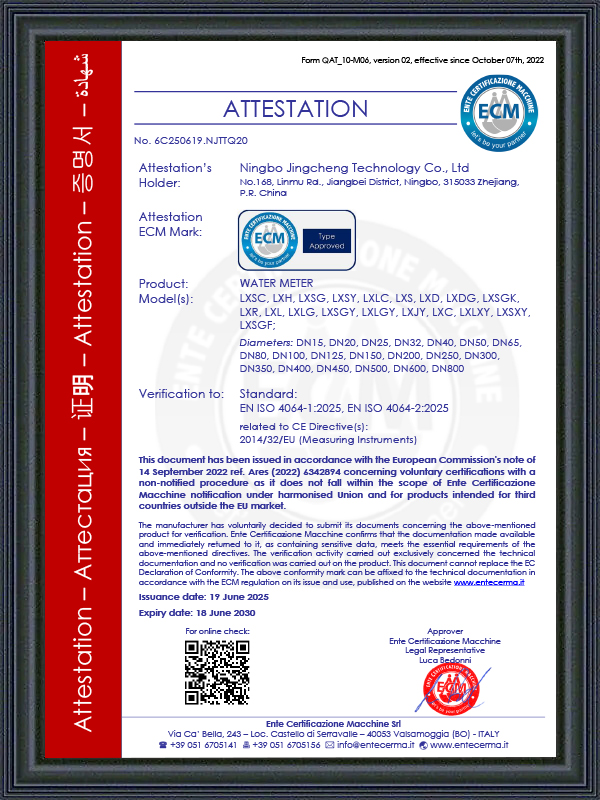
An RS485 meter must satisfy metrological requirements and the electrical rules that let many devices share a serial bus.
Class 2 limits and test points for the measuring chamber. The encoder count is verified against the mechanical dial over the full flow range.
Electrical characteristics of drivers and receivers: differential levels, receiver threshold, common-mode range and unit-load rating. Transceivers are tested for bus-fault tolerance.
Frame structure, function codes, exception responses and 3.5-character timing follow the Modbus over serial line guide, so the meter works with standard masters.
ESD, EFT and surge tests on the RS485 pair and supply input confirm survival of lightning-induced transients and inverter noise in industrial cabinets.
The bus interface is isolated from the supply and measuring circuit, preventing ground loops between distant panels and protecting the PLC port.
Wetted parts suitable for drinking water can be supplied with NSF/ANSI 61, WRAS or ACS certificates for the destination market.
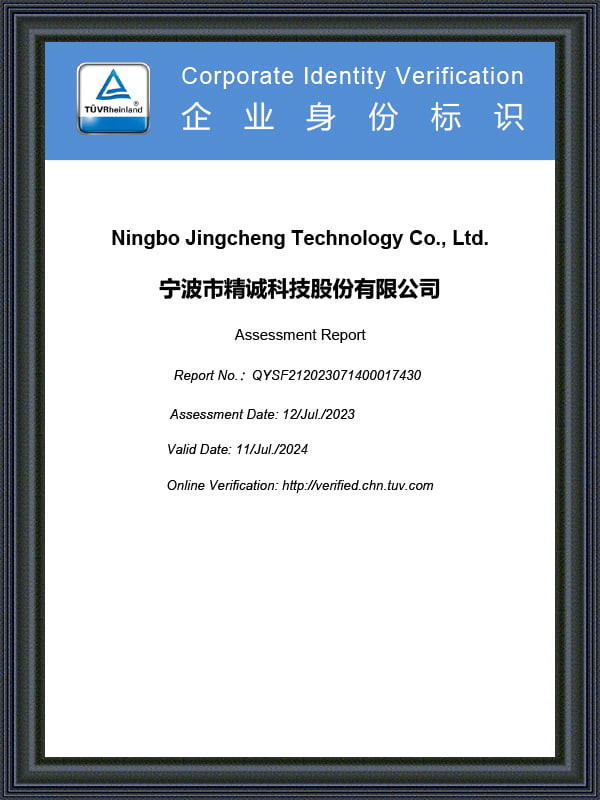
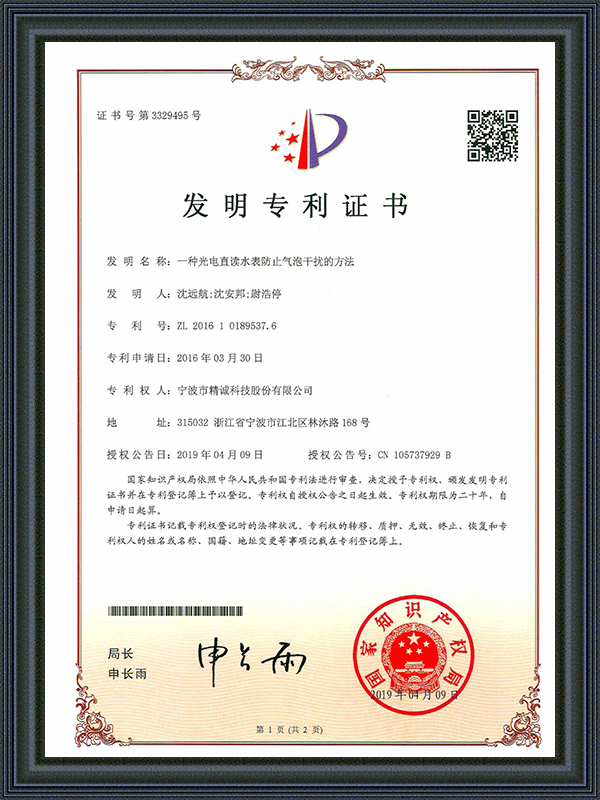
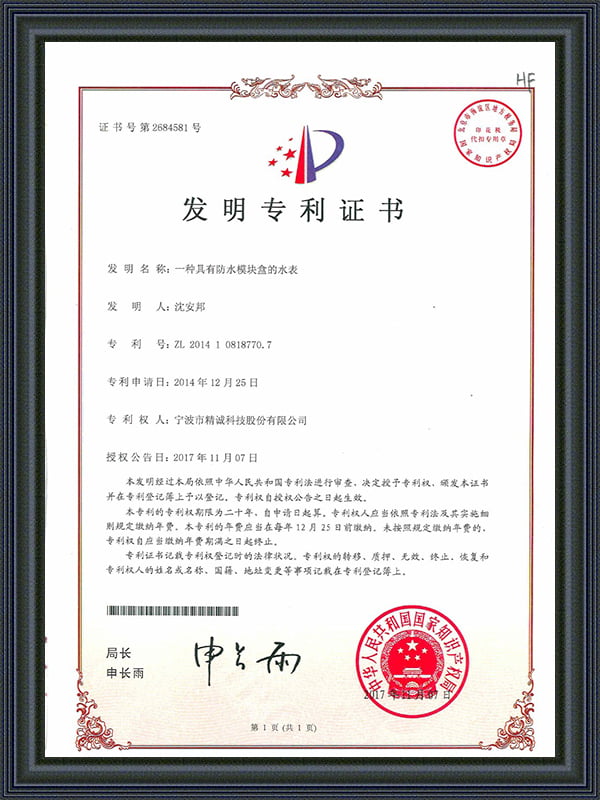
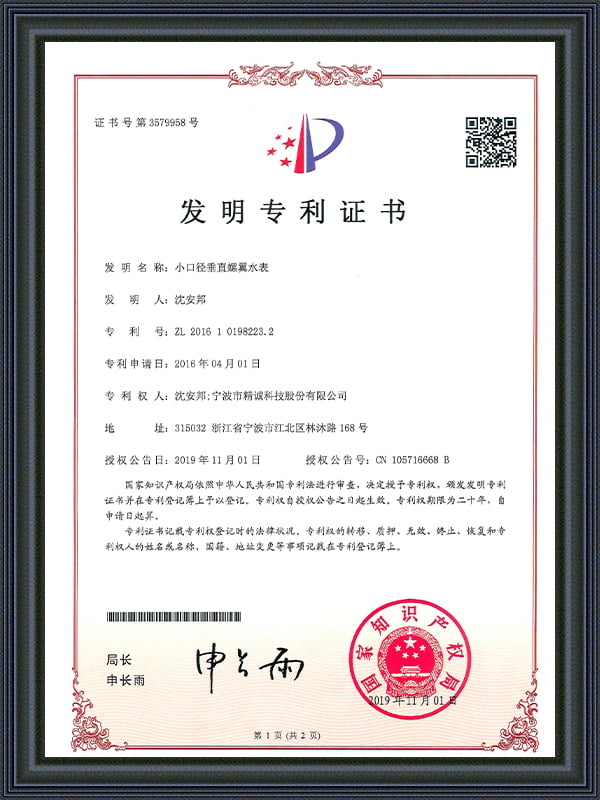
Two things define this meter: how RS485 carries data reliably over long cable, and how Modbus presents the meter as a simple register table.
RS485 transmits each bit as a voltage difference between two wires. A receiver treats a difference above +200 mV as one state and below -200 mV as the other, regardless of the absolute voltage on either wire. Noise that couples equally into both conductors cancels at the receiver, and the common-mode range of -7 V to +12 V tolerates ground potential differences between distant panels.
Every meter on a segment is a transceiver in a daisy chain. The cable should be a single line, terminated at both ends with 120 Ω resistors and biased so the idle state is defined. Stubs should be short and star topologies avoided. Our meters use isolated, low-load transceivers with fail-safe biasing so that many devices can share the pair and unpowered meters do not corrupt traffic.
Modbus RTU is a master–slave protocol: the master sends a request addressed to one slave, and only that slave answers. A frame carries the slave address, function code, data and a CRC-16 check, with silent intervals of 3.5 character times marking frame boundaries. The meter implements function 03 to read holding registers, 04 to read input registers, 06 to write a single register and 16 to write several registers.
The cumulative volume is held as a 32-bit value in two registers, with flow rate, status word and configuration in further registers. The map is documented so that integrators can configure the PLC without trial and error. Status bits report reverse flow, empty pipe, magnetic interference, encoder fault and low supply voltage. Because the meter keeps its count in non-volatile memory, power cycles never lose the reading.
Measured performance data for the RS485 wired remote reading water meter. Use these charts to confirm pressure loss, accuracy and installation dimensions before specifying.
Figure 1 — Head loss curve (MPa vs. flow m³/h)
The chart shows pressure loss across the meter for DN15 to DN50. The RS485 module sits outside the water path, so head loss is set by the multi jet chamber alone and remains at or below 0.063 MPa at Q3.
Figure 2 — Accuracy error curve (Class 2, R100, Q1–Q4)
Because the encoder counts exactly the same rotations as the mechanical register, the Modbus volume and the dial agree to the last digit. The error curve stays inside ±5% in the lower zone and ±2% in the upper zone, so PLC-based cost allocation matches the visual reading.
Figure 3 — Installation dimensions (L × H × B × D)
| Size | L (mm) | H (mm) | B (mm) | D (thread) |
|---|---|---|---|---|
| DN15 | 165 | 110 | 92 | G3/4" |
| DN20 | 190 | 115 | 94 | G1" |
| DN25 | 260 | 128 | 108 | G1¼" |
| DN32 | 260 | 136 | 110 | G1½" |
| DN40 | 300 | 162 | 138 | G2" |
| DN50 | 300 | 172 | 142 | Flange |
Dimensions are for reference and include the RS485 module and cable gland. Confirm exact values with our engineering team before installation design.
Choosing a wired interface depends on who reads the data. This table compares RS485 Modbus with M-Bus and pulse output.
| Design Feature | RS485 Modbus RTU | M-Bus | Pulse Output |
|---|---|---|---|
| Native to PLC / SCADA | Yes — Modbus is standard | Needs level converter | Needs counter input |
| Bus powering | External 12–24 V | Powered from bus | Passive |
| Polling speed | Fast — up to 19,200 baud | Slow — 2,400 baud typical | Continuous pulses |
| Meters per segment | Up to 128 | Up to 250 | One |
| Data content | Volume, flow, status registers | Volume, history, time | Count only |
| Cable length | Up to 1,200 m | Up to 1,000 m | Up to 100 m typical |
| Configuration over bus | Writable registers | Limited | None |
| Best application | Industrial plants and BMS | Residential blocks | Single point to panel |
This comparison is indicative. Actual performance depends on cable quality, topology and the specific product configuration. Contact our engineers for application-specific guidance.
Premium quality
since 2002
Coming From China, Marketing To The World
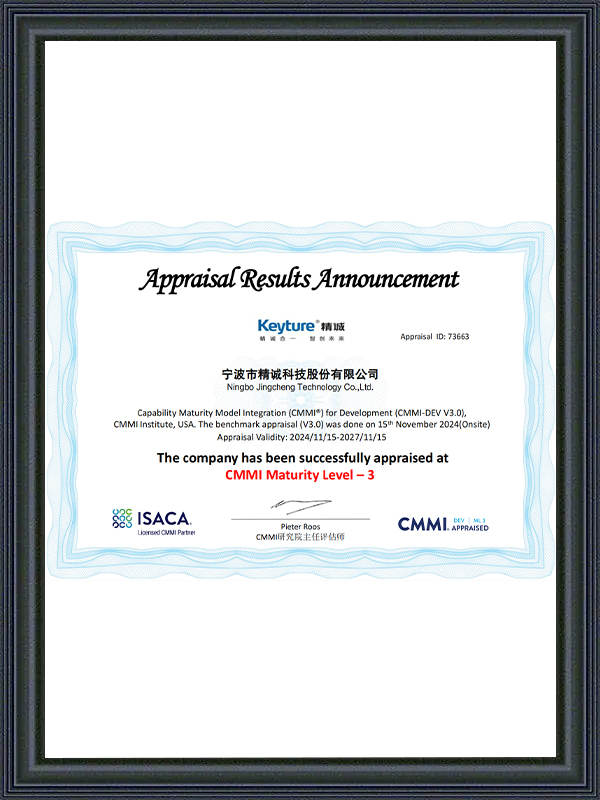
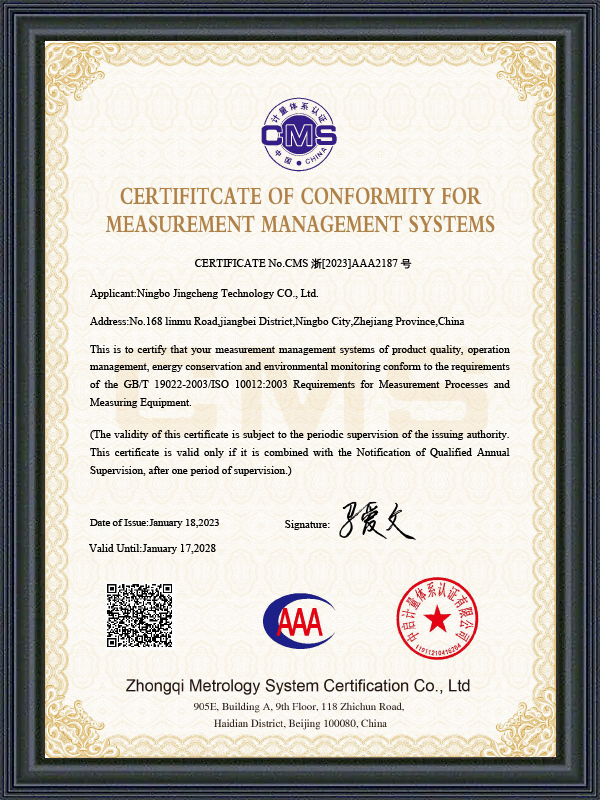
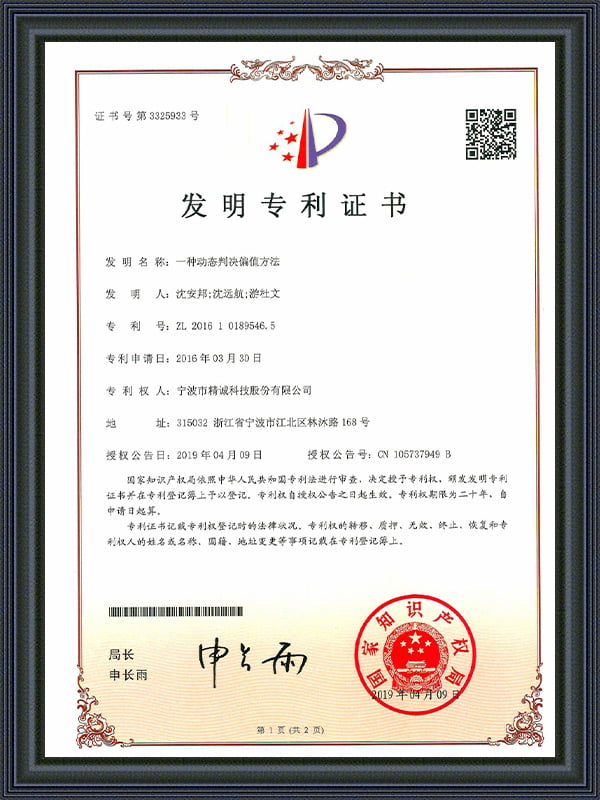
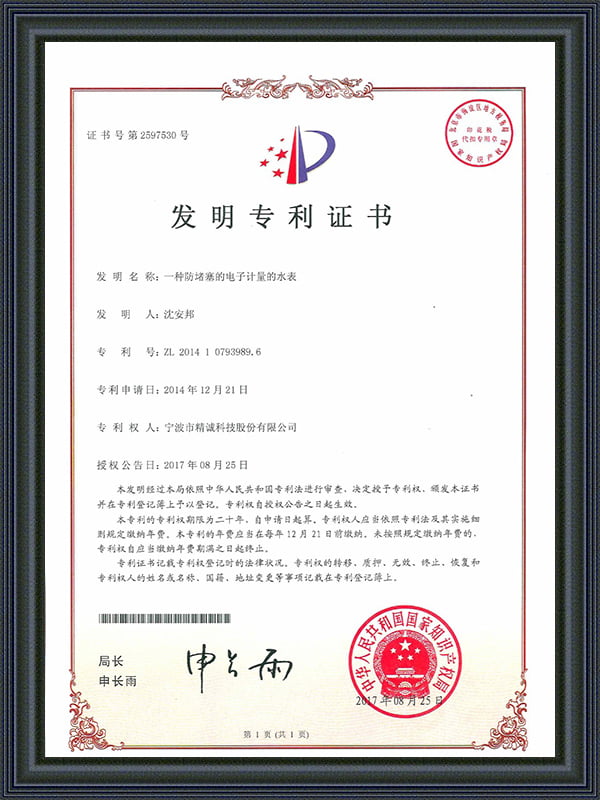
Keyture Meter is located in Picturesque Jiangbei Investment Park, NINGBO, CHINA. It is a comprehensive high-tech China RS485 Wired Remote Reading Water Meter Manufacturers and Custom RS485 Wired Remote Reading Water Meter Factory that integrates scientific research & development, production, sales, and service. Established in 2002 as a manufacturer and exporter of water meters for more than 22 years. The factory covers an area of 40 acres (30,000 square meters), 200 staff, 100+ types of products, product capacity of 5 million per year. Its product range covers single jet, multi-jet, volumetric piston type, Woltman type, IC card intelligent water meter, remote control water meter, optoelectrical reading direct remote control water meter...
Yearly production capacity
Production Area
Works and inspectors
Production experience
Excellent product with exquisite craftsmanship
Customization
We have a strong R&D team, and we can develop and produce products according to the drawings or samples the customers offered.
Cost
We are a professional manufacturer and also have our own processing machinery. So we can offer good prices and good products directly.
Quality
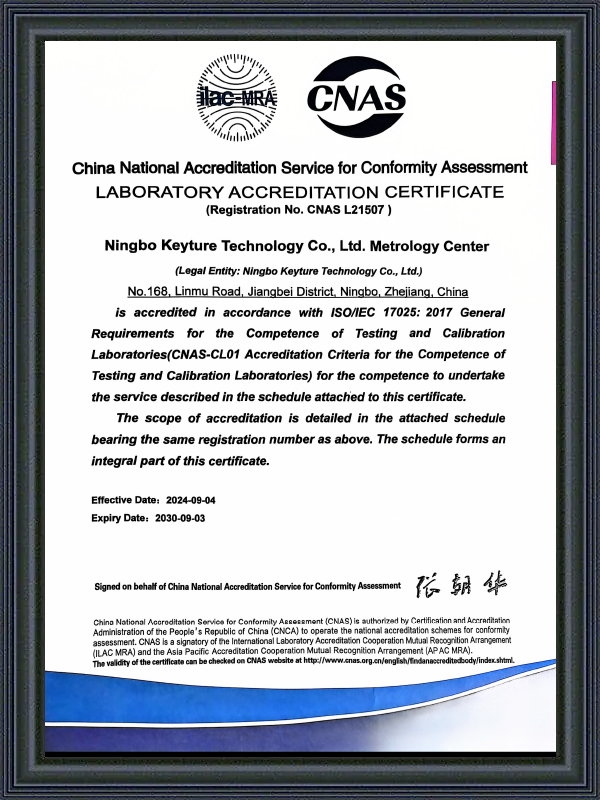
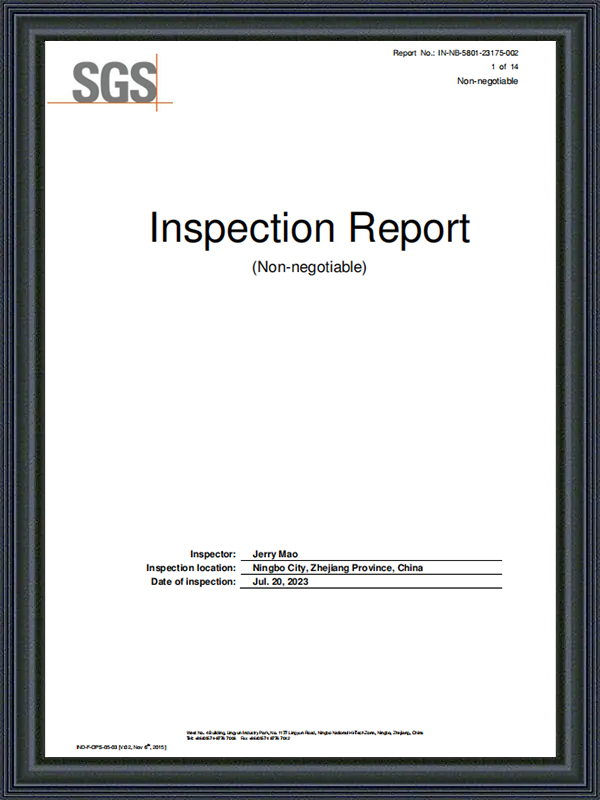
We have our own testing lab and advanced and complete inspection equipment, which can ensure the quality of the products.
Service
We focus on developing high-quality products for top-end markets. Our products are in line with international standards, and are mainly exported to Europe, America, Africa, Asia and other destinations around the world.
Capacity
Our annual production capacity is over 5 million units. We can meet the needs of different customers with different purchase quantities.
Shipment
We are about 35 kilometers away from Ningbo Port. It is very convenient and efficient to ship goods to any other countries.
From mechanical meters to smart AMR/AMI systems — we provide end-to-end water metering solutions tailored to your project.
Chosen where meters must talk directly to PLCs, SCADA or building automation over a robust serial bus.
Run the RS485 pair as a single daisy chain from the master to the last meter, using shielded twisted-pair cable with 120 Ω characteristic impedance. Place a 120 Ω termination resistor at each physical end of the bus only, and add bias resistors at the master so that the idle state is defined.
Keep stubs under 0.5 m and avoid star wiring. Route the cable away from power cables and variable-speed drives, and cross them at right angles where necessary. Connect the shield to earth at one point only to prevent ground loops, and use the isolated interface so that distant panels with different earth potentials do not interfere.
Give each meter a unique address before closing the housing, set identical baud rate and parity across the bus, and check each meter with a Modbus test tool. Record address, serial number and location in the commissioning sheet. Install the meter in the flow direction with the register facing upward and 10 × DN of straight pipe upstream.
RS485 meters need very little maintenance. Operators watch for lost communication, which usually indicates a wiring fault, a missing termination or a supply problem rather than a meter fault. Because Modbus polling is continuous, the PLC can raise an alarm within seconds and the faulty segment can be located by disconnecting branches.
The communication module is replaceable without changing the measuring chamber, and the cumulative volume stored in the module can be written back from a recorded value if the module has to be changed. Keep a log of the last good reading to carry over accurately.
The chamber life is typical of multi jet meters, eight to ten years in potable water. The module has no battery, so the electronic life is usually longer than the metrological verification period.
RS485 is a differential, multi-drop serial standard that supports many devices on one pair at distances up to about 1,200 m. RS232 is single-ended, point-to-point and limited to a few metres. RS485 is much more robust in industrial environments.
Yes. The standard firmware implements Modbus RTU as a slave. Function codes 03, 04, 06 and 16 are supported, and the register map is documented for PLC and SCADA integration.
A standard RS485 segment supports 32 unit loads, and our low-load transceivers allow up to 128 meters. More meters can be connected with repeaters or additional ports on the master.
Up to 1,200 m at 9,600 baud with good shielded twisted pair. Lower baud rates allow longer runs and higher rates need shorter cable. Repeaters extend the distance further.
Yes. The standard version uses 12 to 24 V DC with a very low current draw. Powering the meter externally lets it respond instantly and avoids battery replacement. A battery-backed version for count preservation is available on request.
The cumulative volume is stored in non-volatile memory and the mechanical dial keeps counting. When power returns, the meter resumes communication with the correct reading.
Yes. The slave address, baud rate, parity and pulse scaling can be written through Modbus registers, or set locally with a configuration tool. This speeds up commissioning of large systems.
Without 120 Ω termination at both ends of a long RS485 line, signals reflect from the cable ends and corrupt data. Termination and bias resistors also ensure a defined idle state, preventing false characters.
Not directly, but a Modbus-to-BACnet or Modbus-to-KNX gateway can map the registers into those protocols. Many building automation controllers also read Modbus RTU natively.
RS485 Modbus uses external power, faster baud rates and is native to industrial controllers. M-Bus powers devices from the bus, supports more meters per segment and is common in European residential metering. Choose by the system you are integrating with.
Yes. The transceiver is isolated and protected by TVS devices against ESD up to ±15 kV and by surge suppression on the A/B lines. In areas with strong lightning exposure, external surge protectors are recommended.
Class 2 accuracy with R100 range ratio is standard, in sizes DN15 to DN50. Brass bodies are standard and cast iron is available for larger sizes. Hot water versions can be provided on request.
Send us the PLC or SCADA platform, number of meters, cable length and baud rate. Our engineers will recommend the right RS485 configuration and Modbus register map, with price and lead time.

Address: No.168,LinMu Rd.,Zone B, Jiangbei investment Park, Ningbo, Zhejiang,China
Tel: +86-0574-83090480/+86-18892665118
Fax: +86-0574-83021045
Email: [email protected]
Web: https://www.keyturemeter.com/
Quick Links
Product
Mobile terminal
 Custom RS485 Wired Remote Reading Water Meter Manufacturers