 English
 Español
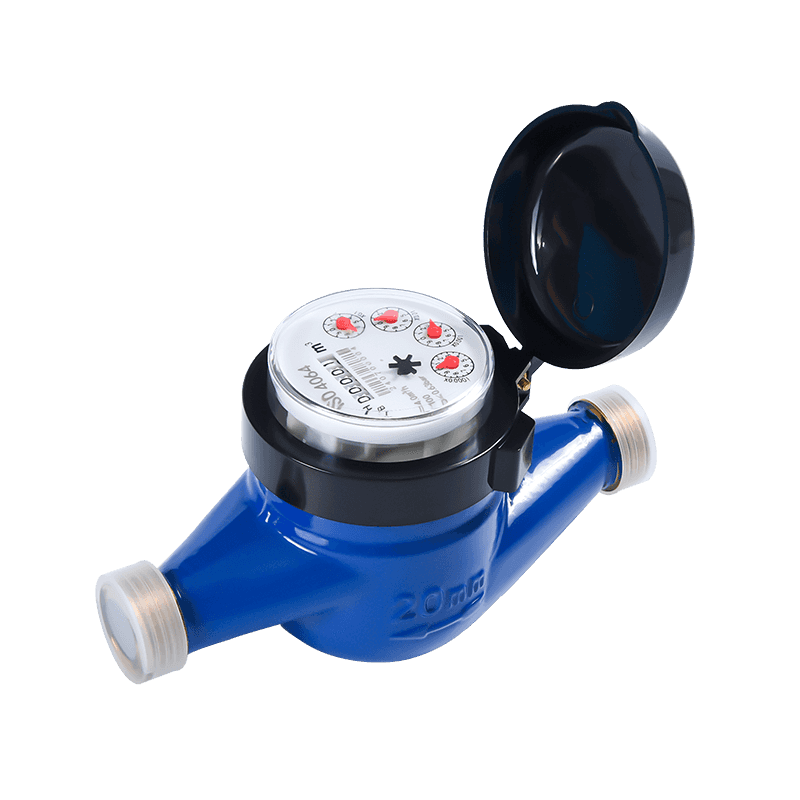
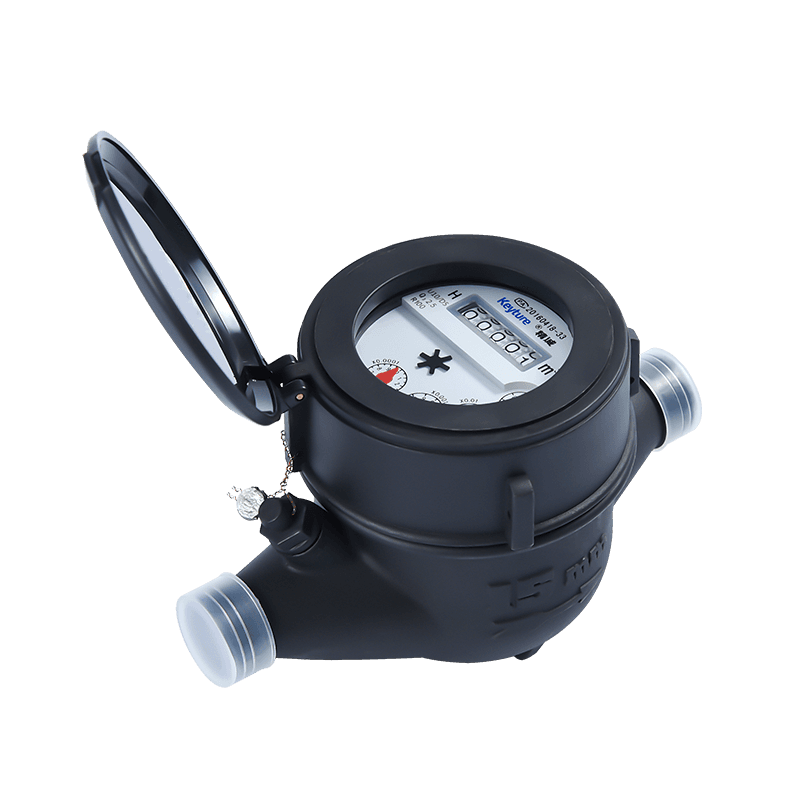
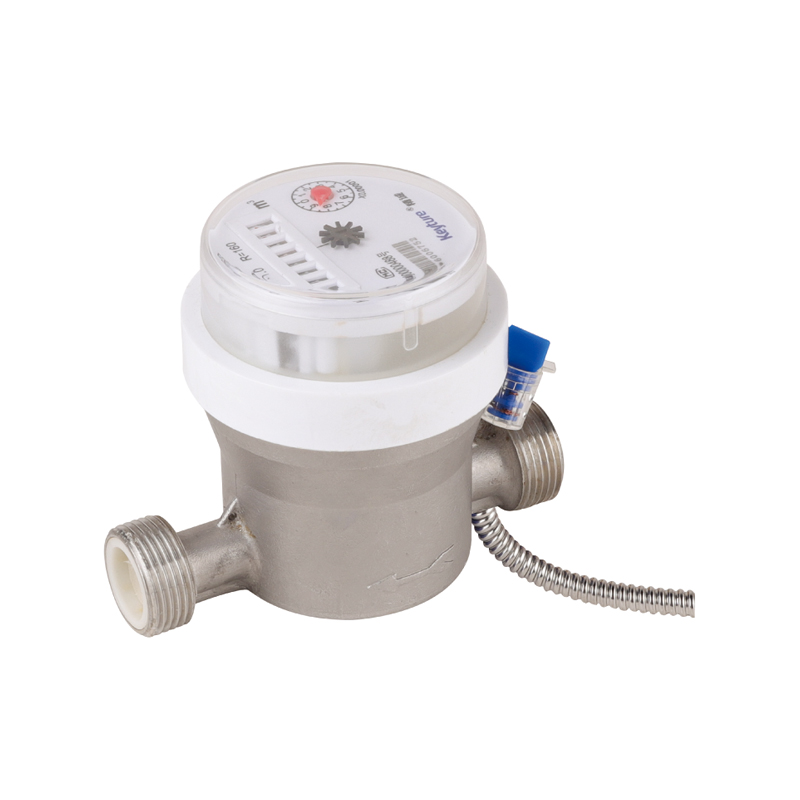
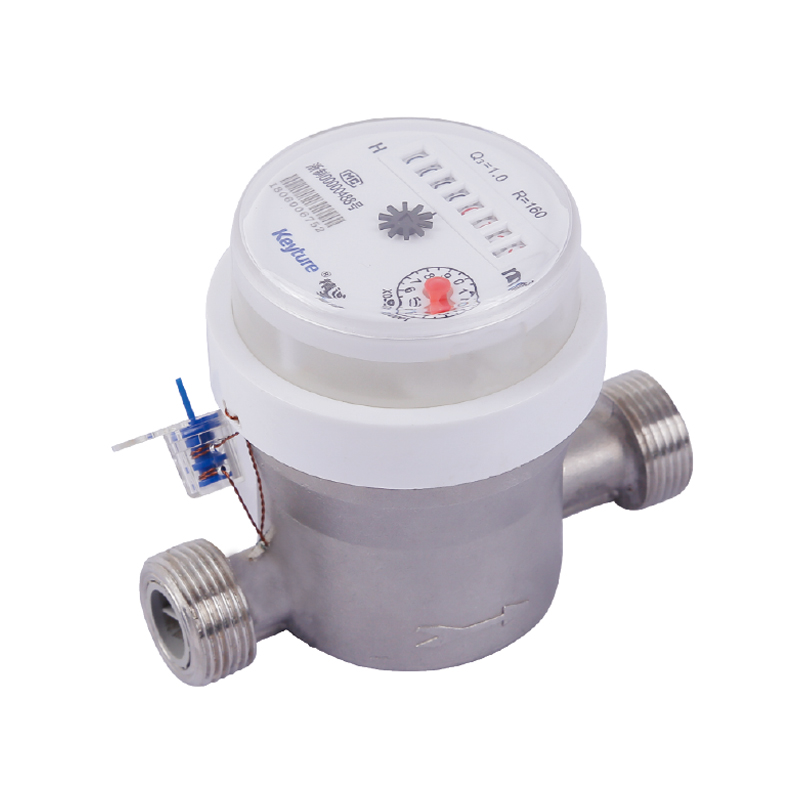
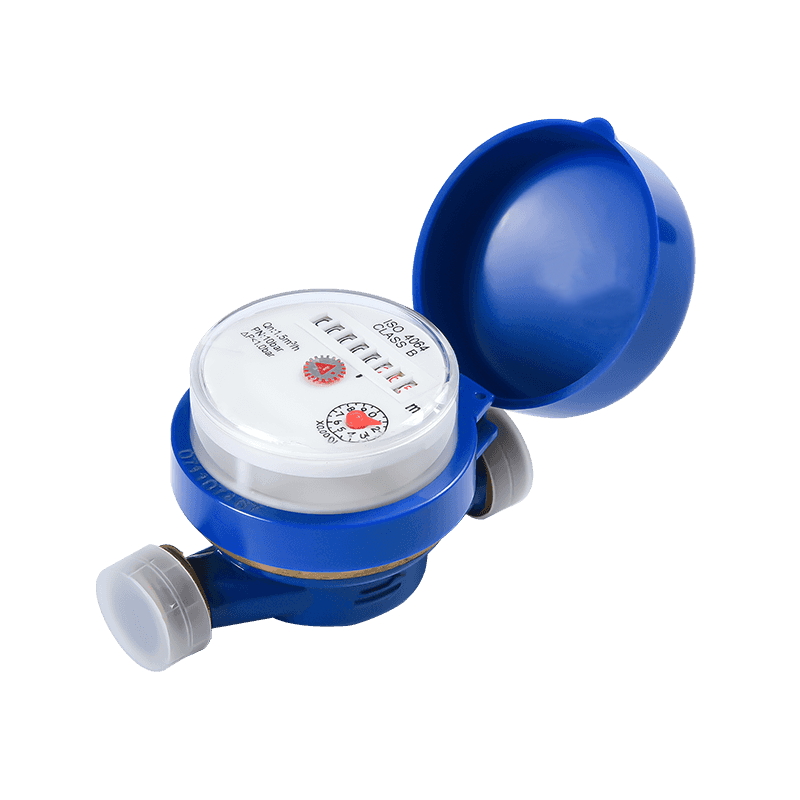
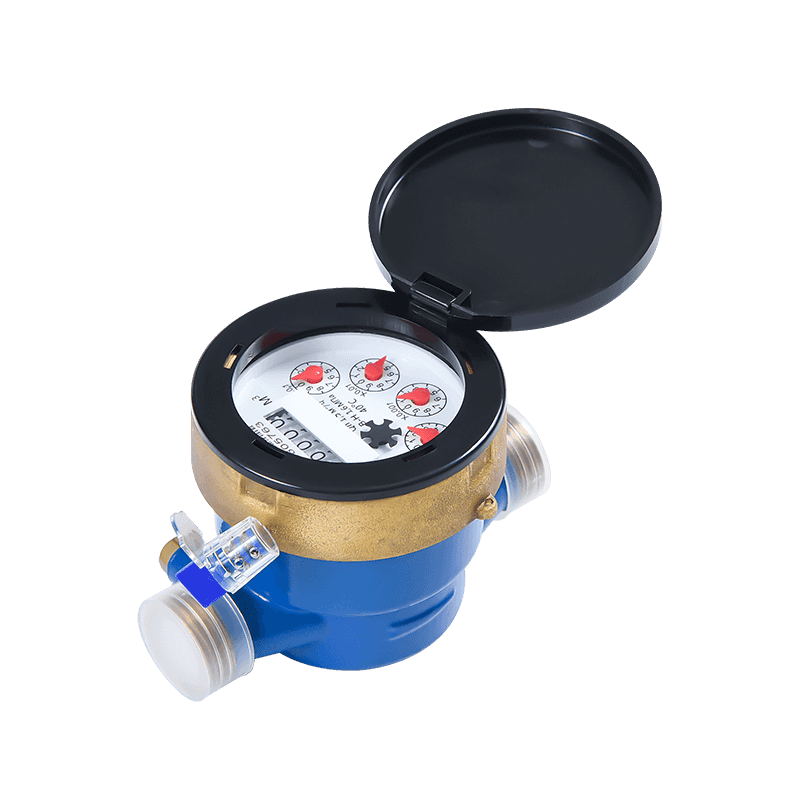
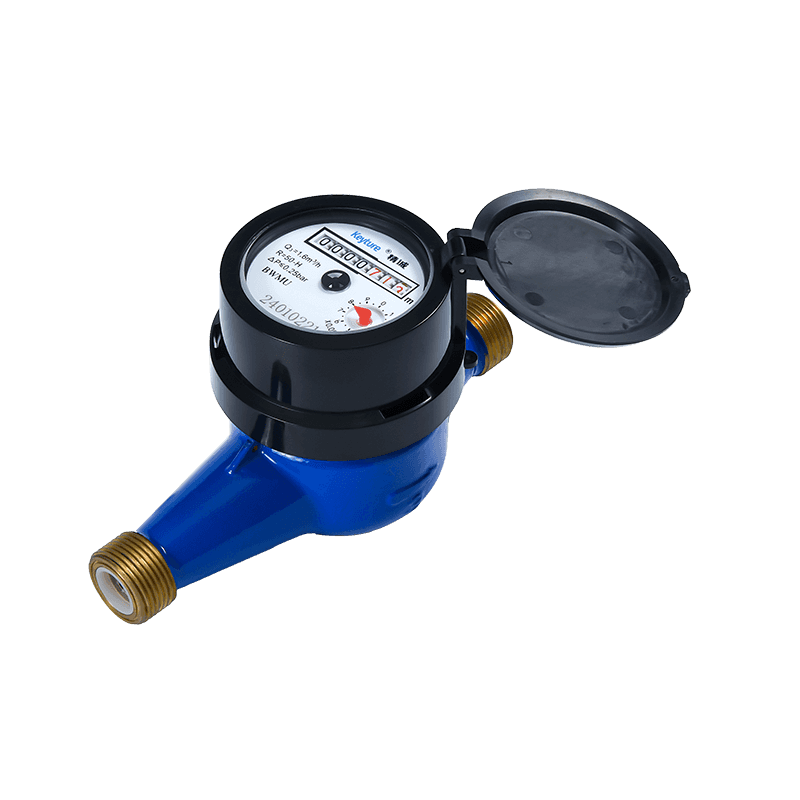
No Dynamic Seal to Leak
Without a rotating shaft through the housing there is no stuffing box or lip seal to wear. The partition is a static barrier, so the register stays dry and the meter does not weep over time.

A vane wheel meter whose register is driven by a magnetic coupling through a sealed wall — no dynamic seals, no leak path and built-in protection against external magnets.
Magnetic coupling · sealed partition · anti-magnetic shield
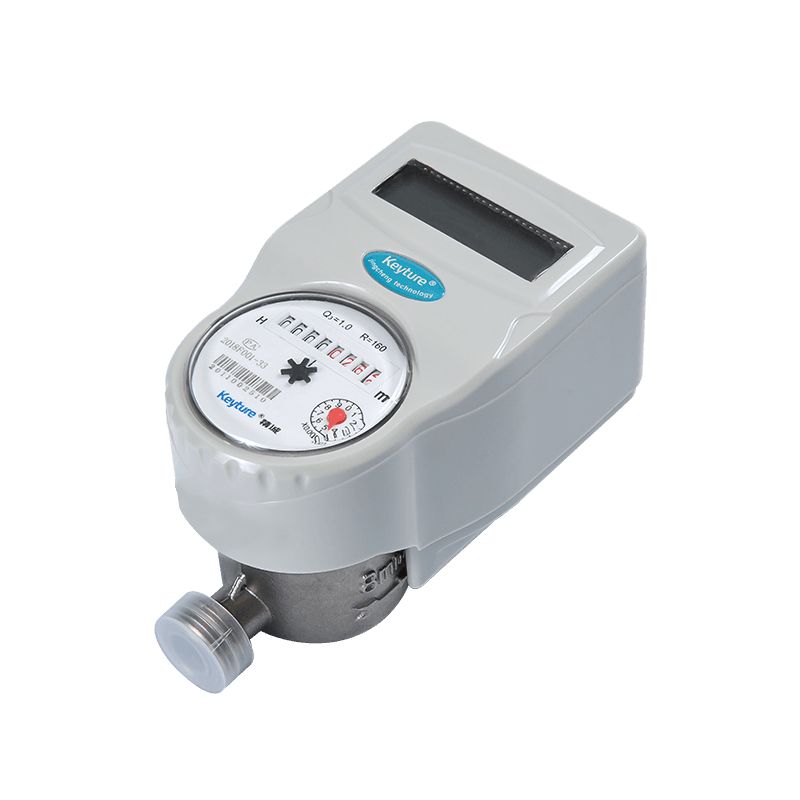
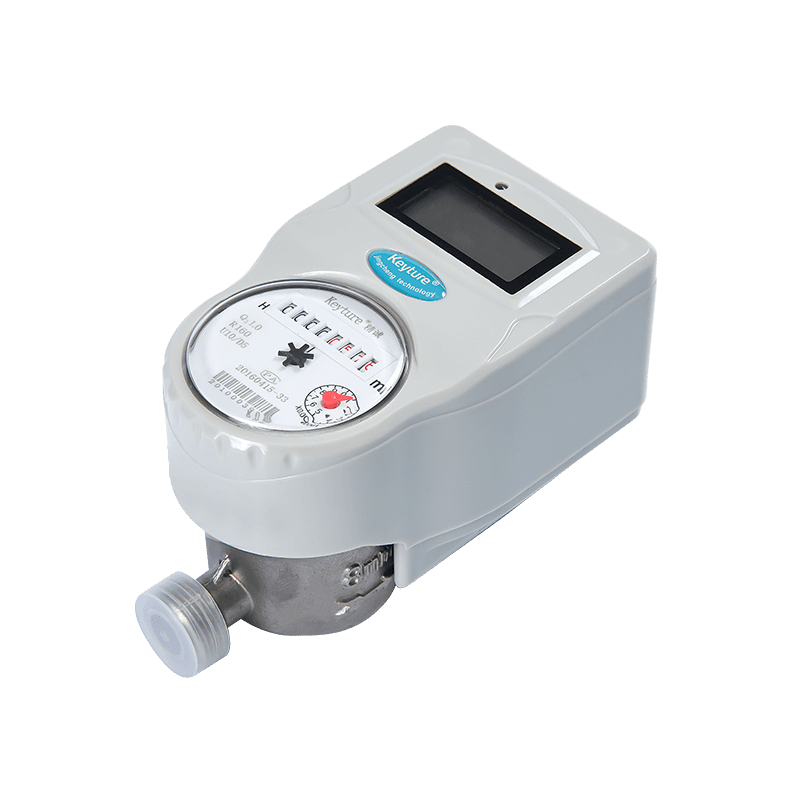
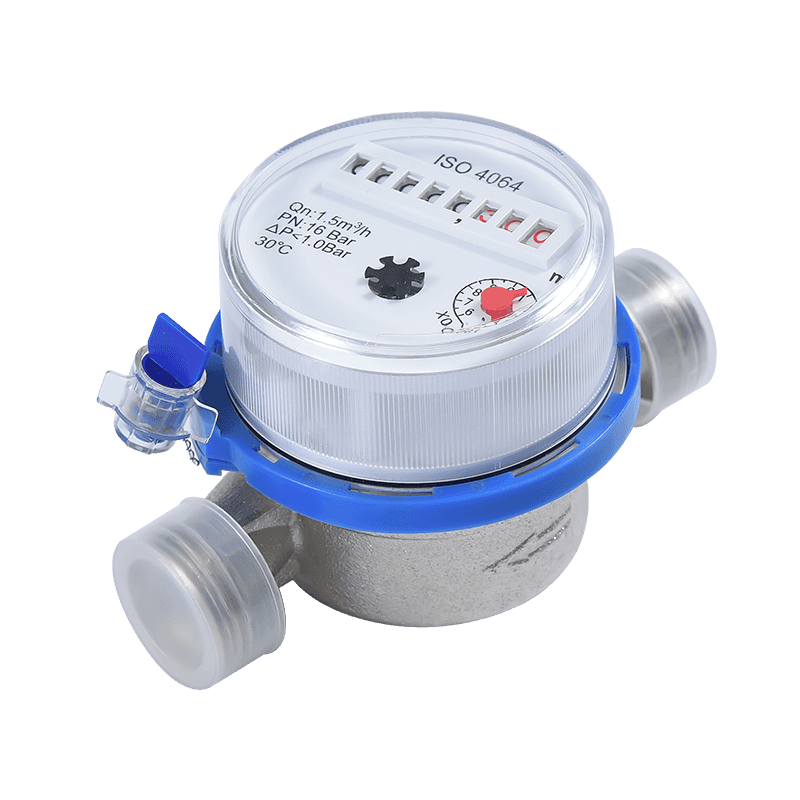
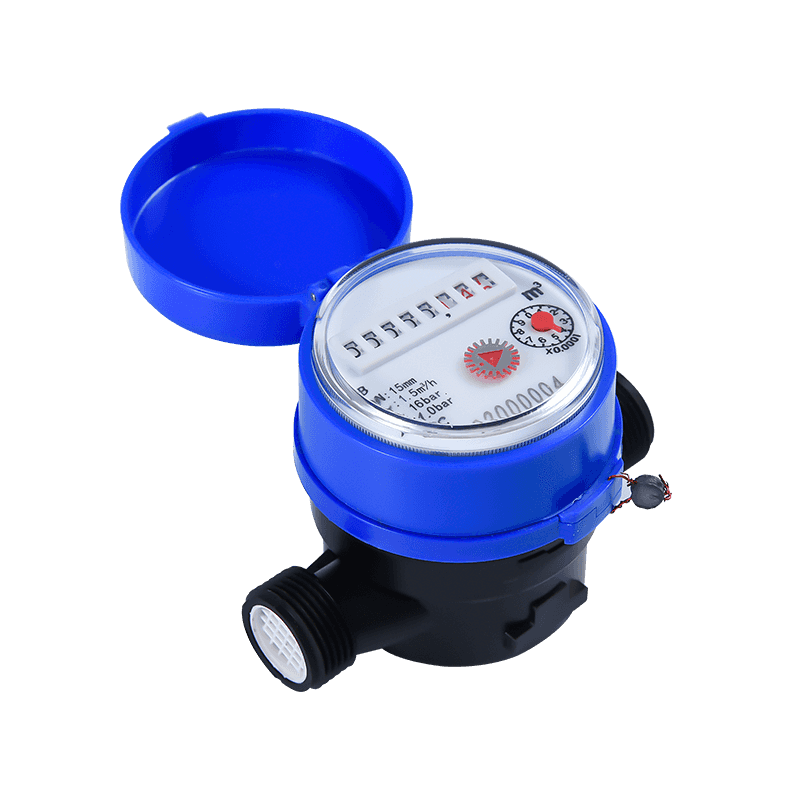
A magnetic drive cold water meter is a vane wheel meter in which the measuring chamber and the register are connected not by a shaft but by a pair of permanent magnets. A driving magnet is mounted on the impeller spindle inside the wet chamber; a following magnet sits on the other side of a sealed partition in the dry register and turns in step with it. The torque passes through the wall by magnetic attraction alone. Since no rotating part penetrates the housing, there is no stuffing box, no lip seal and no dynamic leak path between water and register. The wet side contains only the impeller and its pivots, and the dry side contains only gears and the dial.
This arrangement is what makes the meter robust for cold water service. The impeller can be optimised purely for hydraulics and the register purely for readability, with the wall between them acting as a permanent, tested pressure barrier. The magnetic coupling is designed with a controlled torque limit: under normal flow the follower stays locked to the driver, but a violent surge or a stuck register causes the magnets to slip and re-engage, preventing gear damage. Because the coupling is transmitted through a non-magnetic wall, the design can also include anti-magnetic shielding that screens the register from external magnets used to slow the dial, an important safeguard in markets where tampering is common.
The ‘cold water’ rating defines the materials. With a working range of 0.1 °C to 30 °C, designers can use standard engineering polymers for the impeller, bearings and chamber, avoid the thermal expansion stress that high temperatures cause and keep seals simple. The meter is supplied in DN15 to DN40 with brass or polymer bodies, Class 2 accuracy under ISO 4064 / OIML R49 and an R125 range ratio, and it is compatible with pulse output modules for AMR retrofit. For utilities and builders who need a straightforward, leak-free and tamper-resistant meter for ordinary potable supply, a magnetic drive cold water meter offers the cleanest separation of wet and dry parts at modest cost.
Key takeaway: A magnet is a seal that never wears. By transmitting torque through a solid wall, the magnetic drive removes the leak path, protects the gears and resists magnetic tampering.
Six design advantages that come directly from transmitting torque through a magnetic coupling.
Without a rotating shaft through the housing there is no stuffing box or lip seal to wear. The partition is a static barrier, so the register stays dry and the meter does not weep over time.
Shielding plates and a balanced magnet arrangement make it difficult for external magnets to slow or stop the dial. Tamper attempts are physically resisted rather than only detected.
The coupling slips under excess torque, protecting the gear train from damage during water hammer, debris jams or rough handling, then re-locks automatically.
The wet side holds only the impeller and pivots, while gears and dial remain dry. Water-borne deposits cannot reach the register, and register service never exposes the water circuit.
Designed for 0.1 – 30 °C, the polymer and seal selection can be simpler and more stable. Thermal expansion mismatch, which limits hot water designs, does not apply.
Magnetic drag is low and constant, so the impeller sees repeatable friction. The error curve stays stable over the service life and between production batches.
Standard configuration below. Body material, coupling strength, register type and pulse options can be adapted to your market requirements.
| Parameter | Specification |
|---|---|
| Standard | ISO 4064 / OIML R49 |
| Meter type | Magnetic drive, vane wheel, velocity type |
| Nominal diameter | DN15 – DN40 (1/2" – 1½") |
| Accuracy class | Class 2, R125 standard / R160 optional |
| Coupling | Permanent magnet pair, ferrite or NdFeB, through non-magnetic partition |
| Coupling slip torque | Calibrated, typically 3 – 5 × running torque |
| Magnetic shielding | Dual-plate soft-iron shield; resists external fields up to 100 mT |
| Water temperature | 0.1 °C – 30 °C (cold water) |
| Working pressure | MAP 16 bar |
| Pressure loss | ≤ 0.063 MPa at Q3 |
| Body material | Brass or glass-reinforced polymer |
| Impeller | Engineered polymer with sapphire / ruby pivot |
| Register | Dry-type, 6-digit odometer plus pointer |
| Connection | Threaded G3/4" – G2" |
| Installation | Horizontal (H) standard; vertical (V) on request |
| Pulse output | Optional reed switch, 1 L / 10 L per pulse |
| Protection | IP65 standard; IP68 on request |
Q4 is the overload flow, Q3 the permanent flow, Q2 the transitional flow and Q1 the minimum flow, all expressed in m³/h.
| Nominal Diameter | Q4 Overload | Q3 Permanent | Q2 Transitional | Q1 Minimum | Range Ratio | Reading Range |
|---|---|---|---|---|---|---|
| DN15 (1/2") | 3.125 | 2.5 | 0.032 | 0.02 | R125 | 0.0001 – 99,999 m³ |
| DN20 (3/4") | 5 | 4 | 0.0512 | 0.032 | R125 | 0.0001 – 99,999 m³ |
| DN25 (1") | 7.875 | 6.3 | 0.08064 | 0.0504 | R125 | 0.0001 – 99,999 m³ |
| DN32 (1¼") | 12.5 | 10 | 0.128 | 0.08 | R125 | 0.001 – 999,999 m³ |
| DN40 (1½") | 20 | 16 | 0.2048 | 0.128 | R125 | 0.001 – 999,999 m³ |
Values shown for R125. R160 versions and alternative thread standards are available — tell us your target market, tamper risk level and pulse requirements and we will confirm the correct configuration.
A magnetic drive meter is tested for the usual metrological requirements and also for magnetic coupling integrity and tamper resistance.
Class 2 limits and test points for cold potable water meters. Verification includes tests at Q1, Q2, Q3 and Q4 on automatic gravimetric rigs.
Meters are tested in static external magnetic fields to confirm that error remains within limits. Our shielded design is validated up to the stated field strength.
Accelerated life tests run the coupling through millions of cycles and repeated slip events, then re-test accuracy to confirm no loss of torque or alignment.
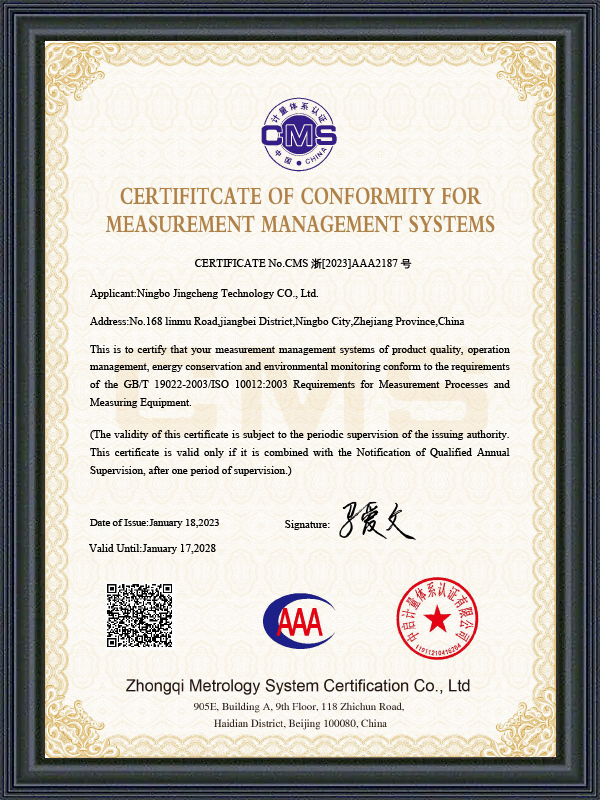
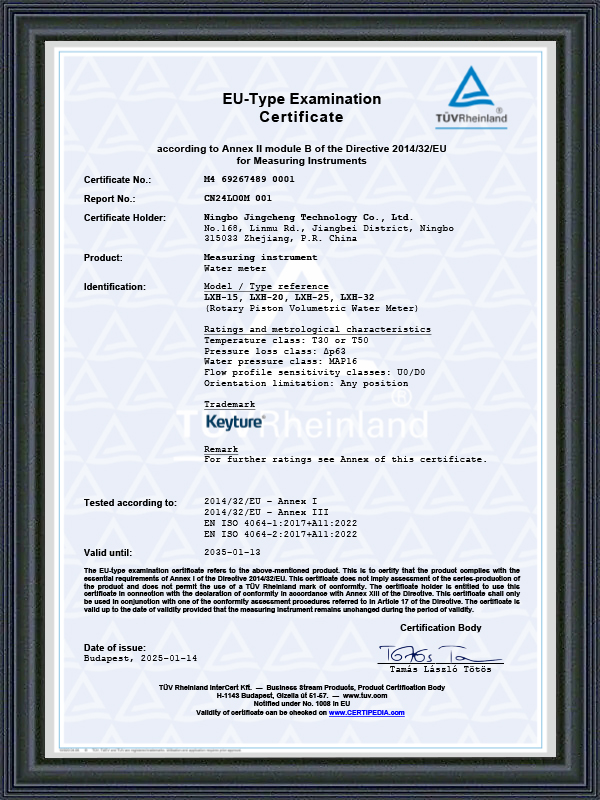
EU MID approval with the required electromagnetic and magnetic disturbance tests for static and mechanical meters.
The partition wall is pressure-tested at 1.5 × MAP and leak-tested with helium or air to confirm that the wet and dry sides are permanently separated.
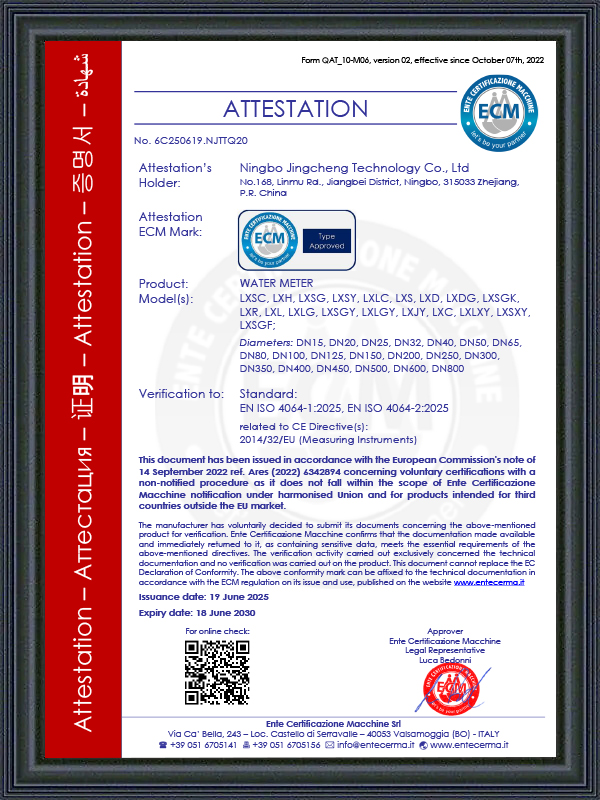
Brass, polymer and seal materials in contact with drinking water can be supplied with NSF/ANSI 61, WRAS or ACS certificates.

Two features define this meter: how the magnetic coupling transmits torque, and how shielding protects it from tampering.
The driving magnet is a ring or disc with alternating poles, mounted on the impeller spindle. Directly across the partition, the follower magnet has matching poles and is mounted on the first gear of the register. Magnetic attraction locks the two together so that each impeller revolution produces exactly one revolution of the follower. The partition is made of non-magnetic material such as brass or polymer, so it passes the field without distortion.
The strength of the coupling is a deliberate design parameter. It must be strong enough to drive the register under all flows, but weak enough to slip rather than break gear teeth when the register jams. Magnet material, pole count, air gap and wall thickness are tuned so that the slip torque is several times the running torque. After a slip event the magnets automatically re-lock at the next pole, without any loss of count if the slip was brief.
Strong external magnets are a common way to interfere with mechanical meters. A magnet held against the cover can pull on the follower, slow the register or even stop it completely. To resist this, the register is surrounded by soft-iron shielding plates that redirect external field lines around the coupling. Magnet orientation and an internal balancing magnet also reduce the influence of fields that reach the follower.
Shielding is tested by placing neodymium magnets of defined strength against every face of the meter and measuring the error. The meter must stay within Class 2 limits under the specified field, and a visual indicator or sensor can be added to flag attempted tampering. Together with the lead-seal boss, the magnetic design raises the effort required for fraud without raising the cost of honest installation.
Measured performance data for the magnetic drive cold water meter. Use these charts to confirm pressure loss, accuracy and installation dimensions before specifying.
Figure 1 — Head loss curve (MPa vs. flow m³/h)
The chart shows pressure loss across the magnetic drive meter at DN15 to DN40. The partition wall does not intrude into the flow path, so losses are those of the vane wheel chamber alone, at or below 0.063 MPa at permanent flow.
Figure 2 — Accuracy error curve (Class 2, R125, Q1–Q4)
The magnetic coupling adds a small, constant drag torque, which is calibrated into the factory adjustment. The error curve stays inside ±5% in the lower zone and ±2% in the upper zone, and remains in the same band when a test magnet is held against the shielded cover.
Figure 3 — Installation dimensions (L × H × B × D)
| Size | L (mm) | H (mm) | B (mm) | D (thread) |
|---|---|---|---|---|
| DN15 | 165 | 100 | 82 | G3/4" |
| DN20 | 190 | 105 | 84 | G1" |
| DN25 | 260 | 118 | 98 | G1¼" |
| DN32 | 260 | 126 | 100 | G1½" |
| DN40 | 300 | 152 | 128 | G2" |
Dimensions are for reference. Confirm exact values with our engineering team before installation design.
How the impeller is connected to the register determines leak risk, tamper resistance and maintenance. This table compares coupling methods.
| Design Feature | Magnetic Drive | Direct Mechanical Shaft | Electronic Sensor (Hall / Optical) |
|---|---|---|---|
| Dynamic seal required | None | Yes — stuffing box or lip seal | None |
| Leak risk over time | Very low | Rises with seal wear | Very low |
| Magnetic tamper resistance | Good with shielding | Not affected | Hall sensors can be affected |
| Overload protection | Coupling slips, then re-locks | Gear damage possible | Not applicable |
| Power requirement | None | None | Battery required |
| Register servicing | Dry side serviced without opening water side | Water side exposed | Battery and electronics |
| Unit purchase cost | Low | Lowest | Higher |
| Best application | General cold water supply | Legacy and low cost | Smart and remote metering |
This comparison is indicative. Actual performance depends on water quality, tamper environment and the specific product configuration. Contact our engineers for application-specific guidance.
Premium quality
since 2002
Coming From China, Marketing To The World
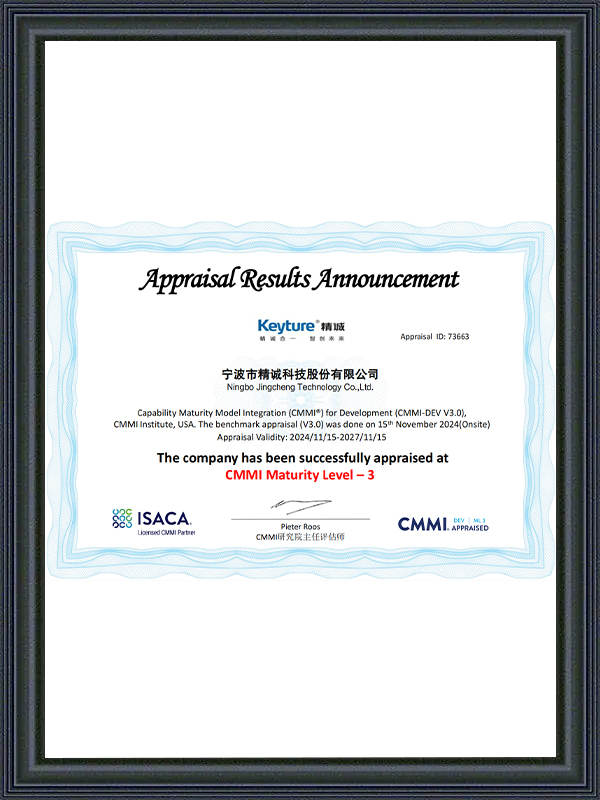
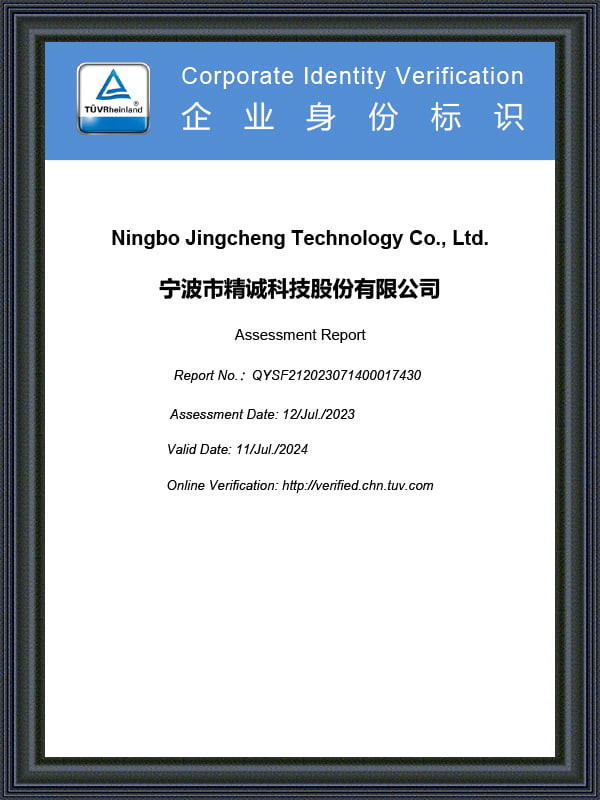
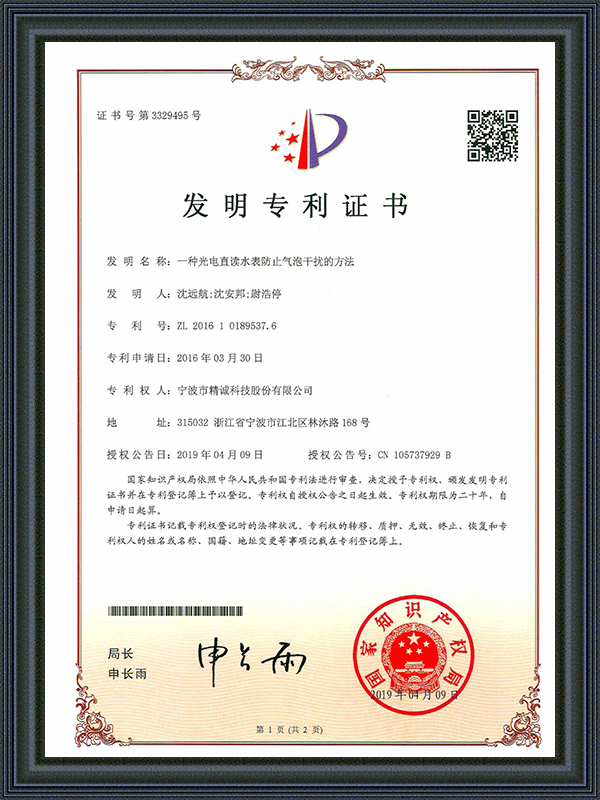
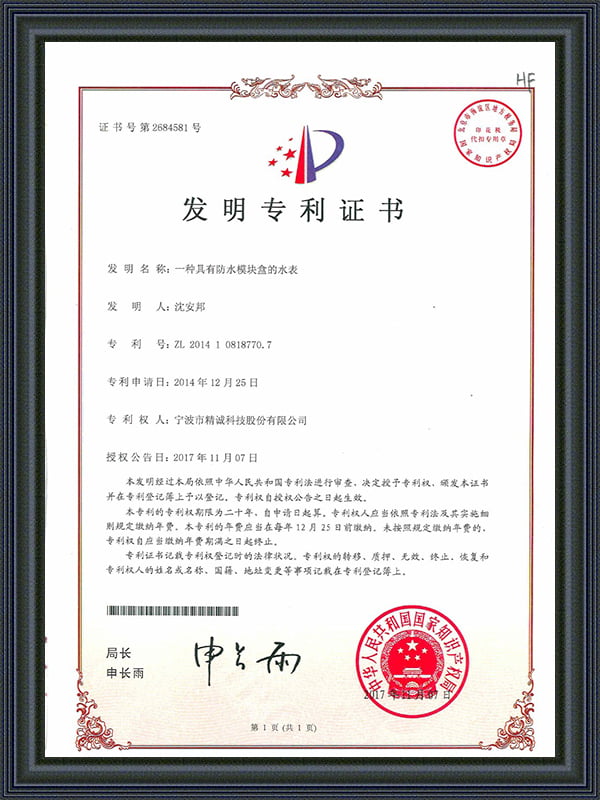
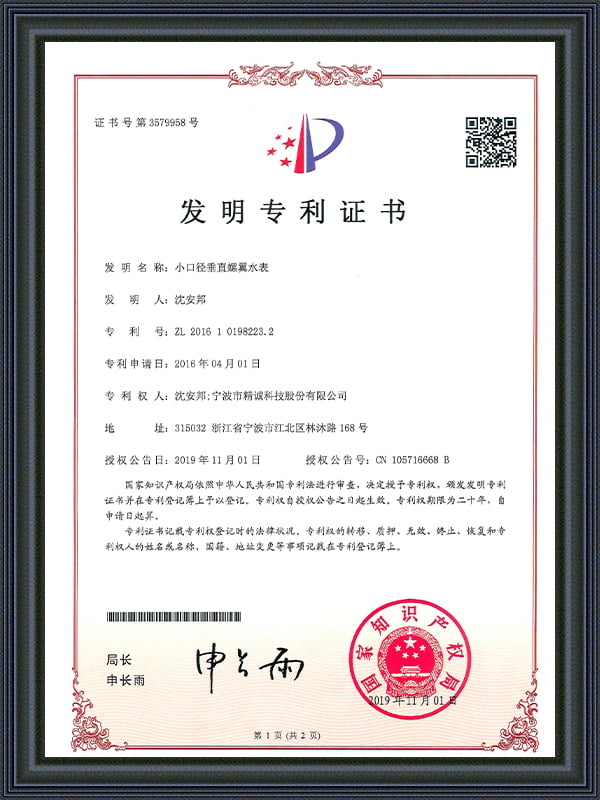
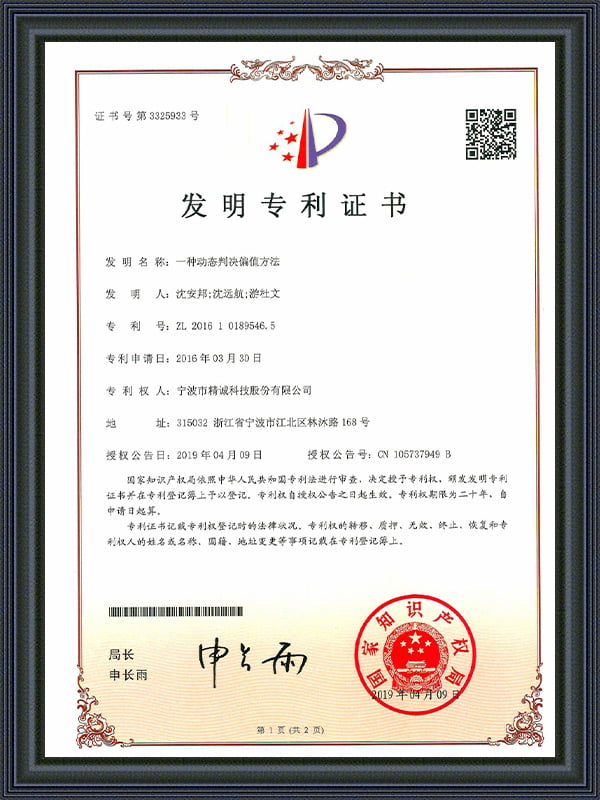
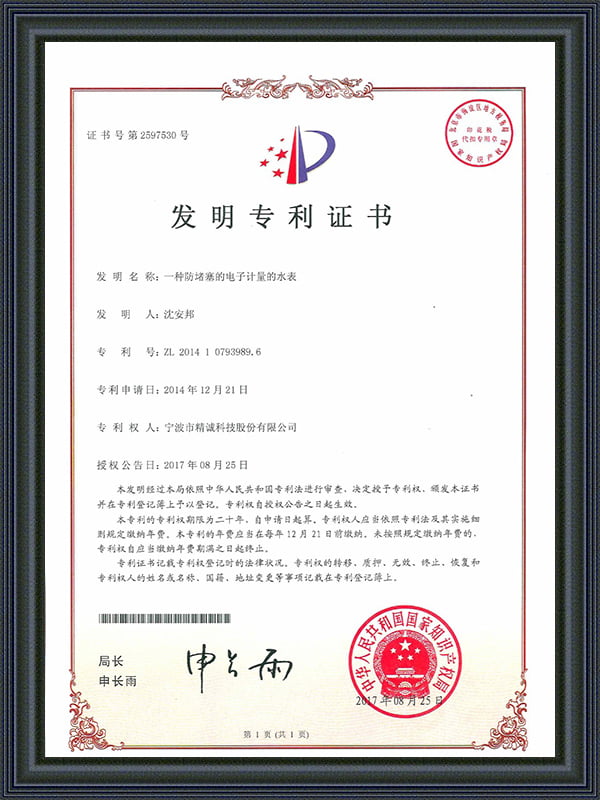
Keyture Meter is located in Picturesque Jiangbei Investment Park, NINGBO, CHINA. It is a comprehensive high-tech China Magnetic Drive Cold Water Meter Manufacturers and Custom Magnetic Drive Cold Water Meter Factory that integrates scientific research & development, production, sales, and service. Established in 2002 as a manufacturer and exporter of water meters for more than 22 years. The factory covers an area of 40 acres (30,000 square meters), 200 staff, 100+ types of products, product capacity of 5 million per year. Its product range covers single jet, multi-jet, volumetric piston type, Woltman type, IC card intelligent water meter, remote control water meter, optoelectrical reading direct remote control water meter...
Yearly production capacity
Production Area
Works and inspectors
Production experience
Excellent product with exquisite craftsmanship
Customization
We have a strong R&D team, and we can develop and produce products according to the drawings or samples the customers offered.
Cost
We are a professional manufacturer and also have our own processing machinery. So we can offer good prices and good products directly.
Quality
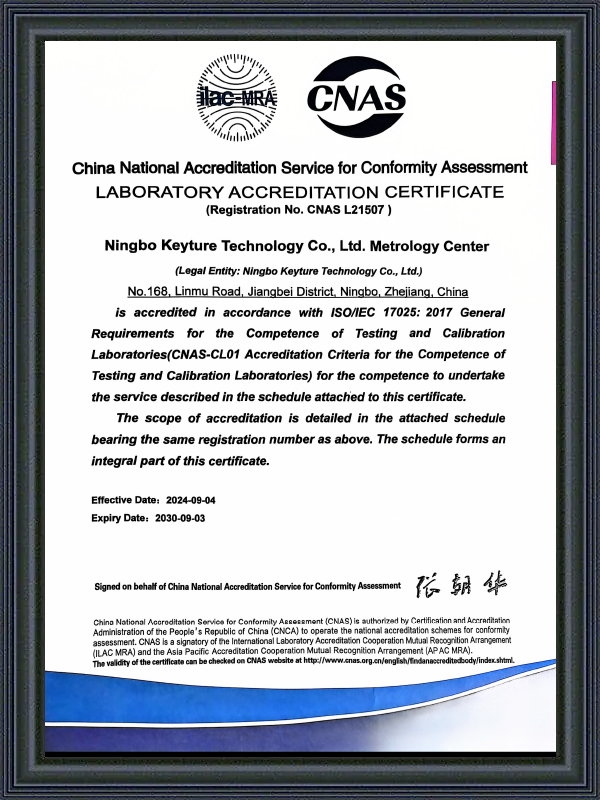
We have our own testing lab and advanced and complete inspection equipment, which can ensure the quality of the products.
Service
We focus on developing high-quality products for top-end markets. Our products are in line with international standards, and are mainly exported to Europe, America, Africa, Asia and other destinations around the world.
Capacity
Our annual production capacity is over 5 million units. We can meet the needs of different customers with different purchase quantities.
Shipment
We are about 35 kilometers away from Ningbo Port. It is very convenient and efficient to ship goods to any other countries.
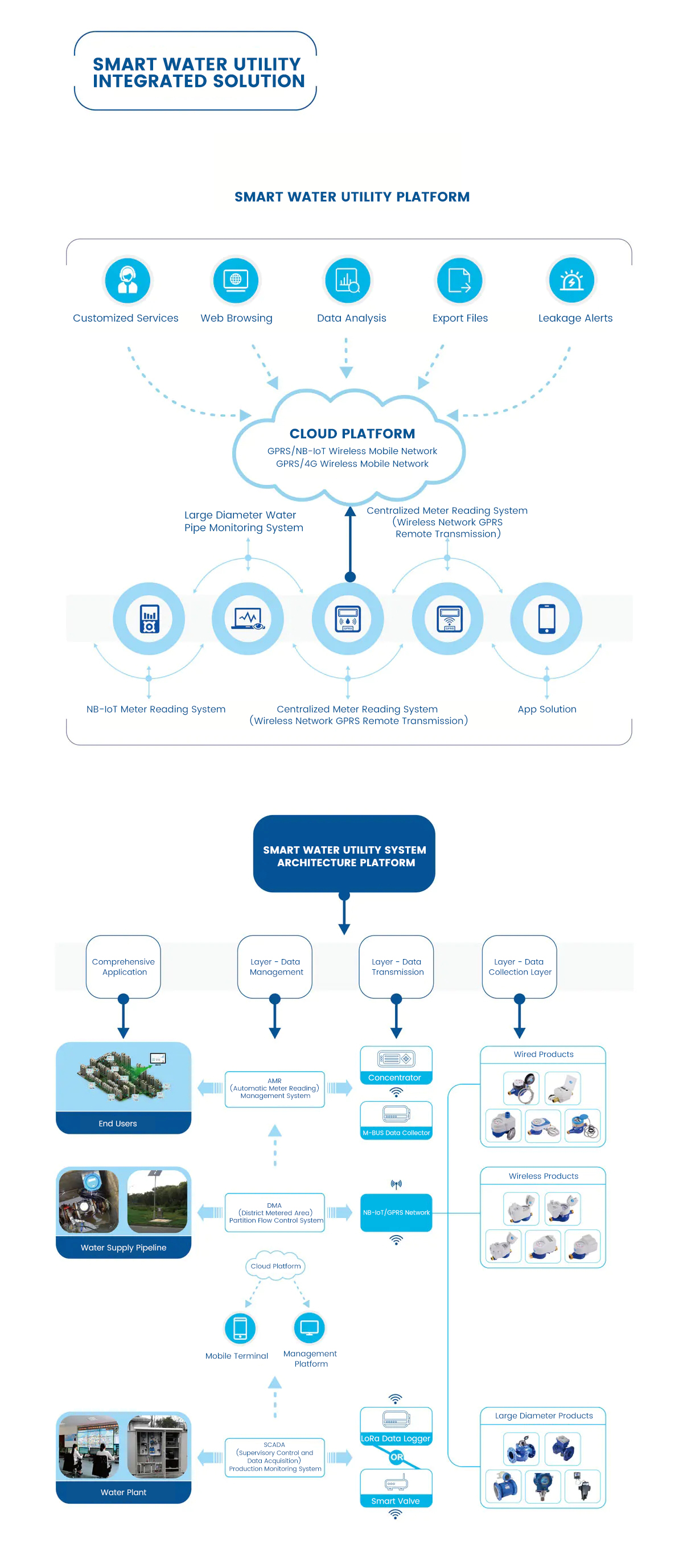
From mechanical meters to smart AMR/AMI systems — we provide end-to-end water metering solutions tailored to your project.
Suited to ordinary potable cold water service where leak-free construction and tamper resistance are valued.
Install the meter horizontally with the register facing upward and in the direction of the flow arrow. Magnetic drive meters rely on gravity to keep the impeller seated on its pivot, so tilting the meter changes the load and can shift the error curve at low flow.
Keep strong magnets, large transformers and motors away from the meter. The shielding is designed for tamper-level fields, but permanent proximity to strong magnets can still affect long-term performance. Do not install the meter against steel plates that carry magnetic flux.
Flush the pipework before fitting the meter and install a strainer if the supply carries sediment. Tighten unions by hand with a quarter turn and seal the register with a lead wire. After commissioning, verify that the dial turns smoothly with a low trickle flow.
A magnetic drive meter needs very little maintenance. The register is sealed and dry, and the water side has only the impeller and pivots. Inspect the dial for clarity, check the unions for leaks and confirm that the seal wire is intact. If the dial stops or turns erratically, check for debris in the strainer before replacing the meter.
Because the coupling is non-contact, there is no seal to replace. When the meter reaches the end of its verification period, the measuring unit can be removed, tested and refurbished with a new impeller and bearings. The register can be reused if its gears are in good condition.
Typical service life is 8 to 10 years in potable water at cold-water temperatures. Cold water slows polymer ageing, so many units remain within accuracy limits well beyond the mandatory period.
It is a water meter in which the impeller drives the register through a pair of magnets across a sealed wall instead of a mechanical shaft. This avoids dynamic seals and keeps the register completely dry.
Because there is no shaft through the housing. The partition is a solid, static wall tested at 1.5 × MAP, and torque passes through it magnetically. With nothing rotating through the wall, there is nothing to wear and leak.
Strong magnets can influence a magnetically coupled meter, which is why our design includes soft-iron shielding and a balancing magnet. The meter is tested against defined magnet strengths and remains within Class 2 limits.
The coupling is designed to slip when torque exceeds a set limit, protecting the gear train. After the jam clears, the magnets re-lock automatically. This also protects the register against water hammer and rough handling.
The cold water rating allows simpler materials and avoids thermal expansion problems between polymer and metal parts. Higher temperatures require different bearing, magnet and seal materials. For hot water, please consider our hot water version.
Yes. The magnetic drag is small and constant, and the R125 range ratio means the minimum flow is one-hundred-and-twenty-fifth of permanent flow. Low-flow performance is verified on every batch.
Permanent magnets keep their strength for decades under normal temperatures, and there is no contact between the magnets. Accelerated tests confirm that coupling torque stays stable throughout the meter’s life.
Yes. A reed-switch or Hall-effect pulse module can be added to the register. Because the pulse sensor reads the follower, the pulse module can be fitted without disturbing the water circuit.
Forged brass is standard and glass-reinforced polymer bodies are available for cost-sensitive projects. Both are suitable for drinking water and can be supplied with certification for the destination market.
The standard calibration is horizontal with the register facing upward. Vertical installation is available on request and is marked on the dial. Check the orientation symbol before installation.
Eight to ten years in normal potable cold water is typical. Cold water slows ageing of polymer parts, and the meter can often be refurbished by replacing the measuring unit.
A test magnet of defined strength is placed on each face of the meter during a flow test, and the error is compared with the baseline. Our factory test report states the field strength at which the meter remains within limits.
Send us the size, orientation, pulse needs and tamper risk level. Our engineers will recommend the right magnetic drive cold water configuration, with price and lead time.

Address: No.168,LinMu Rd.,Zone B, Jiangbei investment Park, Ningbo, Zhejiang,China
Tel: +86-0574-83090480/+86-18892665118
Fax: +86-0574-83021045
Email: [email protected]
Web: https://www.keyturemeter.com/
Quick Links
Product
Mobile terminal
 Custom Magnetic Drive Cold Water Meter Manufacturers