English
 Español
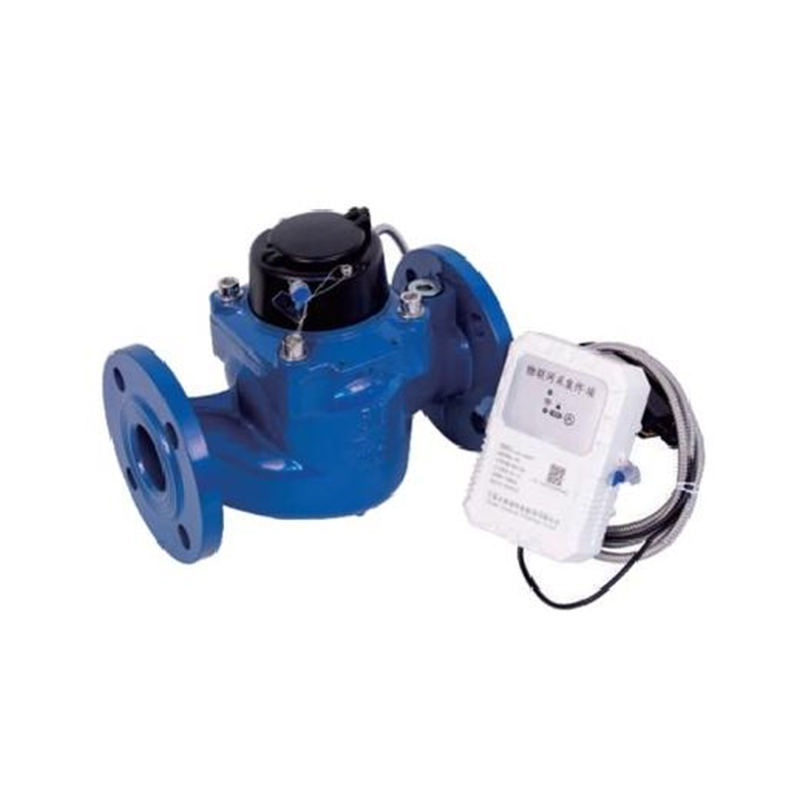


Ultrasonic water meters have rapidly displaced traditional mechanical meters across modern water utility networks, valued for their absence of moving parts, wide turndown ratios, and high measurement accuracy. Manufacturers typically publish a rated service life of 10 to 20 years. In practice, however, the actual operating lifespan of an ultrasonic water meter is governed by the interaction of several distinct technical factors. Understanding these constraints is essential for equipment selection, system design, and long-term asset management.
The vast majority of ultrasonic water meters operate on internal lithium batteries, eliminating the need for external power wiring and enabling flexible deployment in pits, vaults, and remote locations. Battery capacity is therefore one of the most direct determinants of service life. Power consumption is influenced by multiple variables: higher data logging frequencies draw more current; wireless communication modules — including NB-IoT, LoRa, and M-Bus transceivers — generate significant peak current during each transmission event; and low ambient temperatures, particularly below 0 °C, measurably reduce the effective capacity of lithium cells.
Leading manufacturers address this through deep sleep architectures, adaptive sampling strategies, and ultra-low-power microcontrollers, achieving verified battery service lives exceeding 12 years. Once a battery is exhausted, the entire meter unit typically requires replacement. Procurement decisions should therefore prioritize independently validated battery life data over nominal theoretical figures.
The transducer is the functional core of every ultrasonic water meter, converting electrical signals into acoustic pulses and receiving the returning waveforms. Transducers are constructed around piezoelectric ceramic (PZT) elements that undergo progressive degradation over time through several mechanisms.
Depolarization: Continuous electrical excitation and repeated thermal cycling gradually reduce the polarization intensity of the ceramic material, diminishing transmitted signal amplitude and receive sensitivity. Over time this degrades the accuracy of transit-time measurements.
Coupling interface deterioration: The coupling layer between the transducer face and the pipe wall — whether a coupling compound or an epoxy potting — develops micro-fractures under repeated thermal expansion and contraction cycles, reducing acoustic transmission efficiency and degrading the signal-to-noise ratio.
Corrosive water attack: Prolonged exposure to water containing elevated chlorine, sulfide compounds, or low pH can corrode transducer surface materials, physically compromising the acoustic contact area.
Hot water applications present particularly demanding conditions for transducer longevity. Sustained operation above 60 °C significantly accelerates material aging, making the selection of high-temperature-rated transducers a critical design decision for domestic hot water or district heating metering installations.
Water quality is among the most frequently underestimated factors affecting ultrasonic water meter service life.
Scale formation: Hard water with high calcium and magnesium ion concentrations produces carbonate scale deposits on the pipe wall and transducer faces. Scale accumulation alters the effective internal bore, introduces metrological error, attenuates the acoustic signal path, and in severe cases triggers signal-loss alarms or causes measurement interruption. The rate of scaling depends on water hardness, temperature, flow velocity, and the chemical balance of the supply.
Suspended particles and entrained air: Untreated source water with high sand content, or distribution networks that have not been adequately flushed following construction works, exposes transducer faces to abrasive impingement. Entrained air bubbles scatter ultrasonic signals, introducing random errors into transit-time calculations and reducing long-term measurement reliability.
Biofilm growth: Under certain water chemistry conditions, biological films develop on the internal wetted surfaces of the meter body. Biofilm alters wall roughness and modifies the velocity profile within the measurement section, indirectly affecting metrological performance over extended periods.
The signal processing circuitry, microcontroller, data storage, and communication modules inside an ultrasonic water meter face the same reliability challenges as any precision electronic assembly subjected to continuous, long-duration operation.
Ambient temperature and humidity are the dominant environmental stressors. Meters installed in outdoor pit enclosures or underground valve chambers are exposed to persistently high relative humidity and, in some installations, intermittent submersion. The quality of conformal coating applied to the printed circuit board — providing resistance to moisture ingress, salt fog, and fungal growth — is a principal determinant of whether the electronics can operate reliably for a decade or more.
Electronic components exhibit a characteristic bathtub failure-rate curve. Following a relatively stable mid-life period, aging mechanisms including capacitor degradation and solder joint fatigue fracture tend to emerge simultaneously once design lifetimes are approached, manifesting as anomalous readings or communication failures.
Ultrasonic water meters require adequate upstream and downstream straight pipe runs to ensure a developed, stable velocity profile across the measurement cross-section. Installations positioned immediately downstream of bends, valves, reducers, or pumps subject the meter to persistently disturbed flow. Beyond the metrological consequences, continuous operation under non-ideal flow conditions forces the internal signal processing algorithms into permanent compensation mode, increasing power consumption and accelerating battery depletion.
Mechanical vibration from adjacent pumping equipment or compressors is transmitted through the pipework to the meter body, interfering with acoustic signal acquisition and potentially loosening the mechanical connections securing the transducers over time.
For buried installations, the meter body must withstand soil overburden loads and differential settlement stresses. The choice of body material — copper alloy, stainless steel, or engineering polymer — along with the ingress protection rating of the enclosure, directly governs structural and corrosion resistance over the intended service life.
Under identical service conditions, the service lives achieved by ultrasonic water meters from different manufacturers can differ substantially. The underlying reasons lie in design choices and production quality: transducer encapsulation technology, hydraulic design of the flow body, elastomer seal compound selection, IP protection grade (IP68 is the minimum requirement for pit-mounted installations), and electromagnetic compatibility design all constitute foundational elements of long-term reliability.
Products that have successfully completed type-evaluation testing under ISO 4064, the EU Measuring Instruments Directive (MID), or OIML R49 have been subjected to systematic verification of their environmental durability and metrological stability. These certifications represent a meaningful reference standard for engineering procurement.
prevIs it Really Worth Getting a Water Meter? 5 Critical Facts You Need to Know
nextWhy Is the Electronic Water Meter Replacing Mechanical Meters in Modern Smart Cities


Address: No.168,LinMu Rd.,Zone B, Jiangbei investment Park, Ningbo, Zhejiang,China
Tel: +86-0574-83090480/+86-18892665118
Fax: +86-0574-83021045
Email: [email protected]
Web: https://www.keyturemeter.com/
Quick Links
Product
Mobile terminal
 Wholesale Potable Water Flow Meter Manufacturers