English
 Español


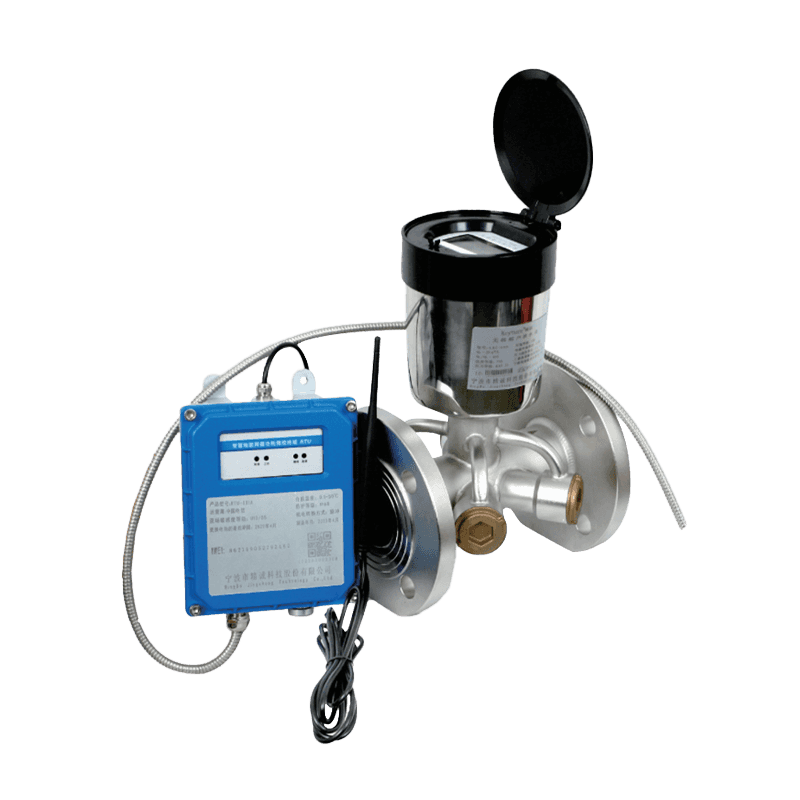
For over a century, global water management relied primarily on traditional mechanical water meters. These devices measure flow by driving internal impellers or pistons, accumulating readings on mechanical counters via gear sets. However, with increasing global water scarcity and the rise of Smart City concepts, traditional mechanical metering can no longer meet modern demands for high precision, real-time monitoring, and data-driven operations. In this context, the Electronic Water Meter has emerged, initiating a digital revolution in water measurement.
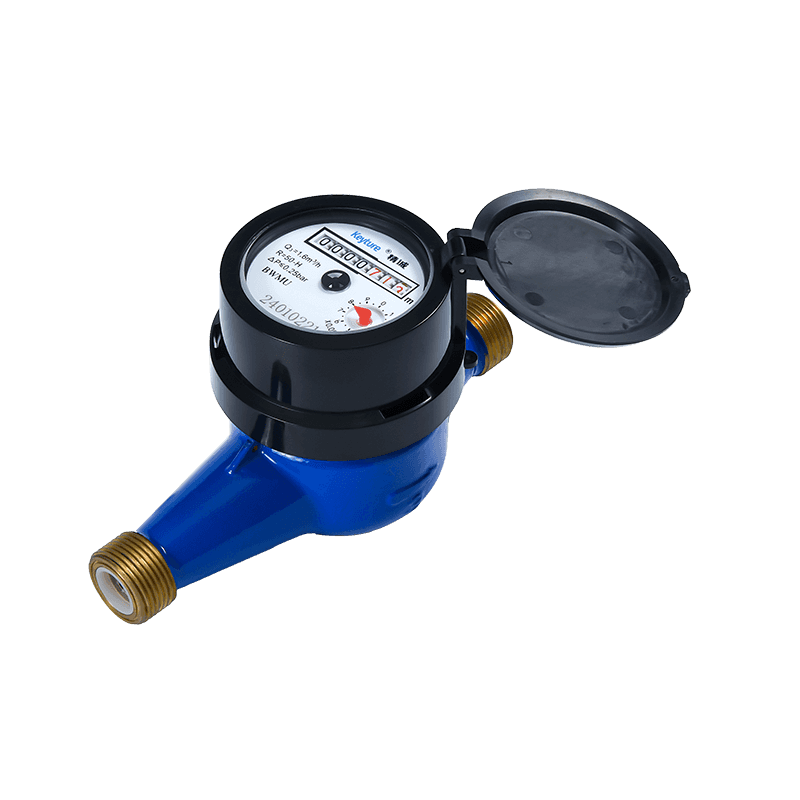
Traditional mechanical water meters have revealed several unavoidable defects in long-term industrial and residential use. First is mechanical wear: because metering depends on physical contact and rotation, bearings and gears suffer irreversible wear over time. This leads to a gradual decline in accuracy—often characterized by the meter "slowing down"—resulting in significant economic losses for water utilities. Second is the high starting flow rate: mechanical meters often fail to detect minor leaks, meaning a large volume of low-velocity water flow goes unbilled.
The Electronic Water Meter has completely transformed this landscape. It no longer relies on moving mechanical parts, instead utilizing sensor technologies such as Ultrasonic Time-of-Flight or Electromagnetic induction principles. This "static" design means there are no frictional losses inside the product, allowing it to maintain consistent measurement accuracy for over 10 years.
For manufacturers, the Electronic Water Meter is more than just a metering tool; it is an integrated data terminal. It can monitor pipeline pressure, flow anomalies, and backflow in real-time, transmitting this critical data to management platforms via electronic protocols.
| Performance Indicator | Traditional Mechanical Meter | Electronic Water Meter | Advantage Analysis |
| Measurement Principle | Rotation of impeller/piston | Ultrasonic/Electromagnetic (No moving parts) | Electronic has no wear; longer life |
| Turndown Ratio (R value) | Typically R50 - R80 | Up to R250 - R500 | Electronic has wider range and higher precision |
| Starting Flow (Q1) | High (Cannot detect minor leaks) | Extremely low (As low as 1-2 L/h) | Significantly reduces Non-Revenue Water (NRW) |
| Pressure Loss | Large (Internal mechanical resistance) | Minimal (Straight-through structure) | Reduces pump energy; maintains pipe pressure |
| Anti-interference | Sensitive to impurities and bubbles | Digital filtering algorithms; high stability | More stable data; fewer complaints |
| Data Collection | Manual reading or pulse sampling | Real-time digital transmission (NB-IoT/LoRa) | Enables automated, refined management |
| Protection Class | Typically IP65 | Standard IP68 (Submersible) | Adapts to harsh meter pit environments |
In international trade and large-scale engineering projects, selecting an Electronic Water Meter has become a standard trend. For factories and water utilities, while the initial procurement cost is higher than mechanical meters, the Life Cycle Cost (LCC) advantages are significant. By reducing leaks, eliminating error drift caused by mechanical wear, and saving on manual reading costs, an Electronic Water Meter typically achieves a Return on Investment (ROI) within 2-3 years through increased revenue collection.
Furthermore, the built-in sensors of the Electronic Water Meter can capture "water hammer" effects or abnormal pressure fluctuations, providing an early warning system to protect expensive industrial piping—an added value that no mechanical meter can offer.
Understanding why the Electronic Water Meter maintains such long-term stability requires a look into its internal electronic system. Unlike mechanical structures driven by gears, the Electronic Water Meter is a culmination of sensor technology, microelectronics, and precision algorithms. The absence of rotating parts fundamentally eliminates errors caused by physical wear.
A high-quality Electronic Water Meter generally consists of four key parts:
1. Sensor Unit: The "senses" of the device, usually consisting of a pair of ultrasonic transducers or a set of electromagnetic coils. It is responsible for converting flow signals into electrical signals.
2. Signal Processing Chip: Captures weak analog signals and converts them into digital data via a high-speed A/D converter. This chip features built-in filtering algorithms to exclude interference from impurities or vibrations.
3. CPU & Memory: The "brain" of the Electronic Water Meter. It calculates cumulative flow based on preset formulas, records instantaneous flow rates, and stores data in non-volatile memory (EEPROM), ensuring data is not lost even if the battery dies.
4. LCD Interactive Display: Visually displays current data, including total volume, flow rate, flow direction, and various alerts like leak alarms or low battery warnings.
Ultrasonic Time-of-Flight: This technology is most widely used in the Electronic Water Meter. It uses ultrasonic beams to measure the time difference between upstream and downstream propagation in the liquid. Sound travels faster downstream and slower upstream. High-precision clock chips calculate this microsecond-level time difference to determine flow velocity. This offers an extremely wide measurement range, capable of capturing minute changes in water flow.
Electromagnetic Induction: This type of Electronic Water Meter is based on Faraday’s Law of Electromagnetic Induction. When a conductive liquid (water) flows through a magnetic field, it generates an induced electromotive force. The voltage is proportional to the flow velocity. The measurement channel is completely unobstructed, resulting in near-zero pressure loss, making it ideal for large-diameter industrial pipes.
| Technical Indicator | Ultrasonic Electronic Water Meter | Electromagnetic Electronic Water Meter |
| Working Principle | Acoustic Time-of-Flight | Electromagnetic Induction |
| Pressure Drop | Minimal (Slight narrowing in pipe) | Zero resistance (Full bore structure) |
| Water Quality Requirement | Requires low impurities/bubbles | Requires only conductive liquid; high impurity resistance |
| Starting Flow Measurement | Excellent (Measures dripping water) | Average (Weaker at extremely low velocities) |
| Typical Application | Residential, commercial, water saving | Wastewater, industrial raw materials, main pipes |
| Installation Requirement | Tolerant of some vibration | Must avoid strong magnetic fields |
| Maintenance Frequency | Extremely low | Low (Check for electrode scaling) |
In traditional metering logic, precision and lifespan are often contradictory. However, the Electronic Water Meter solves this via a pure electronic metering solution. Since there are no moving parts (like impellers) obstructing the flow, sand or impurities will not cause the device to jam or the accuracy to drift. This "static measurement" characteristic ensures that the Electronic Water Meter accuracy curve remains flat throughout its service life (usually 10-15 years), requiring no frequent removal for calibration or repair.
Additionally, the circuit boards of the Electronic Water Meter are typically treated with a vacuum potting process to achieve an IP68 protection rating. This ensures electronic components remain stable even if the meter pit is flooded for long periods, which is vital for protecting water system assets.
In modern water management and industrial processes, the accuracy of metering equipment directly impacts a company's financial health. Upgrading from a mechanical meter to an Electronic Water Meter is not just a hardware replacement; it is a transition from "vague estimation" to "precision governance."
Non-Revenue Water (NRW) is the gap between the water supplied and the water billed. The Electronic Water Meter effectively narrows this gap by eliminating low-flow leakage. Mechanical meters have a "dead zone" where the impeller won't start during minor leaks. The Electronic Water Meter has high sensitivity, capturing flow as low as 1-2 L/h, ensuring every drop is billed. It also prevents mechanical error drift, ensuring precision remains within the rated range for over 10 years.
| Cost Item | Traditional Mechanical Meter | Electronic Water Meter | Long-term Benefit Analysis |
| Initial Unit Price | Lower | Medium/High | Higher cost but multiple functions |
| Installation Cost | Standard | Standard + System Integration | Same cost, but adds digital capabilities |
| Manual Reading Cost | Extremely high (Door-to-door) | Extremely low (Remote collection) | Saves over 90% in labor costs |
| Leak Repair Response | Lagging (Reactive) | Real-time (Proactive alarms) | Reduces leak detection time by 60%+ |
| Maintenance Cycle | 3-5 years for replacement | 10-15 years maintenance-free | Reduces asset replacement frequency |
| Billing Disputes | High (Lack of evidence) | Low (Transparent data) | Increases user satisfaction and cash flow |
Upgrading to an Electronic Water Meter gives management a "God's eye view." Remote communication modules allow systems to receive data every 15 minutes or even every minute. Abnormal water alarms can be triggered if a factory shows continuous flow during non-production hours, preventing property damage from burst pipes. Utilities can also optimize pump frequency, reducing energy consumption by 10%-20%.
Using an Electronic Water Meter proves a commitment to refined water resource management. This is essential for Green Building certifications (like LEED), ISO 14001 compliance, and showcasing a factory's digital strength. For industrial parks or high-end residential developers, making the Electronic Water Meter a standard feature is a core competitiveness for attracting high-quality tenants.
The Electronic Water Meter is not a one-size-fits-all product. Technical routes vary significantly based on principle, environment, and diameter requirements.
Ultrasonic Electronic Water Meter: Uses sound wave time difference to calculate velocity. Best for residential and commercial buildings. Its ability to capture low flow makes it ideal for leak monitoring and precise billing.
Electromagnetic Electronic Water Meter: Measures flow based on Faraday’s Law. Best for industrial production and large networks. The full-bore structure means zero pressure loss, perfect for wastewater and agriculture.
| Key Parameter | Ultrasonic Electronic Water Meter | Electromagnetic Electronic Water Meter | Selection Advice |
| Pipe Diameter (DN) | DN15 - DN300 | DN15 - DN3000 | Choose Electromagnetic for >DN300 |
| Accuracy Class | Typically Class 2 (±2%) | Up to ±0.5% | Choose Electromagnetic for high-end industry |
| Conductivity Req. | No requirement | Must be conductive | Cannot use Electromagnetic for pure water |
| Pressure Loss | Very low | Zero | Choose Electromagnetic for pressure-sensitive pipes |
| Impurity Resistance | Medium | Extremely Strong | Choose Electromagnetic for sewage/raw water |
| Protection Class | IP68 | IP68 | Both are submersible |
| Typical Battery Life | 10+ years | 6-10 years | Choose Ultrasonic for long-term maintenance-free |
Smart Residential & Apartment Sub-metering: In residential areas, the primary task is "granular management." With high turndown ratios (R250+), it detects toilet tank leaks. This solves unbilled small flow and enables remote pre-payment.
Industrial Process Control & Factory Water Saving: For factories, the Electronic Water Meter is both a billing tool and a production monitor. Electromagnetic versions are used for cooling water or wastewater, as no mechanical rotors mean no clogging with residue.
Municipal Water Supply DMA Management: In city networks, the meter is installed at District Metering Area (DMA) nodes. It uses high-frequency sampling to analyze Minimum Night Flow (MNF), pinpointing underground burst locations accurately.
For residential reading efficiency and leak reduction, prioritize Ultrasonic. For large factories, wastewater, or high flow stability, prioritize Electromagnetic. If the medium is non-conductive, you must choose Ultrasonic.
If sensors are the "eyes" of the Electronic Water Meter, communication protocols are the "brain." Protocols determine maintenance costs, signal depth, and battery life.
NB-IoT (Narrowband IoT): Based on cellular base stations (4G/5G). It offers strong penetration (underground pits), supports massive connections, and requires no private base stations.
LoRaWAN: An unlicensed band allowing for private networks. It provides fully autonomous data control and zero traffic fees, ideal for remote factories or parks.
Wireless M-Bus: A European standard for short-range communication, ideal for "Walk-by" or "Drive-by" meter reading.
| Parameter | NB-IoT (Cellular) | LoRaWAN (Private) | Wireless M-Bus |
| Network Architecture | Carrier-dependent | Private Gateway | Point-to-Point/Concentrator |
| Signal Penetration | Extremely Strong | Strong | Average |
| Latency | < 10 seconds | Seconds to minutes | Minute-level |
| Battery Life | 8-10 years | 10-15 years | 10+ years |
| Operating Cost | Annual SIM traffic fee | Zero traffic fee | Zero traffic fee |
| Deployment Ease | Plug and play | Requires gateway planning | Requires handheld devices |
| Data Security | Carrier-grade encryption | AES-128 encryption | Standard encryption |
Overcoming Deep Well Challenges: In urban projects, the Electronic Water Meter is often installed in deep pits. NB-IoT’s power density gain is 20dB higher than GSM, allowing signals to reach where others can't.
Remote Mines & Smart Farms: In areas without cell signals, LoRaWAN provides flexibility. One gateway can cover 10km, ensuring data stays within a private server.
Two-Way Communication: Modern protocols allow back-office systems to send commands. For example, if a severe leak is detected, the system can remotely close the electronic valve integrated into the Electronic Water Meter.
Future Compatibility: Our factory uses modular designs. This ensures that as networks move to 5G RedCap, your Electronic Water Meter hardware remains compatible for the next 15 years.
Even a superior Electronic Water Meter will suffer if installed incorrectly. We follow the "30% product, 70% installation" rule to ensure peak performance.
The Electronic Water Meter accuracy depends on flow stability. Bends and valves create turbulence. The U10 / D5 Principle requires at least 10 times the pipe diameter (10D) of straight pipe upstream and 5D downstream. The pipe must always be full; avoid installation at the highest point (air pockets).
| Factor | Ideal Condition | Avoidance Area | Engineer Tip |
| Location | Away from pumps/motors | Near power distribution rooms | Strong magnetic fields interfere with electrodes |
| Pipe State | Consistent diameter | Near sudden diameter changes | Diameter changes cause turbulence |
| Protection | Standard meter pit | Areas with heavy vehicle traffic | Avoid unnecessary physical impact |
| Light/Humidity | Shaded, dry, ventilated | Direct sunlight or flooded pits | Sunlight ages LCD screens and casings |
1. Appearance Inspection: Every 6 months, check the Electronic Water Meter casing for cracks or leaks and clean the display.
2. Signal Strength Monitoring: Monthly, check RSSI on the dashboard. If the signal drops, check for obstructions.
3. Electrode Cleaning: In wastewater scenarios, if flow drifts, clean electrodes with a non-abrasive cloth.
4. Battery Management: Monitor voltage data. The Electronic Water Meter usually alarms at 10% remaining life.
Gasket protrusion: Misaligned gaskets create turbulence, causing the Electronic Water Meter to read incorrectly. Reverse installation: Ensure flow matches the arrow on the casing. Air accumulation: Installing at high points causes air to block the sensor or jump readings.
Ans: Yes. Modern Electronic Water Meter units use ultra-low power processors. Under standard conditions (one transmission per day), batteries last 10-15 years. Frequency of transmission, signal strength, and extreme temperatures all affect lifespan.
Ans: No. Mechanical meters use magnetic couplings and are easily disturbed. The Electronic Water Meter uses electronic sensors (ultrasonic or electromagnetic) with no magnetic moving parts. It passes rigorous EMC tests and is highly resistant to cheating.
Ans: This depends on the type. Ultrasonic meters use filtering algorithms; while severe bubbles refract waves, the system identifies an "Empty Pipe Alarm" rather than giving a false reading. Electromagnetic meters are extremely resistant to sand and debris.
| Medium Condition | Traditional Mechanical Meter | Electronic Water Meter |
| Fine Sand | Easily wears impeller; causes error | No impact (Straight structure) |
| Pipe Bubbles | Causes "air spinning" (fast reading) | Smart filtering (Alarm/Correction) |
| Scale Deposit | Jams mechanical gears | Minimal impact (Signal compensation) |
| Reverse Flow | Causes counter reverse/damage | Precise bidirectional recording |
Ans: Usually because the Electronic Water Meter is more accurate. Mechanical meters have a high starting flow (15-30 L/h) and miss minor leaks. The Electronic Water Meter starts at 1-3 L/h, capturing water that was previously "uncounted."
Ans: No. Data is stored in EEPROM. Even with a broken screen or dead battery, cumulative flow and logs are permanently saved and can be recovered via remote commands.
Ans: It is the highest promise for installation environments. IP6X means dust-tight, and IPX8 means protected against long-term immersion under pressure. It means the Electronic Water Meter works even if flooded for weeks.
prevHow Long Do Ultrasonic Water Meters Last?
nextWill Ultrasonic Water Meters Completely Replace Mechanical Water Meters Within Five Years? An Industry Evolution Analysis


Address: No.168,LinMu Rd.,Zone B, Jiangbei investment Park, Ningbo, Zhejiang,China
Tel: +86-0574-83090480/+86-18892665118
Fax: +86-0574-83021045
Email: [email protected]
Web: https://www.keyturemeter.com/
Quick Links
Product
Mobile terminal
 Wholesale Potable Water Flow Meter Manufacturers