English
 Español
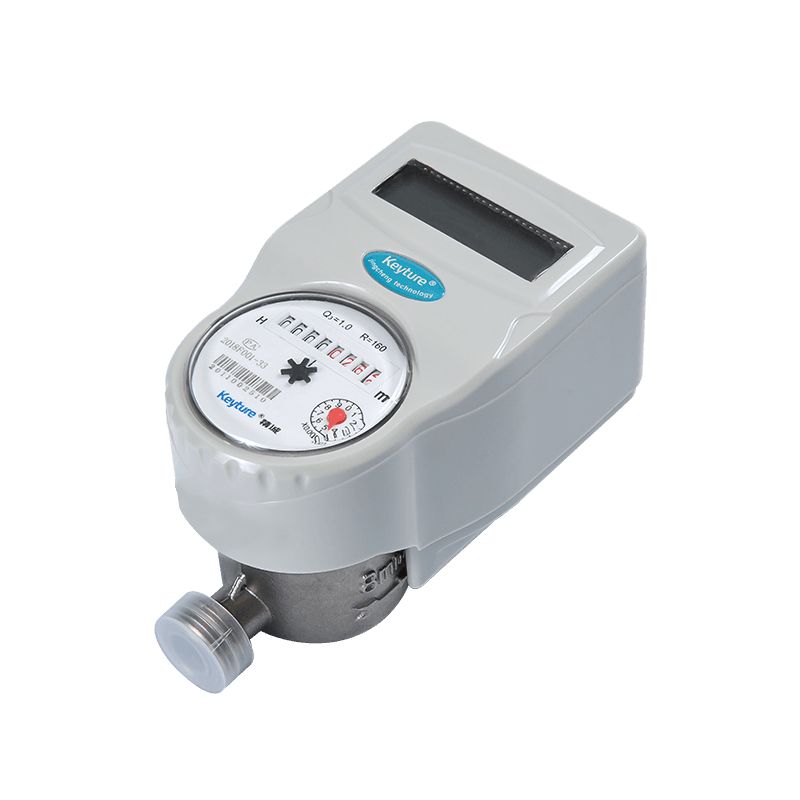


Every month, thousands of households receive a water bill based on a number that appears on a small device buried in a driveway box or tucked inside a utility cupboard. That device is a residential water meter, and the number it records directly determines how much the household pays for water. Knowing how this meter works is far more useful than simple curiosity suggests: it explains why a bill suddenly rises, how a hidden leak can be found before it becomes expensive, and what to look for when a new meter is being installed. This article walks through the internal working principles, reading techniques, accuracy standards and smart metering options that apply to homes today.
A residential water meter is a flow-measuring instrument installed at the point where the public water supply enters a property. Its job is to measure the total volume of water that passes through the pipe, so that consumption can be billed fairly and accurately. In most countries the register displays cubic metres and litres; in some older installations, the register may show cubic feet or gallons. The meter is sized according to the connection diameter, typically DN15 for apartments and most houses, and DN20 for larger homes with higher peak demand.
The meter is installed in series with the incoming pipe. Every drop of water drawn by taps, showers, toilets and appliances passes through the meter before reaching the internal plumbing, so the meter sees the complete picture. When a reading is taken at the start of a billing period and again at the end, the difference between the two numbers is exactly the volume of water consumed in that period. This simple principle is the foundation of everything from monthly billing to district-level leakage analysis. The terminology used around utility metering can be confusing for first-time buyers, so it helps to clarify the basic definitions before comparing different models.
Mechanical meters have been the standard in residential plumbing for more than a century. They use the kinetic energy of the flowing water itself to move a measuring element, and that movement is transferred through magnetic couplings and gear trains to a mechanical register. The register looks much like the odometer on a car dashboard, with a series of numbered wheels that turn as water flows.
The essential point to remember is that a mechanical meter is a volume-integrating instrument. It does not measure pressure, velocity or time directly; it counts discrete events, and each event represents a fixed, known volume of water. Two distinct technologies dominate the residential market.
Positive displacement meters, sometimes sold as rotary piston or volumetric meters, contain a precisely machined measuring chamber with a moving element inside. As water enters the chamber, it pushes a nutating disc or an oscillating piston from side to side. The movement seals a portion of water at the inlet, carries it across the chamber and releases it at the outlet, then returns to take a new portion. Each complete cycle moves exactly the same volume, so the total volume is the number of cycles multiplied by the chamber volume. Because the chamber physically isolates a fixed amount of water at every cycle, positive displacement meters perform exceptionally well at very low flow rates. A slow drip from a tap or a worn toilet valve still turns the piston, and the consumption is recorded correctly. This is why volumetric designs are the standard choice for households in many European countries where low-flow accuracy is a legal requirement.
Step 1
Water enters the chamber
Inlet pressure pushes water into the measuring chamber and drives the piston to one side.
Step 2
The piston carries the volume
The moving element seals a known volume of water and transports it toward the outlet.
Step 3
The register counts each cycle
Every piston cycle adds the fixed chamber volume to the total displayed on the register.
Multi-jet velocity meters use a completely different measuring principle. Instead of dividing the water into equal volumes, they measure how fast a small turbine wheel rotates in the stream. Water enters the measuring chamber through a ring of ports arranged around the turbine, and the jets strike the vanes from several directions at the same time. The balanced thrust keeps the impeller stable and reduces bearing wear. The rotation speed is proportional to the flow rate, and the register integrates the number of rotations over time to compute the total volume that has passed.
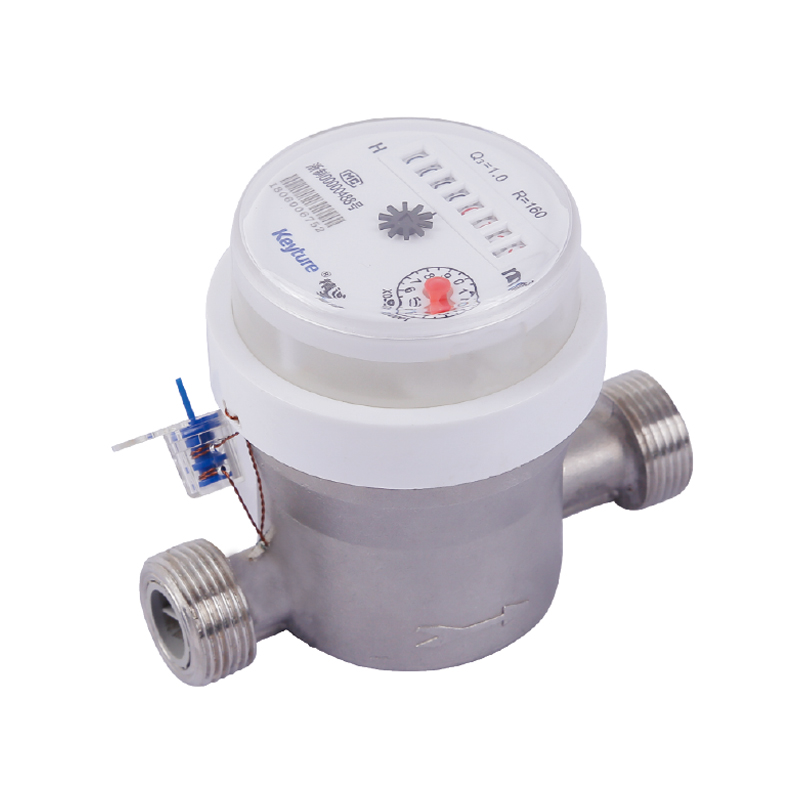
Multi-jet meters are simpler to produce and less expensive than positive displacement meters, and they tolerate suspended particles better because the internal flow passages are more open. They do not catch the tiniest trickles as reliably as a piston meter, but their overall performance is entirely adequate for ordinary household use, and the price difference is significant. A common example is the DN15 domestic multi-jet dry-type meter, which combines a durable brass body with a dry dial design:
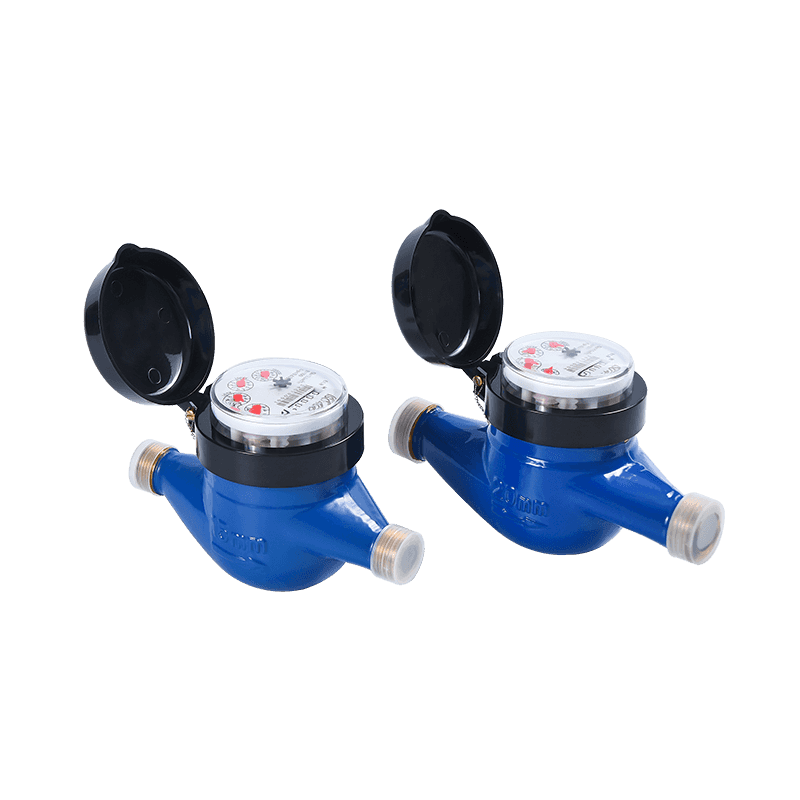 DN15 Multi-Jet Dry-Type Cold Water Meter with Brass BodyThis domestic multi-jet meter combines a durable brass body with a dry dial register, ensuring long-term readability even in hard water. Its magnetic drive and open flow passages make it a reliable, economical choice for ordinary household use.View Product →
The term "dry-type" means the register is separated from the water by a magnetic coupling. Condensation and mineral deposits cannot reach the dial, so the digits stay readable for many years even in hard water regions.
Electronic water meters replace the gear train and mechanical register with a solid-state sensor, a microcontroller and a digital display. They cost more to manufacture, but the measuring chamber contains no moving parts in contact with the water, which removes mechanical wear and extends the service interval. Electronic meters also open the door to remote reading, real-time consumption profiles and automated leak alerts.
The most common electronic technology in residential metering is ultrasonic transit-time measurement. Two piezoelectric transducers are mounted inside the flow tube, facing each other at a slight angle. One transducer sends a high-frequency sound pulse downstream, while the other sends a pulse upstream. When the water is moving, the downstream pulse travels slightly faster than the upstream pulse. The difference in travel time is directly proportional to the average velocity of the water. The meter's processor multiplies this velocity by the internal cross-sectional area of the tube to obtain the volumetric flow rate, and then integrates the flow rate over time to produce the total consumption.
Ultrasonic meters offer an exceptionally wide measuring range. Because the electronics can resolve very small time differences, the same meter that handles a fully open tap at 30 L/min can also register a slow trickle of 1 to 2 L/h. That is why utilities are increasingly specifying ultrasonic meters in networks where small continuous leaks represent a large share of lost water.
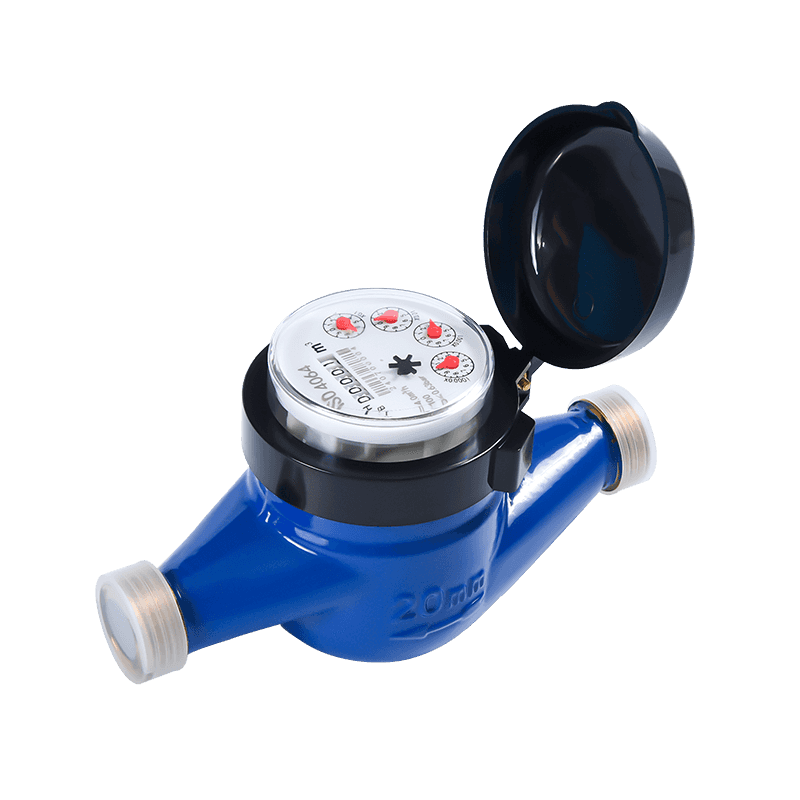
Electronic meters are almost always fitted with a remote-reading module. Wired versions transmit pulses or communicate through RS485 Modbus or M-Bus over a two-wire bus. Wireless versions use radio frequency, LoRa, LoRaWAN or NB-IoT to send readings to a collector or directly to the cloud. The technical path of radio-based systems is covered in our article on how a wireless remote water meter works. A wireless household meter with a dry dial and a battery-powered radio module is a drop-in replacement for a traditional manually read meter:
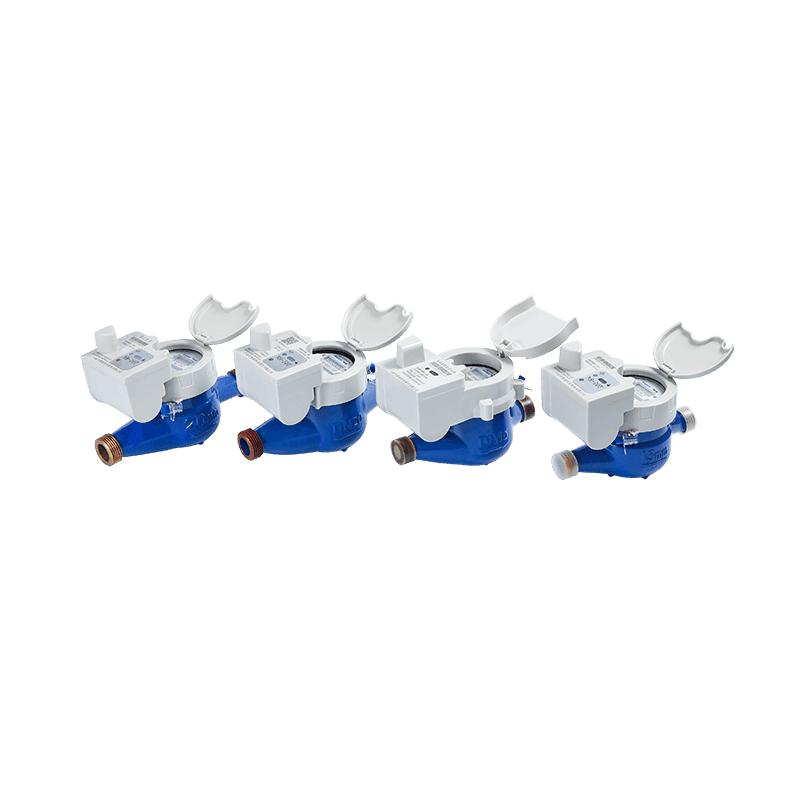 Wireless Remote Dry-Type Water Meter with NB-IoT or LoRaThis split-type wireless meter keeps mechanics and electronics separate, offering IP68 protection and a replaceable battery. Its NB-IoT or LoRa connectivity enables hourly readings and leak alerts, turning the meter into an active water-management tool.View Product →
For the household, the practical benefit is information. A smart meter can report hourly readings to a mobile application, display a graph of daily consumption, identify unusually high usage and send an alert if water continues to flow for a suspiciously long time. In this way the meter evolves from a billing instrument into an active water-management tool.
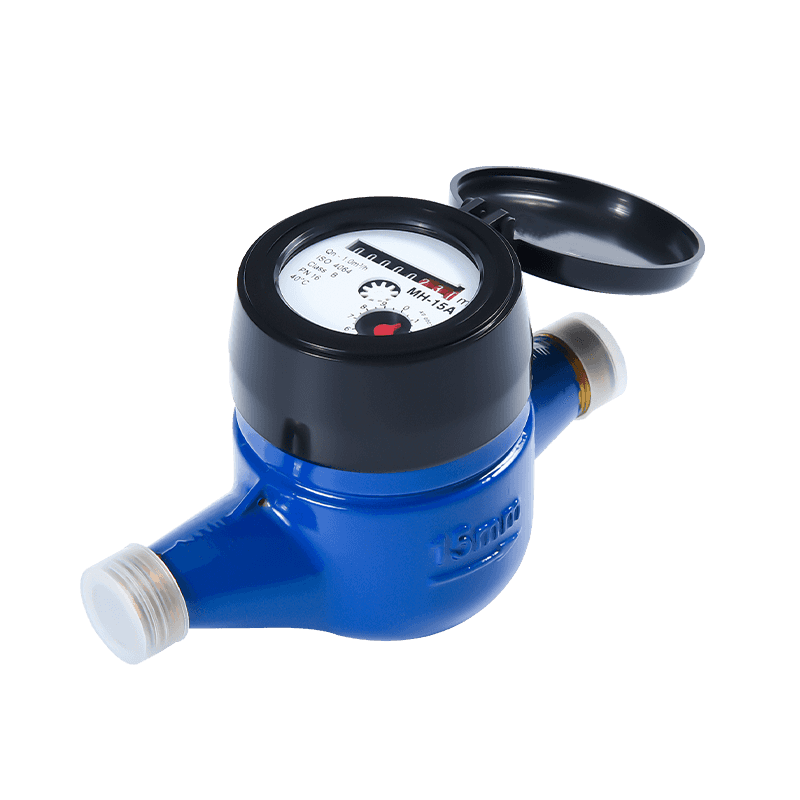
Reading a standard mechanical meter is simple. The register shows a row of digits: the black digits count whole cubic metres, and the red digits represent the decimal fraction, normally litres or hundredths of a cubic metre. Below the digits there is usually a small rotating element called the flow indicator, often a red triangular pointer or a small spinning disc.
The flow indicator is a genuinely useful diagnostic tool. When every tap is closed and all water-using appliances are switched off, the indicator should stand perfectly still. If it rotates, water is moving through the meter, which means the property has a leak, a toilet cistern that never stops refilling, or a dripping internal valve. To measure the leak, take a reading, wait fifteen to thirty minutes without using water and read again. A difference of just a few litres confirms a small leak, while a one-cubic-metre increase over an hour points to a serious fault that should be repaired immediately.
Electronic meters show the same information on an LCD screen, and many models display the instantaneous flow rate continuously. Some smart meters can perform this check automatically and send a leak alarm to the owner's phone, removing the need for manual inspection altogether.
The error permitted for a residential water meter is defined by international standards, primarily ISO 4064 and, in the European Union, the Measuring Instruments Directive. These standards express the meter's performance as an accuracy class with an R ratio. The R number is the ratio between the maximum flow rate and the minimum flow rate at which the meter must still measure within the permitted error band. A meter with class R160 and a maximum flow of 2.5 m³/h has a guaranteed minimum flow of approximately 15.6 L/h; below that figure, the meter is no longer certified to provide accurate readings.
The R ratio is the most useful single number for comparing two residential meters, because it directly indicates how well each meter handles the low flow rates that occur in real households: a slowly filling cistern, a dripping tap or a garden irrigation system. A high-R meter is also the fairer choice for billing, because it records small but genuine volumes that a low-R meter may ignore completely.
Guaranteed minimum flow (Qmin) for a DN15 household meter with Qmax = 2.5 m³/h
Shorter bars mean a lower guaranteed minimum flow and therefore better low-flow detection.
The technologies behind these classes differ in more ways than the R number alone, as the following comparison shows.
| Meter type | Measuring principle | Low-flow accuracy | Moving parts | Typical R class | Primary maintenance |
|---|---|---|---|---|---|
| Positive displacement | Rotary piston or nutating disc | Very good | Piston and chamber | R80 to R160 | Piston inspection |
| Multi-jet velocity | Impeller in multiple jets | Good | Impeller and gear train | R80 | Register replacement |
| Single-jet velocity | Impeller in one jet | Moderate | Impeller and gear train | R80 | Register replacement |
| Ultrasonic | Sound transit-time difference | Excellent | None | R160 to R400 | Battery replacement |
| Electromagnetic | Induced voltage from water movement | Excellent | None | R160 to R400 | Battery replacement |
The practical conclusion for a homeowner is direct: when the local regulations leave the choice open, a meter with class R160 or better produces the fairest bill and the earliest possible leak warning. For a property developer installing meters in hundreds of apartments, the decision becomes a balance between the accuracy class and the initial purchase price.
Five selection criteria matter more than anything else for a household meter.
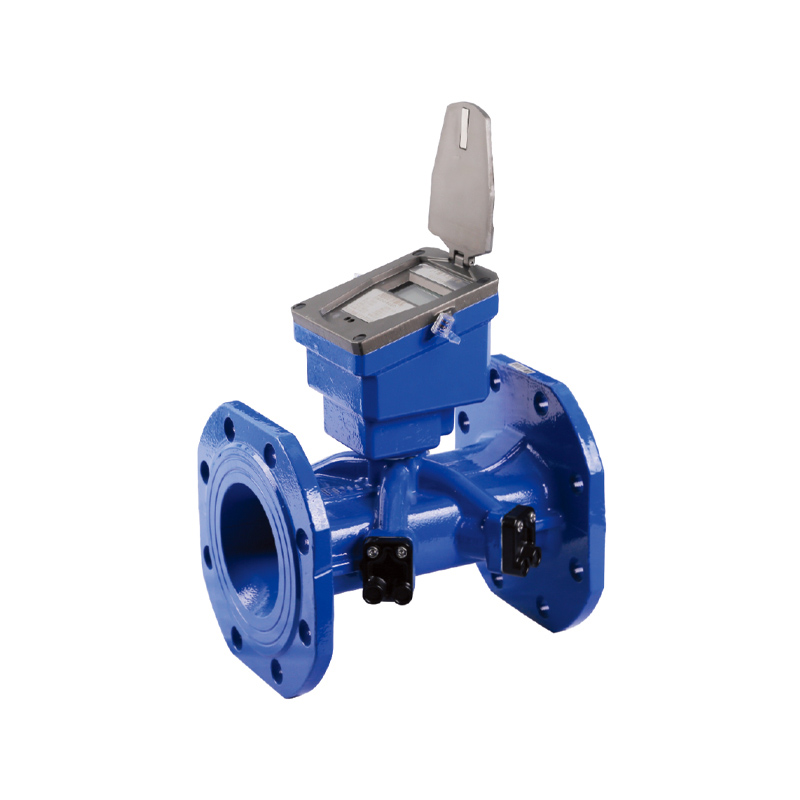
For houses where the meter is mounted in an external pit and the water is aggressive, a plastic-bodied or stainless-steel model is easier to keep in service. For households that prefer a maintenance-free meter with no moving parts, a DN15 to DN25 domestic ultrasonic meter is a modern and increasingly price-competitive option:
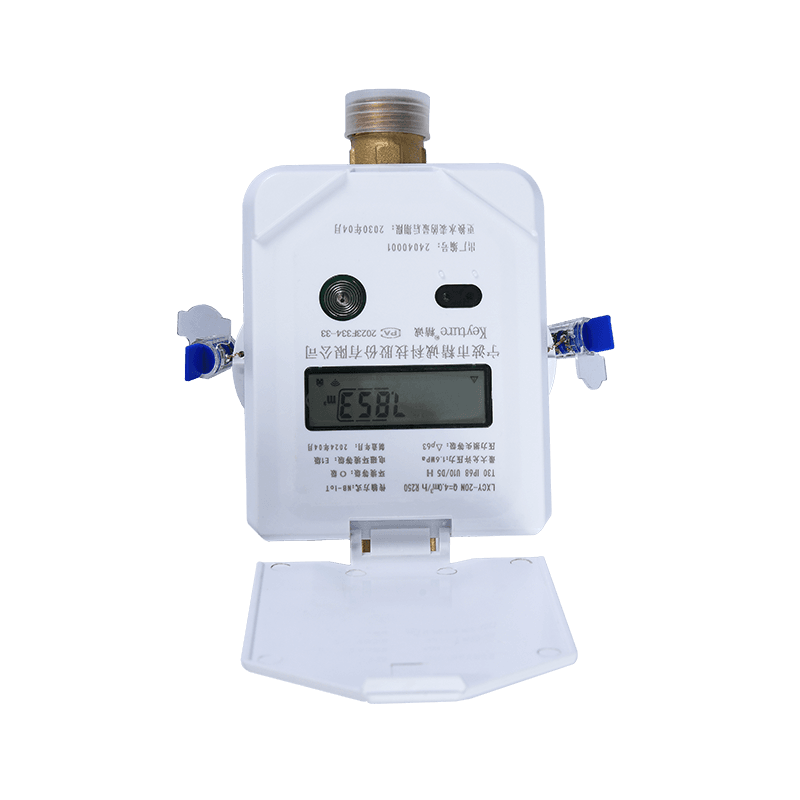 Domestic Ultrasonic Water Meter DN15 to DN25 with IP68This modern ultrasonic meter has no moving parts, reducing wear and maintenance. It offers a wide range ratio, low starting flow, and detects forward and reverse flow. Ideal for aggressive water or maintenance-free household installations.View Product →
Before finalising a purchase, one more check is worthwhile: ask the seller whether the factory holds independent quality certificates such as ISO 9001 and ISO 14001. A manufacturer that publishes its management system certificates in its company profile is generally more transparent about batch testing and traceability.
A residential meter measures the volume of water passing through the pipe. Mechanical meters either count the number of times a chamber is filled and emptied (positive displacement) or integrate the rotation speed of an impeller (velocity meters). Electronic meters use ultrasonic sound pulses or magnetic induction to calculate the flow velocity, multiply it by the pipe cross-section and integrate the result over time.
A basic bucket test is possible. Note the reading, fill a twenty-litre calibrated container at a moderate flow rate, then note the reading again. The difference should be between approximately 19.4 and 20.6 litres if the meter operates inside its typical error band. For a legally valid verification, contact the water utility or a certified metrology laboratory.
Start by checking the flow indicator with every tap closed. If it moves, there is a leak; the most common sources are a toilet cistern that keeps refilling, a dripping tap, a worn washer in an outside faucet or an underground pipe leak. If the indicator is still and the bill stays high, ask the utility to test the meter on a test bench.
At normal household flows, both technologies sit comfortably inside the legal error band. Electronic meters have a wider certified range at the low end of the scale, and they provide insight that no mechanical register can offer: hourly consumption profiles, leak alarms and remote data collection. For fair billing, both options work well; for monitoring and early detection, a smart meter has a clear advantage.
Mechanical meters are typically verified or replaced after six to ten years in service, depending on water quality and national legal requirements. Electronic meters with no moving parts can remain in operation for ten to fourteen years, provided the battery module is renewed when necessary. The local water supply authority can confirm the exact replacement schedule for your region.
A residential water meter is a small and often forgotten device, but it performs a fundamental role in modern water management: it converts the flow of water into a number that is precise, verifiable and fair. Once you understand how the meter works, you can read it with confidence, detect hidden leaks before they reach your bill, and make an informed choice between a mechanical, wireless or ultrasonic model when a new installation is needed. In many cases, replacing an ageing mechanical meter with an R160 or ultrasonic version pays for itself in the first year through avoided water losses and more accurate billing.
prevNo next article
nextWhat Size Thread Does a Residential Smart Water Meter Use and How Does Digital Meter Technology Work


Address: No.168,LinMu Rd.,Zone B, Jiangbei investment Park, Ningbo, Zhejiang,China
Tel: +86-0574-83090480/+86-18892665118
Fax: +86-0574-83021045
Email: [email protected]
Web: https://www.keyturemeter.com/
Quick Links
Product
Mobile terminal
 Wholesale Potable Water Flow Meter Manufacturers