English
 Español
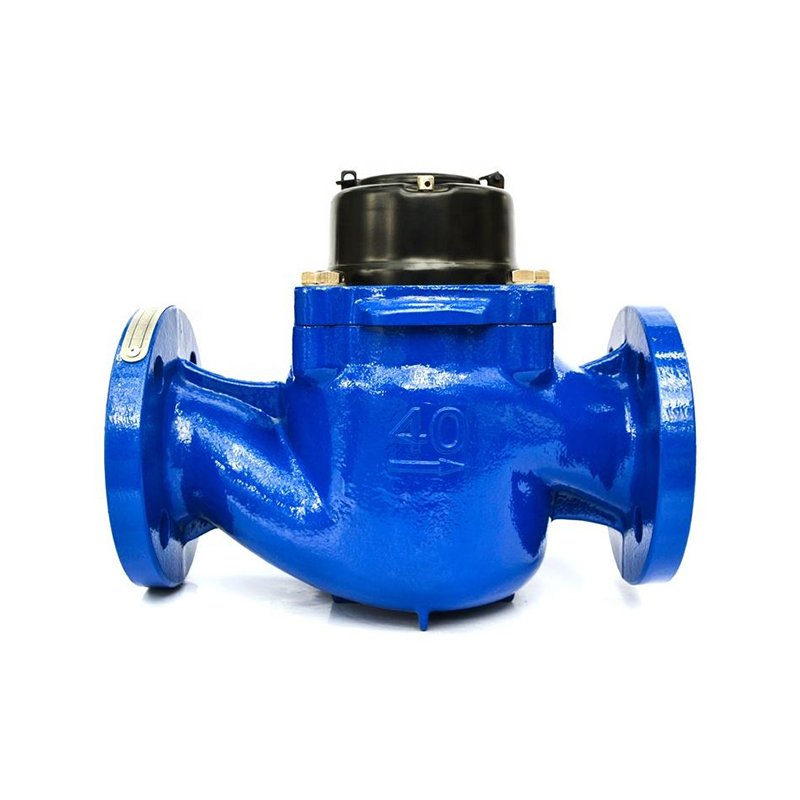


As a manufacturer specializing in large-diameter flow measurement equipment, our production lines are built around one central objective: delivering a bulk water meter that performs consistently across decades of continuous operation. Every bulk meter water unit that leaves our workshop passes through raw material inspection, precision machining, sensor assembly, and multi-stage calibration before it is approved for shipment. This article walks through how a bulk water meter is actually built on the factory floor, what separates an ultrasonic bulk water meter from a mechanical alternative in terms of manufacturing complexity, and what our engineering team recommends for bulk water meter installation once the unit reaches a job site.
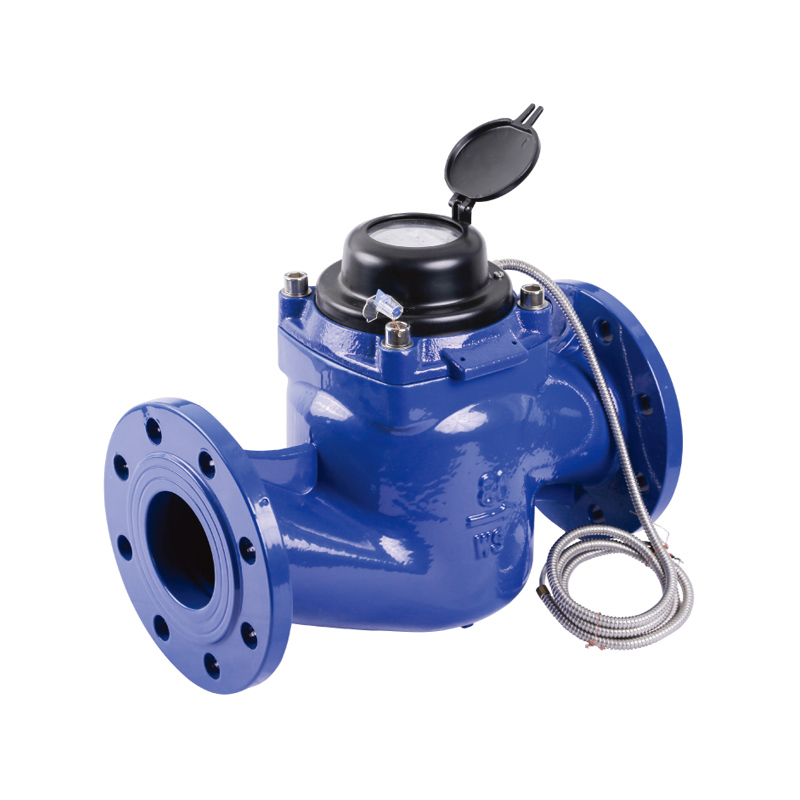
When customers ask what is bulk water meter from a production standpoint, the answer starts with material selection. Housings for large-diameter meters are typically produced from ductile iron, cast bronze, or stainless steel depending on the working pressure class and the corrosiveness of the water source. Our foundry casts housings in batches, each batch tagged with a heat number so that mechanical properties can be traced back to the original alloy pour. After casting, housings go through a machining center where flange faces, register windows, and internal chambers are milled to tolerances measured in fractions of a millimeter, because any deviation in internal geometry directly affects the flow profile a bulk meter water unit will read.
Internal measuring elements — whether a woltmann-type impeller, a turbine rotor, or an ultrasonic sensor pair — are assembled in a climate-controlled clean area to prevent dust or moisture from interfering with moving parts or electronic contacts. This is also the stage where register heads, pulse output modules, and communication boards are fitted, tested individually, and then integrated into the complete assembly.
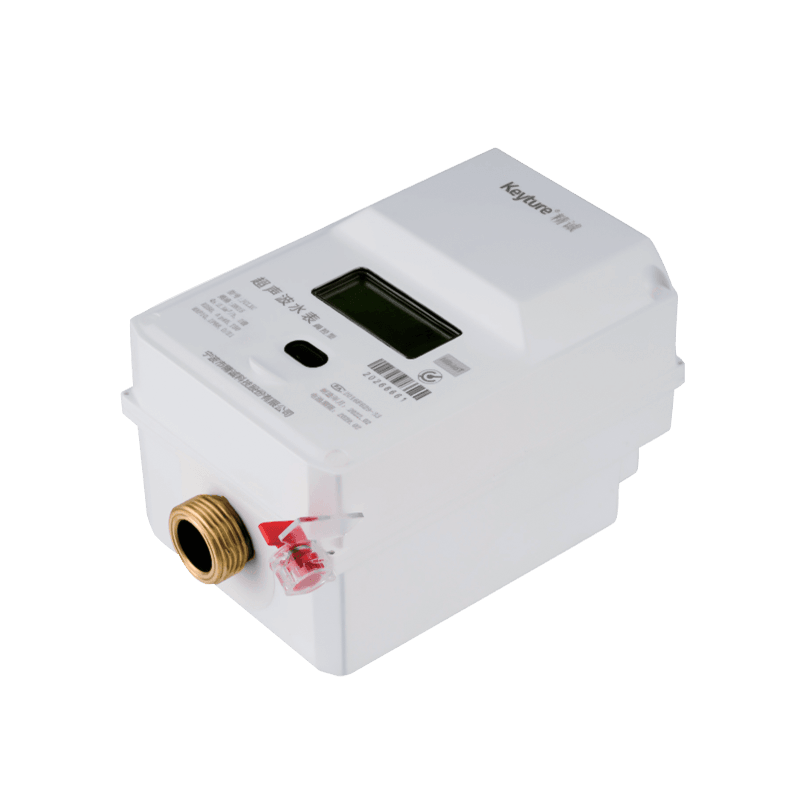
Producing an ultrasonic bulk water meter introduces a manufacturing layer that mechanical meters do not require: electronic signal tuning. After the transducer pair is fixed into the flow tube at the designed measurement angle, each unit is connected to a signal analyzer that verifies the strength and clarity of the transit-time signal at low, medium, and high flow rates. Units that show excessive signal attenuation or noise are pulled from the line and re-checked, because a weak signal path will eventually translate into unstable readings once the bulk size ultrasonic water meter is installed on a live pipeline.
Firmware calibration follows signal tuning. The onboard microprocessor is loaded with a flow profile correction curve specific to that meter's body dimensions, and this curve is verified again on the test bench against a reference flow standard. Only after the measured error falls within the declared accuracy class — commonly ±0.5% or ±1.0% depending on the ordered specification — is the ultrasonic bulk water meter cleared for the packaging line.
Because there are no moving parts in the flow tube, ultrasonic bulk water meter production also includes an accelerated pressure test, where each housing is subjected to hydrostatic pressure well above its rated working pressure to confirm there is no deformation or leakage at the flange seal or housing seams.
The table below summarizes the parameter differences our engineering team commonly references when a project team is deciding between a mechanical bulk water meter and a bulk size ultrasonic water meter.
| Parameter | Mechanical Bulk Water Meter | Ultrasonic Bulk Water Meter |
| Accuracy Class | Class B / Class C | ±0.5% to ±1.0% |
| Range Ratio | 1:80 to 1:100 | 1:150 to 1:250 |
| Pressure Loss | Moderate, due to impeller resistance | Minimal, no obstruction in flow path |
| Moving Parts | Impeller, gear train | None |
| Typical Maintenance Interval | 2–3 years | 5–8 years |
| Data Output Options | Pulse, mechanical register | Pulse, RS485, M-Bus, optional wireless |
| Sensitivity to Sediment | Higher, impeller can wear or jam | Lower, but transducer face still needs periodic inspection |
A well-manufactured bulk water meter can still underperform if bulk water meter installation is not executed correctly on site. Because of this, our technical documentation team prepares dimensioned installation drawings for every order, showing required upstream and downstream straight-pipe lengths, recommended orientation, and flange bolt torque values. For larger diameter orders, we also provide a pre-installation checklist covering pipeline flushing, air venting points, and support bracket placement so the meter body is not subjected to unsupported mechanical stress after flange bolts are tightened.
Because a bulk water meter is designed for large-diameter, high-volume measurement, the units we manufacture are ordered for a wide range of project types rather than a single application. Municipal utilities use large-format meters to divide distribution networks into district metering areas, allowing operators to compare inflow against downstream consumption and locate leakage zones. Industrial parks install a bulk water meter at the main incoming connection to allocate consumption costs across multiple tenants sharing a single supply line. Residential developments and mixed-use complexes rely on bulk meter water assemblies at the property boundary before water is distributed to individual sub-meters inside the building. Agricultural operations use the same category of equipment to track irrigation withdrawal volumes against permitted allocations, and treatment facilities install bulk size ultrasonic water meter units at plant inlets and outlets to reconcile raw water intake against treated water output.
Our sales engineering team walks project buyers through a specification checklist before an order is confirmed for production. Pipe diameter and expected flow range determine the meter body size, while working pressure and water temperature determine housing material and seal compound. Sites with limited straight-pipe availability often favor a bulk size ultrasonic water meter because the internal flow-conditioning requirement is generally shorter than for mechanical alternatives with mechanical rotors. Communication requirements — whether the site needs a simple pulse output or a networked RS485/M-Bus protocol for centralized monitoring — are confirmed early, since this affects which electronics board is installed during assembly. Enclosure protection rating is also selected based on installation environment, with higher IP ratings specified for meter pits prone to periodic flooding.
Buyers frequently ask our engineering team what is bulk water meter accuracy realistically achievable in field conditions versus laboratory conditions. In practice, a properly installed bulk water meter with adequate straight-pipe length and correct orientation will perform close to its laboratory-certified accuracy class, while installations with tight bends immediately upstream or entrained air in the line typically see wider measurement variance regardless of whether the technology is mechanical or ultrasonic.
Before any bulk water meter leaves the factory, it is registered with a serial number linked to its individual calibration certificate, hydrostatic test result, and material batch record. This documentation travels with the shipment so that site engineers and utility inspectors can verify the unit's performance data without needing to request records separately. Packaging is designed to protect flange faces and electronic housings during transit, with flange covers fitted to prevent debris ingress before bulk water meter installation begins on site.
prevWhat Is a Drinkable Water Meter and How Does IoT Metering Ensure Safe Drinking Water
nextWhere Is My Water Meter and How Do I Read It Correctly


Address: No.168,LinMu Rd.,Zone B, Jiangbei investment Park, Ningbo, Zhejiang,China
Tel: +86-0574-83090480/+86-18892665118
Fax: +86-0574-83021045
Email: [email protected]
Web: https://www.keyturemeter.com/
Quick Links
Product
Mobile terminal
 Wholesale Potable Water Flow Meter Manufacturers