English
 Español


Last month you used more water than you expected, and the bill made that clear. Or perhaps you are still comparing costs, trying to decide whether installing a meter will save you money or create new problems. Either way, you are asking the same question: what are the downsides of having a water meter?
We have manufactured water meters for more than 22 years, with an annual production capacity of five million units. That means we see how these devices really behave in basements, utility pits, apartment buildings, and industrial plants. Our honest answer is that water meters have real limitations, and pretending otherwise does not help anyone. The good news is that most of those limitations are predictable, understandable, and manageable when you choose the right type of meter.
This article explains seven genuine downsides, the technical reasons behind each one, and the practical ways modern meter designs reduce or eliminate them: upfront installation costs, unpredictable billing, long-term accuracy drift, difficult reading, maintenance demands, vulnerability to harsh environments, and privacy concerns with smart meters.
A water meter is not just a measuring device; it is also a small plumbing project. The real cost includes the hardware, the labor to install it, and sometimes pipe modification to fit the meter body into the existing supply line.
For a single-family home, the expense is modest. For an apartment block or a housing development, the cost multiplies quickly because every unit needs its own meter, and often its own isolation valve. Smart meters add another layer of upfront expense, because the communication module and data infrastructure are included in the initial deployment cost.
There are three practical ways to keep this cost under control. First, check whether your water supplier offers installation at no direct charge — in the UK, households commonly have this right, and similar programs exist in other regions. Second, specify the correct meter for your actual pipe diameter and expected flow; paying for a larger meter than your line needs is wasted money. Third, remember that a remote-reading or prepaid meter costs more upfront but removes the recurring labor cost of manual meter reading for the entire service life of the device, which often makes it the more economical choice for property managers.
A metered supply means your bill reflects actual consumption, so months with heavy use produce heavy charges. Households with consistently high demand — large families, homes with substantial garden irrigation, or properties with frequent guests — can end up paying more than they would under a fixed annual charge. UK consumer advice services regularly point out that high-usage households are usually better off on an unmetered supply, and the same economics apply in other markets.
Bill shock happens for a simple reason: most households have no reliable idea how much water they use. An outdoor sprinkler can consume more in an afternoon than a person uses in an entire week. A leaking toilet can waste hundreds of liters per day without making a sound.
The fix is visibility and control. Repair dripping faucets, replace worn toilet flappers, and install water-efficient fixtures before the meter arrives. If you want even tighter control over spending, prepaid water meters for budget-controlled consumption require payment before use, so you always know exactly how much water remains in your account and you never face a surprise at the end of the billing cycle.
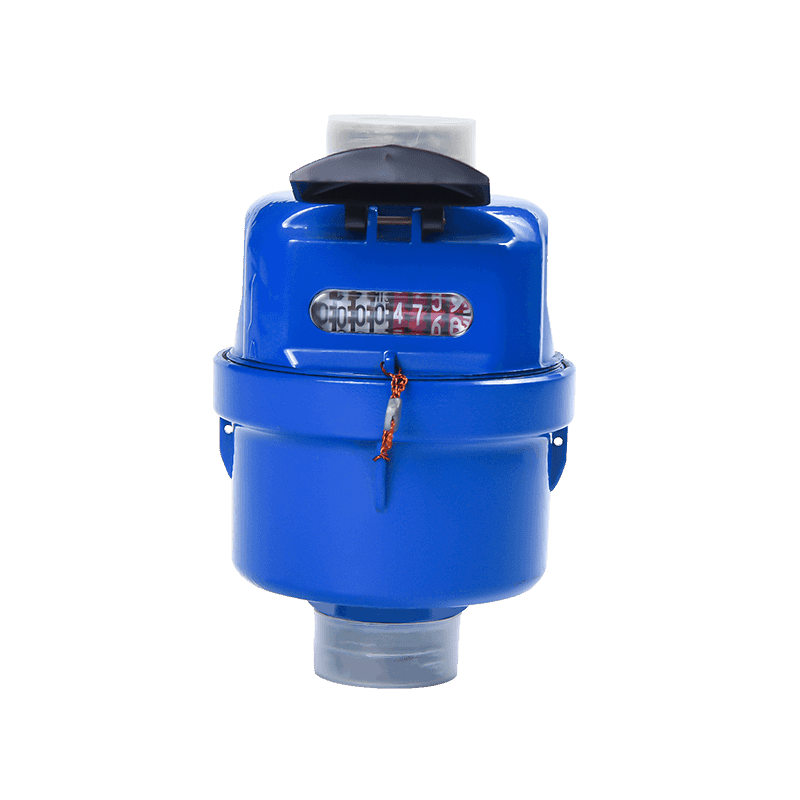
Mechanical meters measure flow with an impeller or a rotating piston, and those moving parts wear with use. Bearings loosen, gears lose precision, and the meter gradually drifts out of its original accuracy band. At very low flows — a slowly dripping tap, for example — many mechanical meters register nothing at all, even though water is passing through.
This is a physical limitation of moving parts, not a manufacturing defect. The international standard ISO 4064 defines accuracy classes, test procedures, and acceptance limits precisely because measurement drift is expected over a meter's lifetime. The practical consequence is that an older mechanical meter can under-register, which loses revenue for the utility, or over-register, which quietly overcharges you. A drift of just two or three percent becomes a noticeable sum on an annual bill. Mechanical designs also differ in how quickly they drift: multi-jet meters, which distribute flow across several measuring ports, tend to maintain low-flow accuracy better than single-jet designs.
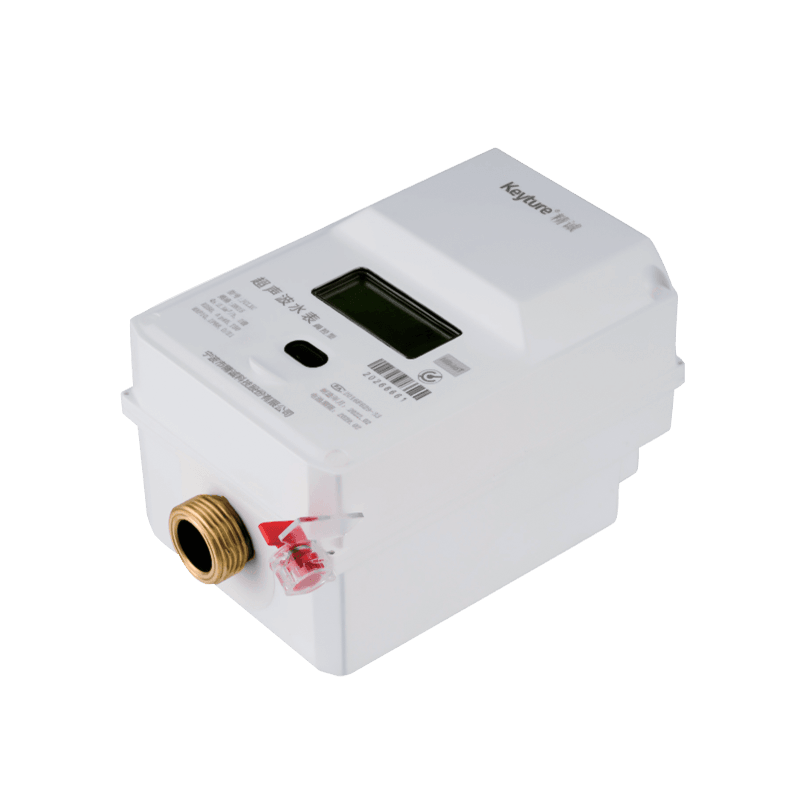
The most effective modern response is to remove mechanical wear from the measurement path entirely. ultrasonic water meters with no mechanical moving parts measure flow electronically by comparing the transit times of sound waves, so the wear-related drift that affects impeller meters does not occur. For households, small businesses, and apartment buildings where billing accuracy matters, this is a meaningful difference. Whichever technology you choose, schedule calibration checks according to the manufacturer's recommended interval.
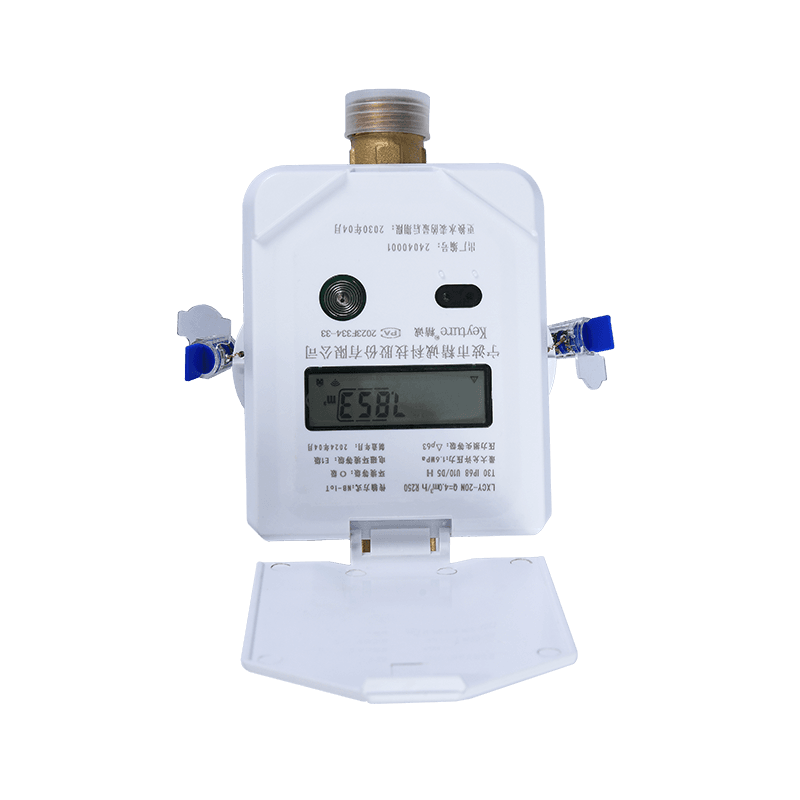 Custom Domestic Ultrasonic Water Meter Dn15~Dn25 Suppliers, OEM/ODM Factory - NiNingbo Jingcheng Technology Co, ltd is China custom Domestic Ultrasonic Water Meter Dn15~Dn25 suppliers and OEM/ODM factory, details:Ultr...View Product →
A conventional meter only provides value if someone can read it. Meters installed in outdoor pits, behind locked panels, or in cramped basements are hard to access, and a meter that is read infrequently can be read incorrectly. Wet-type registers, where the counting mechanism sits in water, can fog when temperature changes cause condensation, and an old dial can become stained, scratched, or covered in grime.
Dry-type and semi-liquid sealed registers were developed specifically to solve the fogging problem: the counting mechanism is isolated from the water, so condensation cannot obscure the digits. On the data side, a remote-reading meter with wired or wireless transmission eliminates the need for physical access altogether, because consumption data is uploaded automatically. When full remote reading is not available, a meter with pulse output or a digital screen provides a practical intermediate solution.
The measuring element inside a meter is a precision component, and the water passing through it is not always clean. Sand, rust particles, and hard-water scale accelerate wear on the impeller, the bearings, and the register gears. On prepaid and remotely controlled meters, the shut-off valve adds another failure point: it can seize if it is left in the same position for months without being exercised. Backflow can also push contaminated water into the meter and accelerate internal corrosion, which is why many installations include a non-return valve.
Two engineering choices reduce this burden significantly. A detachable measuring mechanism lets a technician replace the worn cartridge in minutes, without removing the meter body from the pipe, which cuts both labor time and downtime. Corrosion-resistant body materials, such as stainless steel and bronze, prevent the internal rust that shortens the life of iron-bodied meters in aggressive water. Installing a strainer or filter upstream keeps debris away from the measuring element before it enters the meter.
Meters installed outdoors or in pits face conditions no indoor device ever encounters. In freezing climates, expanding ice can crack the meter body or burst the internal chamber. In hot regions, prolonged ultraviolet exposure and extreme heat degrade plastic components and seals. High humidity, condensation, and periodic flooding corrode electrical terminals and shorten the life of electronic circuits.
The technical answer is the ingress protection rating. A meter with an IP68 rating is completely protected against dust and can withstand continuous immersion in water, which makes it suitable for pit installation, flood-prone basements, and exposed outdoor locations. IP68 waterproof water meters for outdoor installation address the most common cause of premature failure in these settings. For cold climates, insulating the meter enclosure before winter is essential, and choosing a brass or stainless steel body adds tolerance to temperature extremes.
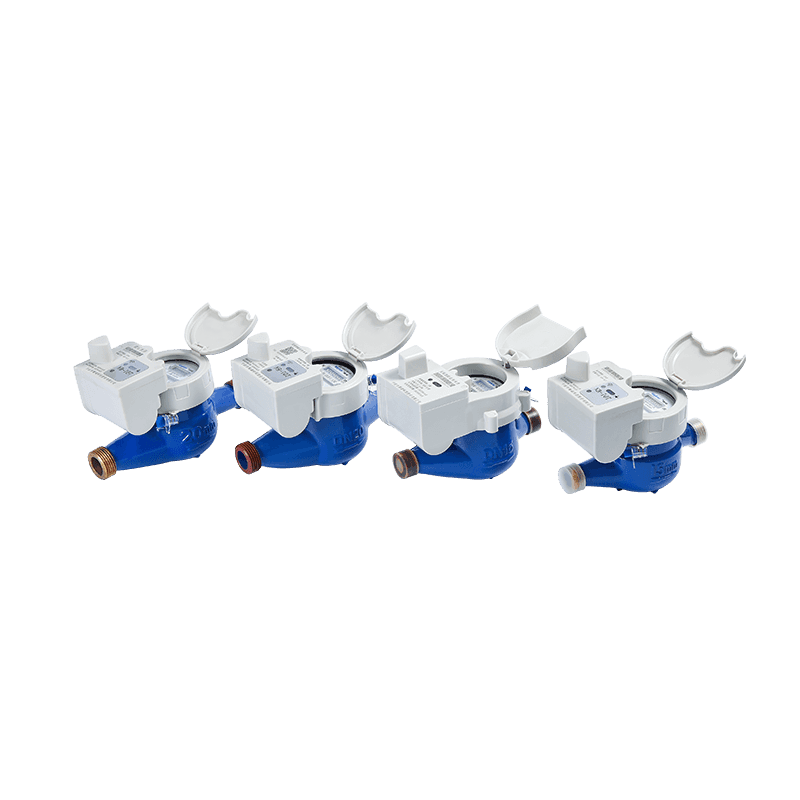 Custom Iron Body Ip68 Waterproof Wireless Remote Water Meter Suppliers, OEM/ODM Ningbo Jingcheng Technology Co, ltd is China custom Iron Body Ip68 Waterproof Wireless Remote Water Meter suppliers and OEM/ODM factory, ...View Product →
Smart meters transmit consumption data to the utility, and the pattern of that data reveals more than just cubic meters. Regular morning and evening spikes show when people are home. A two-week drop to zero in summer indicates that the property is empty. For some households, the idea of continuous monitoring feels intrusive.
Data in transit is also a potential target. Reputable smart metering systems encrypt the data and restrict access to authorized parties, and regulations such as the European GDPR impose strict limits on how usage data can be stored and processed. If privacy is a concern, ask the supplier about the communication protocol, the encryption standard, and which parties can access the data. Many meters also allow you to disable non-essential data-sharing features that are not required for billing.
Here is the honest bottom line: none of these seven drawbacks is a deal-breaker by itself. Installation cost is a one-time event with a clear financial return for most households. Bill shock can be prevented by fixing leaks and monitoring consumption. Accuracy drift is slow, measurable, and — with ultrasonic designs — preventable entirely. Harsh environments are predictable, and the correct ingress protection rating eliminates the most common failure modes. Privacy concerns are real but manageable with the right protocol and the right supplier.
Metered billing creates a direct financial incentive to use water efficiently, and for households with average or below-average consumption, that incentive usually outweighs the inconveniences. The decision comes down to matching the meter to your actual situation instead of buying whatever is cheapest or most feature-rich without checking the basics.
| Your situation | Recommended approach |
|---|---|
| Low water usage | A metered supply is very likely to reduce your bill. |
| High usage (large family, irrigation) | Estimate your real consumption carefully before switching. |
| Billing accuracy is your priority | Choose an ultrasonic meter or a high-precision mechanical model. |
| Outdoor or pit installation | Choose a meter with a high ingress protection rating. |
Run through these five checks before placing an order:
prevHow to Check Your Water Meter: Step-by-Step Guide to Reading & Leak Detection
nextWhat Is a Drinkable Water Meter and How Does IoT Metering Ensure Safe Drinking Water


Address: No.168,LinMu Rd.,Zone B, Jiangbei investment Park, Ningbo, Zhejiang,China
Tel: +86-0574-83090480/+86-18892665118
Fax: +86-0574-83021045
Email: [email protected]
Web: https://www.keyturemeter.com/
Quick Links
Product
Mobile terminal
 Wholesale Potable Water Flow Meter Manufacturers