English
 Español
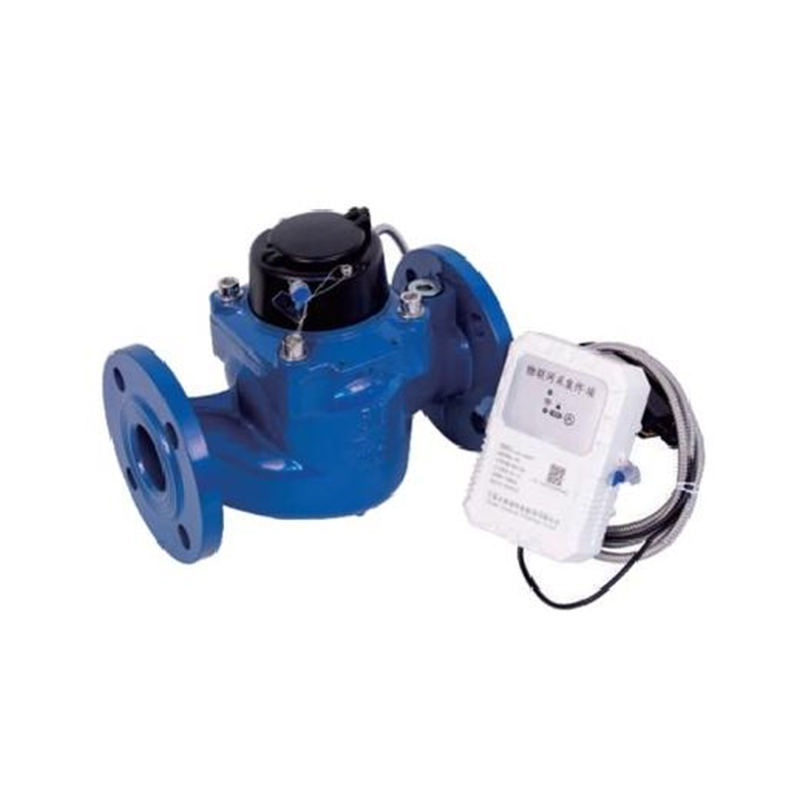


In the advancement of smart water infrastructure, NB-IoT (Narrowband Internet of Things) prepaid water meters have become the industry standard. However, network fluctuations or temporary outages are unavoidable technical challenges. To prevent water supply interruptions caused by signal loss, modern prepaid water meters are engineered with advanced offline logic and Emergency Credit mechanisms.
The brain of a prepaid water meter is its built-in low-power MCU (Microcontroller Unit). Unlike traditional systems that rely on real-time server queries, smart prepaid meters possess local storage and independent decision-making capabilities.
When the network environment encounters anomalies, such as base station maintenance or signal interference, the meter automatically enters an offline operating mode. During this time, the metering functions, balance deduction logic, and the Electric Ball Valve control do not rely on server commands. Instead, the meter performs real-time calculations based on the last synchronized data stored locally. This localized processing ensures the continuity of basic metering and prevents accidental valve closures due to communication failure.
To address the issue of users running out of credit during a network outage when they cannot top up, the Emergency Credit feature is essential.
When the meter detects a zero balance and cannot update the credit via the network, the system automatically triggers an emergency water quota based on pre-configured strategies. Usually, the Water Management System backend pre-sets a fixed value (such as 3-5 cubic meters). This allows users to continue using water even in an arrears state, gaining time for network restoration or finding offline payment channels. Once the network recovers, the system automatically synchronizes the Overdraft Volume consumed during the offline period and deducts it from the next recharge.
In cases of extreme long-term network outages, prepaid water meters support various physical intervention methods to activate emergency supply.
Some high-end models feature a dual-mode system. When NB-IoT remote communication fails, users can use an IC Card or physical RF card at the meter's induction zone to force-activate the internal solenoid valve. Additionally, meters are designed with physical buttons. Long-pressing a specific key combination can trigger the Emergency Valve Opening logic. Furthermore, utilizing Bluetooth or NFC, users can establish point-to-point local communication with the meter via a smartphone app to issue commands even without mobile internet.
Ensuring accurate Stepped Water Price billing during offline status is a significant technical requirement. Modern prepaid water meters include RTC (Real-Time Clock) functionality, powered by a built-in battery that can run for years independently. This means even without a network, the meter accurately identifies the current date and time. When water consumption hits a tier threshold, the MCU automatically switches the unit price according to the locally stored Tariff Table. This high degree of intelligent autonomy reduces dependence on the Cloud Server and ensures financial data integrity.
Security monitoring does not stop during network interruptions. The Anti-Tamper and Magnetic Interference Detection functions remain active in real-time. If a user attempts to dismantle the meter or use magnetic force to interfere with metering during an outage, the meter immediately triggers a Security Shutdown and permanently logs the event. To prevent the valve from scaling due to inactivity, the meter also executes a preset Self-Cleaning Valve cycle, performing regular opening and closing movements.
prevMechanism Analysis: Why Mechanic Water Meter Inaccuracy and Cracking Occur in Winter
nextSmart Water Metering Technology: Ultrasonic vs. RF vs. Mechanical Prepaid Water Meters


Address: No.168,LinMu Rd.,Zone B, Jiangbei investment Park, Ningbo, Zhejiang,China
Tel: +86-0574-83090480/+86-18892665118
Fax: +86-0574-83021045
Email: [email protected]
Web: https://www.keyturemeter.com/
Quick Links
Product
Mobile terminal
 Wholesale Potable Water Flow Meter Manufacturers