English
 Español
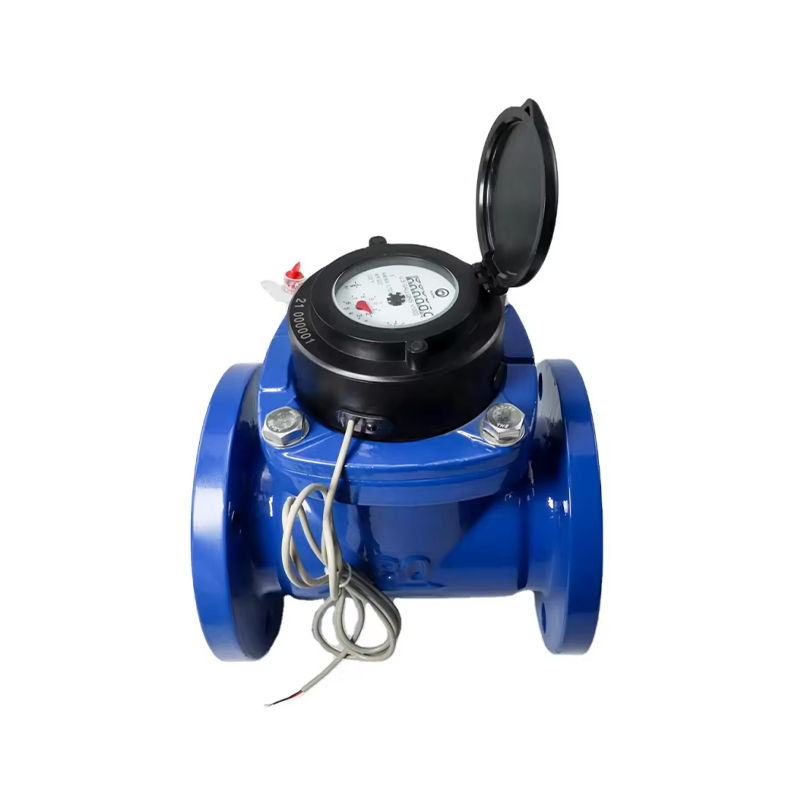


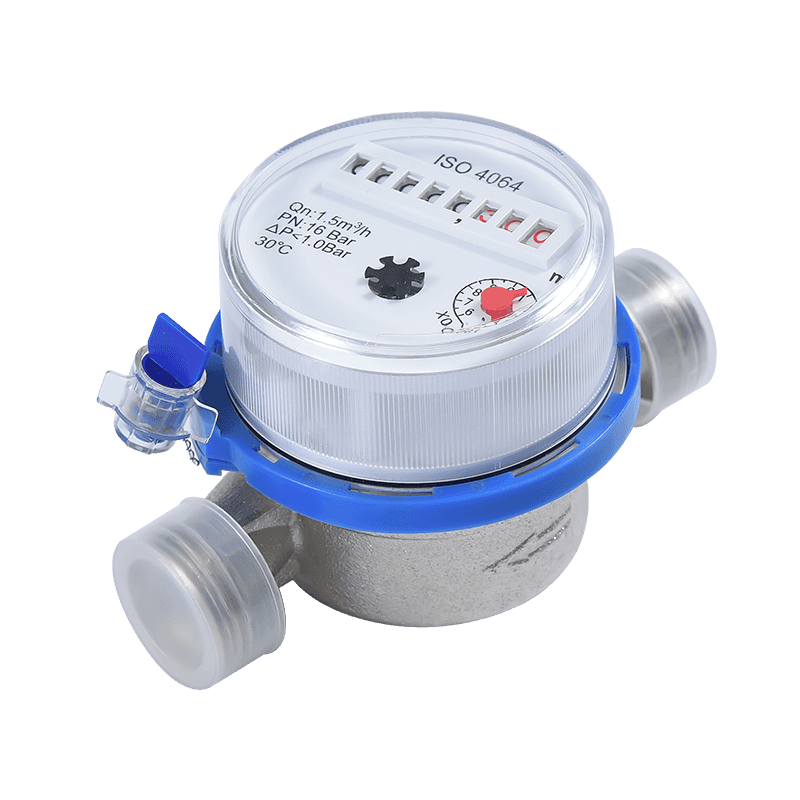
Rotary piston water meters belong to the category of positive displacement water meters. Measurement is achieved through the continuous rotational movement of a piston inside a precisely machined metering chamber, where fixed volumes of water are repeatedly displaced and counted. This metering principle allows excellent accuracy at low flow rates, stable starting performance, and effective detection of small consumption. Rotary piston water meters are widely used in residential sub-metering, apartments, villas, and selected commercial applications. Under long-term operation and varying water quality conditions, several typical failure points may occur, directly affecting metering accuracy, operational reliability, and service life.
The dimensional relationship between the rotary piston and the metering chamber is the core functional element of this water meter type. During extended operation, suspended particles such as sand, rust, and mineral debris circulate continuously through the chamber. These particles cause gradual abrasive wear on the piston surface and chamber walls. As wear progresses, internal clearances increase and uncontrolled internal leakage develops. Measured volume per rotation becomes smaller than the design value. Accuracy degradation is most noticeable at low and transitional flow rates, where volumetric meters are expected to perform best.
Rotary piston water meters show higher sensitivity to water quality compared with velocity-type meters. Fibrous contaminants, plastic fragments, organic deposits, and scale particles can adhere to the piston edge or accumulate in dead zones of the metering chamber. Accumulation increases rotational resistance and reduces free movement. Under low-pressure or low-flow conditions, the piston may fail to initiate rotation. This failure mode results in elevated starting flow rate and unregistered consumption. Severe contamination can cause complete piston seizure and total loss of metering function.
Multiple sealing components are used to isolate the metering chamber from the transmission section. Seals remain submerged under constant hydraulic pressure and temperature variation throughout their service life. Elastomer aging, swelling, loss of elasticity, or micro-cracking may occur depending on material formulation and water chemistry. Once sealing performance declines, water bypasses the metering chamber without being measured. This internal leakage leads to progressive under-registration. Detection of this failure is difficult during short-term inspection due to the absence of visible external leakage.
Rotary piston water meters commonly employ magnetic coupling or mechanical gear transmission to transfer motion from the piston to the register. Magnetic transmission systems are vulnerable to strong external magnetic fields, which may weaken coupling stability and cause irregular counting or stoppage. Mechanical transmission systems experience long-term wear at gear teeth, shafts, and bearing points. Transmission ratio deviation develops over time, resulting in slow counting, intermittent jumps, or cumulative reading errors. Transmission failure has a direct impact on totalized consumption accuracy.
Internal components of rotary piston water meters are often manufactured from engineering plastics. Under prolonged exposure to hydraulic pressure and temperature fluctuations, slow material creep may occur. Dimensional deformation of the metering chamber alters the designed volumetric displacement per cycle. Piston motion becomes uneven, friction points increase, and long-term accuracy stability declines. Repeated cold water temperature variation accelerates material fatigue and shortens operational lifespan.
In regions with hard water or high mineral content, scale formation inside the metering chamber is a common issue. Crystalline deposits attach to chamber walls and piston surfaces, reducing effective metering volume and altering piston balance. Scale accumulation increases rotational resistance and accelerates localized wear. Meter performance becomes inconsistent across flow ranges. This failure mode is frequently observed in installations with minimal filtration and extended service intervals.
Insufficient sealing of the meter housing allows external water or condensation to enter the register compartment. Moisture ingress causes corrosion of gears, shafts, and bearings, reducing transmission efficiency. Register fogging and dial discoloration impair readability and user experience. Continued exposure leads to counting malfunction or register seizure, even if the metering chamber remains mechanically intact.
Rotary piston water meters are sensitive to installation quality and mechanical stress from connected piping. Misalignment, excessive pipe load, or residual debris during installation introduces uneven stress on the metering chamber. Piston rotation becomes asymmetrical and friction increases. Long-term operation under non-design hydraulic conditions accelerates wear and leads to premature failure. Improper installation remains a significant contributor to early performance degradation.
prevWhat are the advantages of rotary piston water meters in the low flow rate range
nextWhat checks are needed when reactivating a drinking water meter that has been out of service for a long time


Address: No.168,LinMu Rd.,Zone B, Jiangbei investment Park, Ningbo, Zhejiang,China
Tel: +86-0574-83090480/+86-18892665118
Fax: +86-0574-83021045
Email: [email protected]
Web: https://www.keyturemeter.com/
Quick Links
Product
Mobile terminal
 Wholesale Potable Water Flow Meter Manufacturers