English
 Español
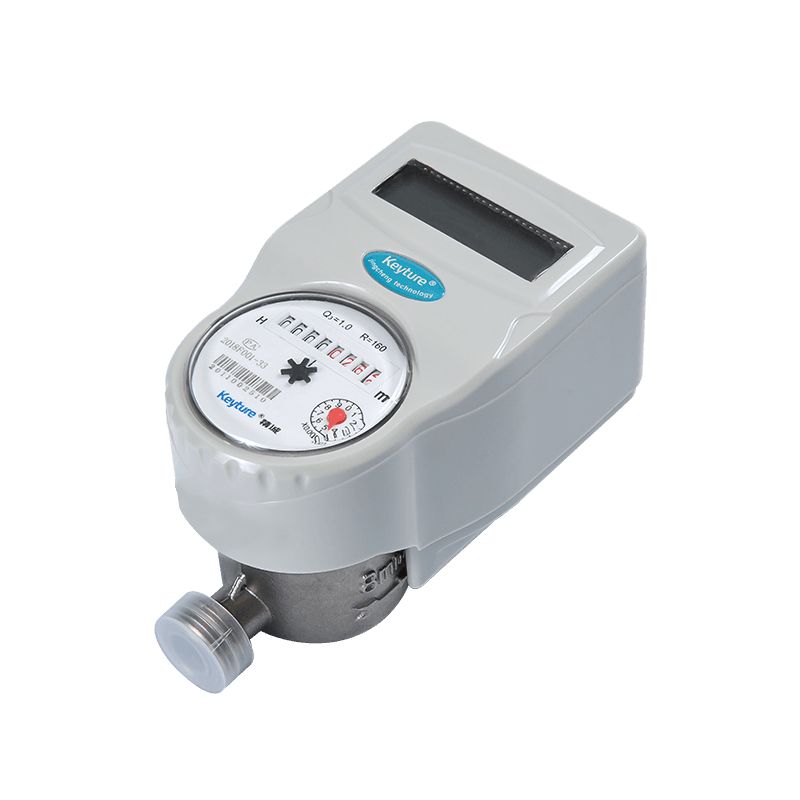


Drinkable water meters are critical components in water supply systems. Their accuracy directly affects billing, resource management, and operational efficiency. Over time, all water meters are subject to various error types. Understanding these errors is essential for water utilities, maintenance personnel, and end-users to ensure reliable measurements and optimize water management.
Mechanical water meters, the most widely used type, rely on gears, rotors, and bearings to measure flow. Long-term operation causes wear on these components, increasing internal resistance. At low or minimal flow rates, this can lead to under-registration, where the meter fails to record small amounts of water accurately. High flow rates can cause delayed response or skipped counts. Continuous wear reduces the meter’s responsiveness, compromising instantaneous flow measurement and overall accuracy.
Water naturally contains minerals, suspended solids, and chemical compounds that may accumulate inside the meter over time. Hard water areas are particularly prone to scaling on rotors, impellers, and measuring chambers. Scale buildup increases friction, reducing flow measurement at low rates, leading to under-registration. Debris or sludge can also obstruct flow sensors or mechanical components, causing erratic readings or even temporary meter stoppage. Accumulated contaminants may reduce the reliability of long-term data collection.
Environmental factors such as temperature, humidity, and exposure conditions can affect meter performance. High temperatures may cause internal parts to expand, disrupting gear alignment or rotor movement, resulting in over- or under-registration. Freezing conditions can damage the meter or interrupt measurement. Long-term exposure to UV light, acid rain, or corrosive environments may degrade the meter casing or electronic components, indirectly affecting measurement accuracy.
Meters often experience highly variable flow conditions, from microflows to peak consumption periods. Many meters exhibit “low-flow under-registration,” failing to accurately record minimal water use. Conversely, at high flow rates, meters may lag or overshoot, leading to momentary over-registration. Systematic errors from flow variability accumulate over time, impacting billing accuracy and water resource reporting.
Electromagnetic and ultrasonic water meters rely on sensors to measure flow. Long-term use can cause sensor drift, signal degradation, or interference from nearby electrical sources. Sensor aging may lead to over- or under-registration, while persistent electromagnetic interference can produce data anomalies or communication faults. Periodic calibration is essential to maintain accuracy in electronic water meters.
Operational factors such as backflow, air bubbles, vibration, or water hammer can influence meter readings. Backflow may cause negative or repeated registration, while air pockets and pulsating flow can create unstable instantaneous readings. Continuous pipe disturbances may affect rotor movement or sensor operation, leading to cumulative errors over time.
Lack of proper maintenance and calibration accelerates error accumulation. Failing to clean, inspect, or replace worn parts allows mechanical, electronic, and flow measurement systems to degrade simultaneously. Neglected meters may under-register, over-register, or experience intermittent failures, affecting fairness in billing and reliability in water management.
prevWhat checks are needed when reactivating a drinking water meter that has been out of service for a long time
nextHow is the accuracy class of a prepaid water meter determined


Address: No.168,LinMu Rd.,Zone B, Jiangbei investment Park, Ningbo, Zhejiang,China
Tel: +86-0574-83090480/+86-18892665118
Fax: +86-0574-83021045
Email: [email protected]
Web: https://www.keyturemeter.com/
Quick Links
Product
Mobile terminal
 Wholesale Potable Water Flow Meter Manufacturers