English
 Español


Your water bill jumped 30 percent this month, yet nothing in your daily routine changed. Before you call the utility company, take five minutes to learn how to read a water meter. That small device, usually buried in a box near the sidewalk, holds the exact record of how much water your home consumed, and it can tell you whether the bill is correct, whether a toilet is silently leaking, or whether an irrigation valve is stuck open.
A water meter is an odometer for your plumbing. Just as a car odometer counts the total miles driven, a water meter counts the total volume of water that has passed through the pipe since it was installed. It does not measure how fast water is flowing right now; it records the cumulative amount, and that cumulative number is what your utility bill is based on.
Inside a mechanical meter, flowing water spins a small impeller or drives a rotating piston. The rotation speed is proportional to the flow rate, and a gear train carries every revolution into the numbered register on top. Because the mechanism never turns backward, the reading only moves forward. That is why a slow leak will gradually advance the numbers even when every tap is closed.
Digital and smart meters work differently. An ultrasonic meter measures the tiny time difference between sound waves sent along and against the direction of flow, which means it has no moving parts to wear out and can detect flows smaller than a mechanical impeller would notice. Whichever technology sits inside, the part you read is the same: a display showing cumulative volume. International accuracy standards, including ISO 4064, define the maximum permissible error for these instruments, which is why a properly maintained meter stays trustworthy for years.
In most American single-family homes, the meter sits at the property boundary, close to the sidewalk or curb, inside a rectangular concrete or plastic box set into the ground. The lid is usually stamped "WATER" or "WATER METER." In some homes, especially in warmer climates, the meter is indoors in a basement, utility closet, or garage near the main shutoff valve.
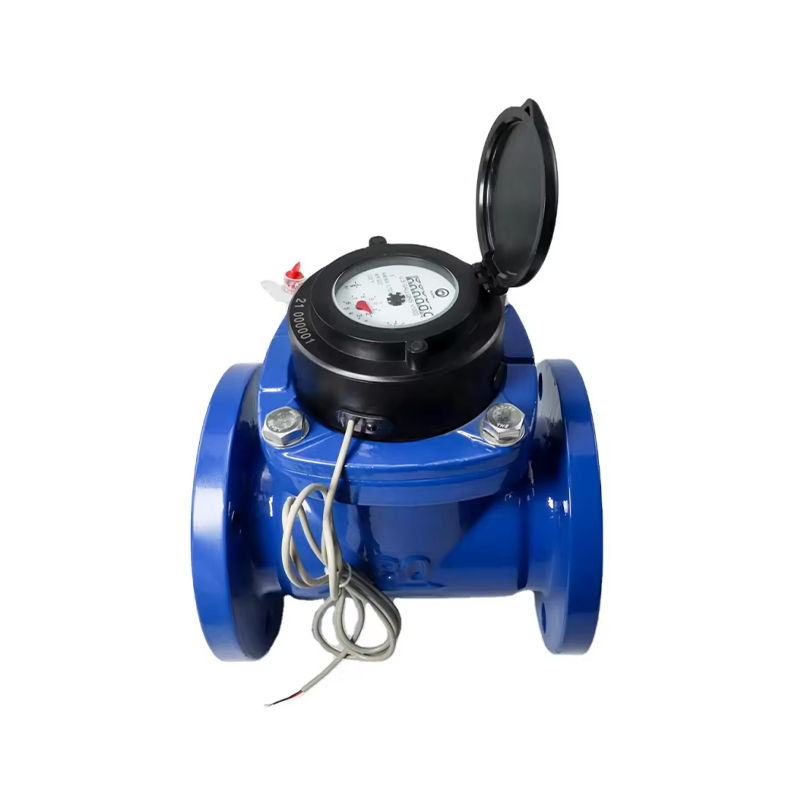
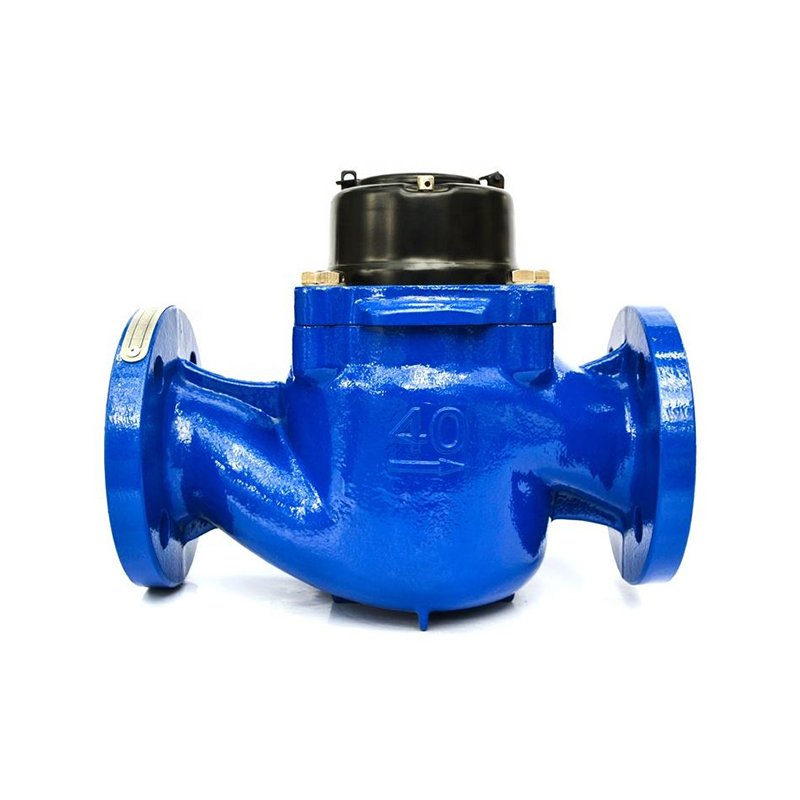
You will need a flathead screwdriver to pry open the lid, a flashlight to see into the pit, and a cloth to wipe the meter face. Open the lid slowly and check for insects, spiders, or small animals before reaching in. In commercial and industrial buildings, large-diameter meters are often mounted in a dedicated meter pit or a mechanical room; the reading method is identical.
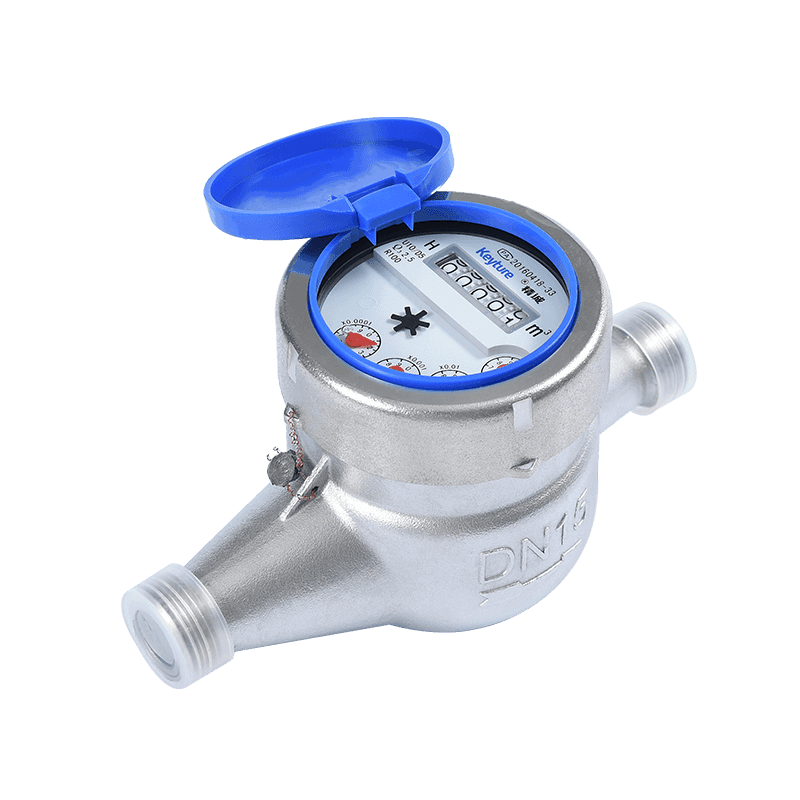
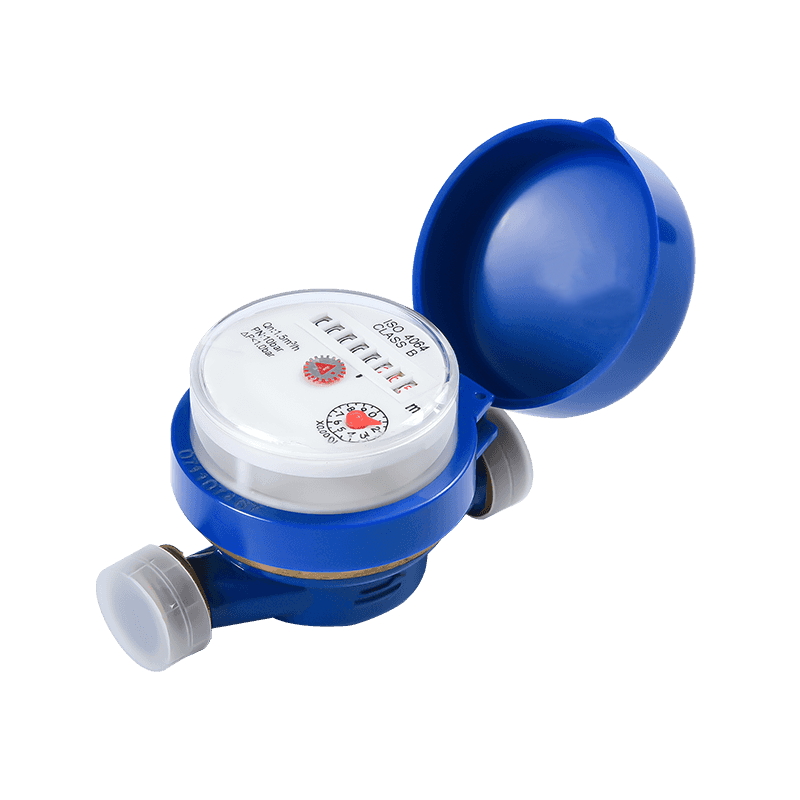
Analog meters are the most common residential type in North America, and no matter which internal design your home has — single-jet, multi-jet, or rotary piston — the reading logic is the same. As a manufacturer serving markets in Asia, Africa, Europe, and South America, we can confirm: register layouts differ slightly, but the zones you need are always the odometer digits and the small dials beneath them. The variations across our range of mechanical water meters mainly affect the body and connection style, not the way you read the register.
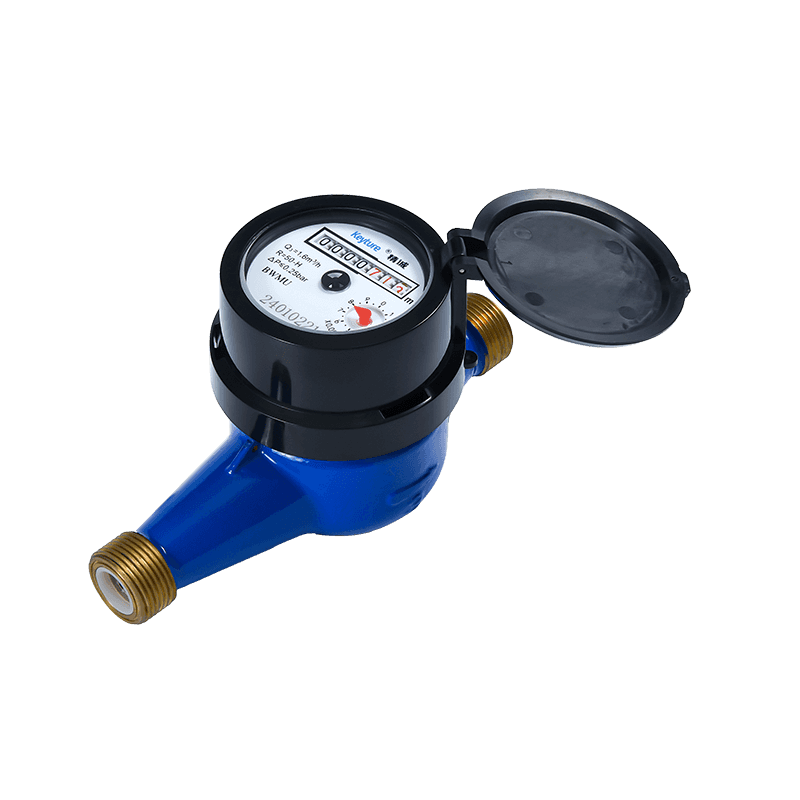
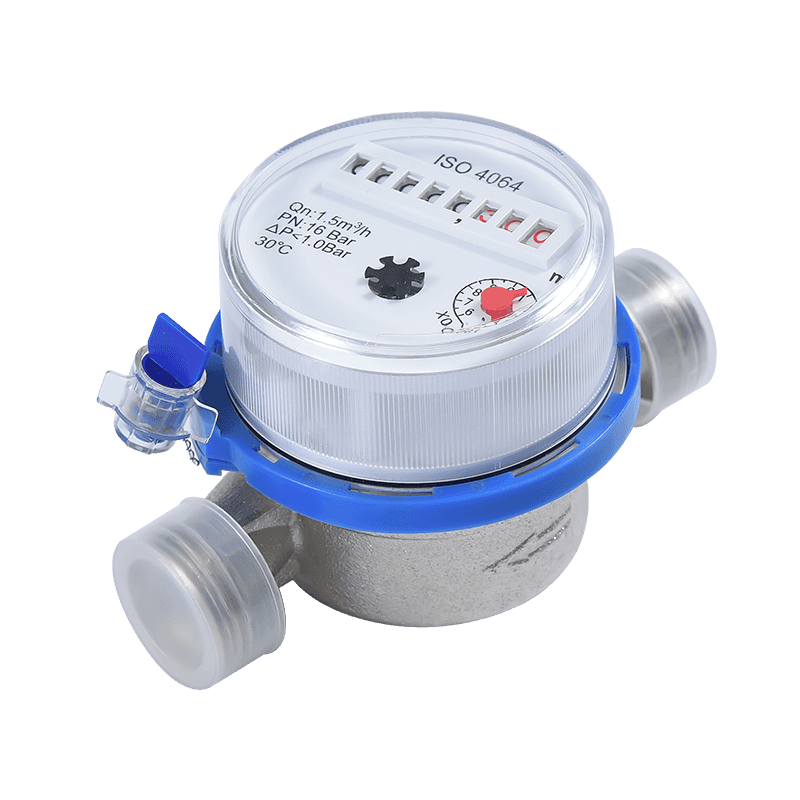
The main part of the register is the row of number wheels that turns like a car odometer. Black digits (or white digits on a dark background) are your primary reading: copy them from left to right without skipping. Red digits, where present, are decimal places; a red 5 beside 1234 means 1234.5 units. The red values are useful for short-duration measurements but are not normally billed.
For example, an odometer showing 1234 in black and 5 in red, on a meter that measures in cubic feet, reads 1,234.5 cubic feet. A typical household mechanical meter like this multi-jet dry-type model carries exactly this style of register, so the same reading steps apply across brands and regions.
Most mechanical registers also include a flow indicator: a small red or black triangle, star, or gear wheel that rotates whenever any water passes through the meter. It responds to very small flows, which makes it the simplest leak detector you already own.
Try this five-minute test:
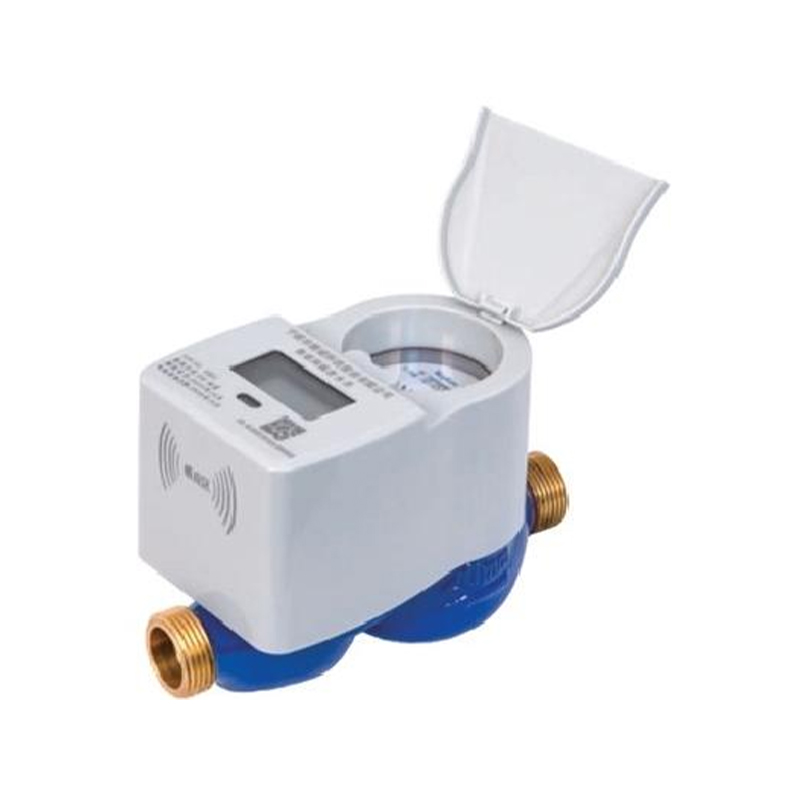
Digital meters replace the mechanical register with an electronic screen, usually an LCD. The primary value on the display is the cumulative consumption, often labeled "TOTAL" together with the unit (m³, ft³, or gal). Many models cycle through extra screens that show current flow rate, date, and diagnostic codes.
Two points cause most confusion. First, do not mistake the flow rate for consumption; flow rate is a momentary value, such as liters per minute, and it does not accumulate. Second, if the screen is blank, some meters stay in sleep mode and wake up when you press a button or hold a magnet near the marked spot.
Smart meters attach a communication module to the same electronic register. AMR (automatic meter reading) systems transmit the reading wirelessly so a utility vehicle can collect data from the street, while AMI systems use networks such as NB-IoT, LoRa, or M-Bus to deliver readings on a schedule. In both cases, the number shown on the display remains the authoritative value. The same remote-reading principle appears in wired remote water meters for utility applications, where a cable carries the signal to an external reading unit.
For a homeowner, reading a smart meter is even simpler: note the total from the screen and keep the date alongside it. New residential installations increasingly rely on domestic ultrasonic meters, which measure flow with sound waves and contain no moving parts, giving them excellent low-flow sensitivity and long-term accuracy.
The calculation is simple: usage equals the current reading minus the previous reading.
Example: your meter read 32,140 gallons on the first of the month and 32,860 gallons today. Subtract, and you get 720 gallons used in that period. To check a bill correctly, write down the date with each reading. Billing periods rarely match calendar months exactly, so compare your readings with the service dates printed on the statement.
Keep a simple log in a notebook or spreadsheet. A sudden increase that does not match your habits is the earliest warning sign of a leak.
Meters around the world measure in cubic meters, cubic feet, or gallons, and bills sometimes use a different unit than the meter does. Keep this conversion table handy.
| Unit | Equivalent |
|---|---|
| 1 cubic meter (m³) | 1,000 liters ≈ 264.17 US gallons ≈ 35.31 cubic feet |
| 1 cubic foot (ft³) | ≈ 7.48 US gallons |
| 1 HCF (hundred cubic feet) | 100 ft³ ≈ 748 US gallons |
Worked example: your meter reads in cubic meters and your utility bills in gallons. Previous reading 12.5 m³, current reading 18.3 m³, difference 5.8 m³. Multiply 5.8 × 264.17 and you get 1,532 US gallons of consumption. If the bill disagrees, confirm the billing dates and ask whether the utility estimated the reading.
An unexpectedly high bill is the most common reason people learn to read their meter, and the meter itself is the fastest way to confirm a leak. This test takes about an hour and requires no tools.
Follow these six steps:
A single leaking toilet can waste thousands of gallons a month, so this one-hour check often pays for itself in the next billing cycle.
Mechanical meters are durable but not permanent. Worn bearings and impellers cause drift, and registers can fog with age. In most jurisdictions, utilities must replace residential meters after a legal cycle — typically every 6 to 12 years — though the exact schedule varies by state and water authority.
Signs that a meter needs attention include cracked or clouded register glass, moisture inside the lens, corrosion on the body, or a reading that stays static while water is running. If you dispute a bill, ask the utility for an accuracy test. Do not remove a meter yourself; in nearly all cases it is utility property.
Replacement technology has also advanced. Ultrasonic water meter technology has moved from industrial pipe diameters into residential sizes, offering no-moving-part reliability and sharper sensitivity at low flows. Newer still, wireless remote reading water meters let utilities and property managers collect readings without entering a home, while residents can always check the display themselves. If your local utility offers an upgrade or meter replacement program, these options are worth asking about.
Reading a water meter is a five-minute skill that pays off at every billing cycle. Find the box, learn which numbers matter, convert units when needed, and use the flow indicator to catch leaks early. Whether your meter is mechanical or digital, the principle is the same: the meter records every drop, and now you know how to ask it the right questions.
prevCan Hot Water Heat Cause Creep on Your Water Meter
nextHow to Check Your Water Meter: Step-by-Step Guide to Reading & Leak Detection


Address: No.168,LinMu Rd.,Zone B, Jiangbei investment Park, Ningbo, Zhejiang,China
Tel: +86-0574-83090480/+86-18892665118
Fax: +86-0574-83021045
Email: [email protected]
Web: https://www.keyturemeter.com/
Quick Links
Product
Mobile terminal
 Wholesale Potable Water Flow Meter Manufacturers